IAW

iaw-white-logo iosandweb technologies
Categories
Blog

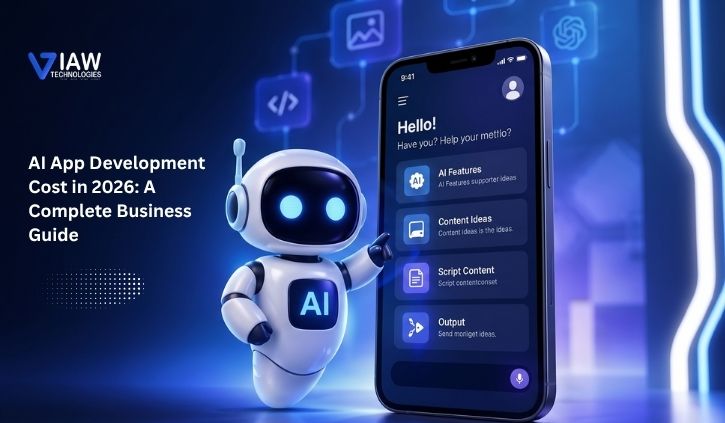
AI App Development Cost in 2026: A Complete Business Guide

Artificial intelligence is reshaping mobile applications, empowering businesses to streamline processes, personalize user interactions, enhance decision-making, and provide innovative digital solutions. Given the increasing adoption of AI, businesses are keen to understand AI app development and the cost involved in building a new mobile app. 

What Is the AI App Development Cost in 2026?

AI application costs can vary widely based on complexity, AI features, underlying technologies, and the integrations chosen by your company.

How Much Does It Cost to Develop an AI App in 2026?

It varies in costs of AI app development because there are various apps designed with different capabilities. Development of a simple application leveraging existing AI APIs might cost much less than that of advanced artificial intelligence applications based on machine learning, generative AI, computer vision, predictive analytics, and intelligent automation. Businesses shouldn’t consider only the cost of development but also the cloud, the cost of cloud storage, API call costs, security measures, test cases and deployment costs and also the ongoing maintenance cost for the development of the AI app.


Businesses should consider the overall cost to develop an AI app, including development, deployment, launch, and ongoing operational expenses.
Businesses often ask how much it costs to build an AI app, but the answer depends on its functionality, complexity, integrations, and maintenance requirements.

Major Factors Affecting AI App Development Cost

Understanding the factors affecting AI app development cost can help businesses create a realistic budget for their project.

1. App Complexity

The number and difficulty of AI features are likely the biggest single cost factor. Basic applications that have a feature, such as an AI chatbot or a prediction feature for recommendation services, will typically require much less development effort than an enterprise application involving voice recognition, machine vision, speech-to-text, machine-learning-powered prediction algorithms or autonomous processes.

2. AI Technology and Model Selection

This is one of the strongest indicators, as AI type determines whether a company can leverage readily made AI models via APIs or invests in developing custom app AI based on needs. A company utilising ML tech for an application may incur costs tied to data formatting and preparation, model training, and app refinement. If relying on generative AI, app development costs depend on model costs, the number of token utilization, app prompt design, and ongoing maintenance and optimization processes.

3. AI Integration and API Integration

The overall development cost of an app also depends on the kind of AI technology incorporated. Companies may choose an experienced AI app development company to build a solution that suits their specific business needs.

Or they may pick from readily available pre-trained AI models via APIs and deploy them in an application.
Machine learning-based applications typically involve the stages of data collection and preparation, training the machine learning model, testing the models, tuning the model, and deployment. Whereas generative AI in a mobile app may include selection of the right pre-trained generative models, prompt design, text generation model, tokenization, API usage and its constant monitoring for its performance.

Hence, the selection of the right type of AI technology for your app determines not just functionality and efficiency but also affects the overall cost.

4. Technology Stack

Technology Stack Choices Also Influence Development Prices Every aspect of the tech stack, from front-end tools and back-end tech to data storage solutions, cloud environments, AI tools, security solutions, etc., needs to function cohesively. Selecting a technology stack that scales readily can also simplify handling a growing user base, large data volumes, or greater AI demand while avoiding expensive rewrites at a future point.

5. Development Team and Timeline

Development Timelines Lead To Development Cost There are also the development costs, which usually increase with the complexity of the app. Choosing the right technology early in the app development process can help businesses manage resources efficiently, reduce delays, and control development costs. 

Custom AI App Development vs. Traditional App Development

Developing fully custom AI apps may be expensive, as it is likely to need the aid of specialized AI knowledge, data processing, model integration, extra testing and infrastructure, compared to a native or cross-platform application. Nevertheless, businesses don’t always have the need to develop their own AI models; it can simply integrate an existing AI service (e.g., machine learning APIs, natural language processing) to gain intelligence at a cheaper development cost and a much faster time.

The cost of AI-powered app development depends on the level of customization, AI features, integrations, and technology required for the application. 

The actual method to be implemented totally depends on the functionalities that the app needs, the targets who will use it, the required data and a company’s business strategy: businesses should think about adding AI.

In the apps to address some specific issue, and not only because they’re cool and trendy. Businesses can also use professional mobile app development services to build a scalable application platform and integrate AI capabilities according to their requirements.

Ongoing Maintenance and Operational Costs

AI app development doesn’t stop when the app is deployed; development costs should also extend to post-deployment expenses such as software updates, security measures, server upkeep, API fees, bug repairs, and AI model fine-tuning, and ongoing monitoring and optimization may eventually call for scaled infrastructure. 

Since AI applications continue to gain users over time and become popular, operational expenses of AI applications go high as users increase. It becomes very essential for organisations to control such expenses by continuously checking the operations with optimal checks that would ensure smooth flow of services from AI applications to control AI development expenses that are continuing.

Conclusion

AI App Development Price in 2026

The final AI app development price in 2026 can vary depending on specific business and technical requirements, so there is no fixed price that applies to every project. Several factors influence the overall cost, including app complexity, AI features, machine learning capabilities, generative AI, API integrations, technology stack, development expertise, development timeline, and post-development support.

Best Ways to Successfully Develop an AI Application

The best way to build a successful AI-powered app is to clearly define your business goals, choose the right AI functionalities, use scalable infrastructure, and partner with a skilled development company. A well-developed AI application can improve automation, personalization, performance, and efficiency while keeping development costs aligned with the business’s objectives.

FAQ

How much does it cost to develop an AI app in 2026?

The AI app development cost in 2026 depends on the app’s complexity, features, and integrations.

What factors affect AI app development cost?

App complexity, AI integration, API integration, technology stack, and maintenance affect the cost.

How long does it take to develop an AI-powered app?

The development timeline depends on the app’s features, complexity, and integration requirements.

Is custom AI app development more expensive than regular app development?

Yes, custom AI app development usually costs more due to advanced AI features and development requirements.
Categories
Blog

Why Hiring an AI Software Development Company Is a Smart Business Move

Artificial intelligence (AI) is among the world’s most impactful technologies that business organisations use to enhance productivity, automate processes, and make intelligent decisions. At present, businesses are utilising AI not just for experiments but for addressing the actual issues in business process operations and customer service needs and in deriving new growth opportunities. 

Working with a skilled AI software development company ensures that custom solutions that sync with your unique business objectives can be tailor-made for you. AI engineers not only enable companies to automate operations and execute predictive analysis but also integrate AI applications and intelligent solutions. 

With growing industry-wise competition, organisations are turning to an AI Software Development Company, which aims to offer scalable, reliable and sustainable products 

Why Businesses Need AI Software Development

Companies produce large amounts of data on a daily basis; manually analysing and managing this data is very difficult and time-consuming. With the technology of artificial intelligence, it is now possible for companies to transform their data into knowledge and gain better decision-making. 

The demand for AI development is increasing because businesses need smarter ways to:

  • Automate repetitive tasks through intelligent automation
  • Improve customer support using AI chatbot development
  • Analyze trends with predictive analytics
  • Reduce operational costs through business process automation
  • Create personalized customer experiences

With advanced artificial intelligence solutions, companies can improve efficiency while focusing more on innovation and strategic growth.

Benefits of Hiring an AI Software Development Company

1. Customized Solutions Through Custom AI Development

The needs of all organisations are not the same, and custom off-the-shelf software solutions will not meet every business need. A professional AI development company can design and develop solutions tailored to business needs, industry standards and requirements, and operational pain points.

Using custom AI development, businesses can create AI-powered application platforms, recommendation systems, and automation tools. 

Businesses can also integrate AI within its existing applications by building an environment where all business processes and applications can communicate.

2. Advanced Enterprise AI Solutions

Enterprise organisations need sophisticated technologies capable of handling difficult processes as well as large data sets. Enterprise AI solutions enable the organisation to enhance the scalability, security and operation performance of the enterprise.

AI technologies ranging from machine learning development, generative AI, computer vision, and natural language processing enable enterprises to build intelligent systems that support better decision-making. AI benefits enterprises by increasing performance and productivity and through intelligent data analysis to reduce manual labour from reports to smart analytics.

3. Better Customer Experience With AI Applications

Because the requirements of customers are constantly growing and companies demand faster, more individualised services. With AI application development, companies can provide a more satisfying customer experience through smart, digital tools. 

Examples include:

  • AI chatbots for 24/7 customer assistance
  • AI-powered applications for personalized recommendations
  • Natural Language Processing for better communication
  • Predictive analytics for understanding customer behavior

These technologies help businesses create stronger customer relationships and improve overall engagement.

How to Choose an AI Software Development Company

Choosing the right technology partner is important for successful AI implementation. Businesses should evaluate an AI partner based on:

  • Experience in developing AI solutions
  • Knowledge of machine learning and automation technologies
  • Industry-specific expertise
  • Ability to create scalable applications
  • Understanding of business goals

When selecting the best AI software development company for their business, firms should look for the technical know-how of the company. They must consider how much experience has the firm obtained. And finally, whether they are capable of developing feasible services or not. 

A capable partner can identify how to make such a choice based on the specific project requirements, estimated budget and the future goals for the business 

Cost of AI Software Development in 2026

The cost of developing AI software in 2026 will vary depending on the project complexity, range of features needed, choice of technology, data needs, time 

to development. 

Developing basic AI tools such as chatbot applications or automation software generally costs less than developing advanced solutions such as Gen AI applications, computer vision applications, or enterprise AI applications, which may take more investment than simpler AI software solutions.

Businesses can control the costs by choosing the appropriate AI approach and by selecting skilful developers who offer flexible solutions to manage the cost of development. 

AI Software Development Services for Startups and Growing Businesses

Companies are making increasing use of artificial intelligence as a way to compete with the established giants. AI software development services for startups can assist small new companies in streamlining processes, better informing choices, and also creating fascinating new items at a very low investment with a small internal department.

These can help the beginning-phase businesses through Automation, analysis of customers, intelligent applications, efficient workflow automation, etc. Any business wishing to take advantage of all-inclusive technology-based products will require the services of professional custom software development service providers. 

Conclusion

It makes sense to hire AI Software Development company Companies are implementing artificial intelligence development services in their projects to maximise profit and bring a substantial change with artificial intelligence. Incorporating services in your IT projects: Generative AI, AI development, intelligent automation, and AI integration software – these solutions have the potential to develop smarter business models. By the time people become comfortable adopting and utilising AI as much as they do the rest of our technology stack in the near future, custom-built AI solutions will become key to growing any enterprise, making it flexible and adaptable to its customers’ needs. 

Categories
Blog

A Complete Guide to AI-Driven Software Solutions for Beginners

The technology landscaxpe is experiencing a seismic shift. Walk into any software development conference, scroll through tech Twitter, or eavesdrop on a startup pitch meeting, and you’ll hear the same buzzwords repeated: artificial intelligence, machine learning, automation. But here’s what most people won’t tell you—AI-driven software solutions aren’t just for tech giants with unlimited budgets anymore. They’re becoming the great equalizer, allowing beginners and small teams to build sophisticated applications that were once the exclusive domain of Fortune 500 companies.

If you’ve been curious about how AI is transforming software development but felt intimidated by the jargon and complexity, you’re in exactly the right place. This guide will walk you through everything you need to know about AI-driven software solutions, from the fundamental concepts to practical implementation strategies that you can start using today.

What Are AI-Driven Software Solutions, Really?

Let’s cut through the marketing hype. AI-driven software solutions are applications that leverage artificial intelligence technologies—like machine learning, natural language processing, or computer vision—to perform tasks that traditionally required human intelligence. Unlike traditional software that follows rigid, pre-programmed rules, AI-powered applications can learn from data, adapt to new situations, and improve their performance over time.

Think of it this way: traditional software is like following a recipe exactly. You add ingredients in a specific order, cook at a precise temperature, and get predictable results. AI-driven software, on the other hand, is like a chef who learns from thousands of recipes, understands flavor profiles, and can improvise based on available ingredients and diner preferences.

The Core Components of AI Software

Before diving deeper, it’s helpful to understand the building blocks that make AI-driven software solutions tick:

Machine Learning Algorithms: These are the mathematical models that enable software to learn patterns from data without explicit programming. When Netflix recommends shows you might like, that’s machine learning in action.

Data Processing Pipelines: AI systems need quality data to function effectively. These pipelines collect, clean, and prepare data for analysis—think of them as the digestive system of AI applications.

Neural Networks: Inspired by the human brain, these interconnected layers of algorithms excel at recognizing complex patterns in images, text, and other data types.

Natural Language Processing (NLP): This technology allows software to understand and generate human language, powering everything from chatbots to content generation tools.

Why Should Beginners Care About AI-Driven Software?

You might be wondering: “I’m just starting out in software development—isn’t AI way too advanced for me?” That’s exactly the mindset that could leave you behind. Here’s the reality: the barrier to entry for AI-driven software solutions has never been lower.

The Democratization of AI Technology

Five years ago, building an AI-powered application required a PhD in computer science, access to massive computing infrastructure, and months of development time. Today, platforms like TensorFlow, PyTorch, and cloud-based AI services from Google, Amazon, and Microsoft have made it possible for beginners to integrate sophisticated AI capabilities into their projects within hours.

Consider these compelling reasons to explore AI as a beginner:

Market Demand: Companies across every industry are desperately seeking professionals who understand AI integration. Learning these skills now positions you for career opportunities that didn’t exist a decade ago.

Competitive Advantage: Whether you’re building a startup or working on side projects, incorporating AI features can differentiate your work from competitors who rely solely on traditional approaches.

Problem-Solving Power: AI opens doors to solving problems that were previously unsolvable with conventional programming—from predicting customer behavior to automating complex decision-making processes.

Automation of Tedious Tasks: One of the most immediate benefits of AI-driven software solutions is their ability to handle repetitive, time-consuming tasks, freeing you to focus on creative problem-solving.

Types of AI-Driven Software Solutions You Should Know

The world of AI software is vast, but for beginners, it helps to understand the main categories and their practical applications. Let’s explore the most accessible and impactful types.

1. Chatbots and Virtual Assistants

These conversational AI applications have become ubiquitous on websites, messaging platforms, and mobile apps. They use natural language processing to understand user queries and provide relevant responses.

Beginner-Friendly Platforms: Dialogflow, Microsoft Bot Framework, and Rasa offer intuitive interfaces for building chatbots without extensive coding knowledge. You can create a functional customer service bot in an afternoon.

Real-World Applications: Customer support automation, appointment scheduling, FAQ handling, and lead generation. E-commerce sites use chatbots to guide customers through product selections, while healthcare providers deploy them for symptom checking and appointment reminders.

2. Predictive Analytics Tools

These AI-driven software solutions analyze historical data to forecast future trends, behaviors, and outcomes. They’re incredibly valuable for business intelligence and decision-making.

How They Work: Machine learning algorithms identify patterns in your data—sales figures, website traffic, customer behavior—and project likely future scenarios based on those patterns.

Practical Uses: Sales forecasting, inventory management, customer churn prediction, and fraud detection. Even small businesses can use tools like Google Analytics with AI features or platforms like Tableau to gain predictive insights.

3. Computer Vision Applications

Computer vision enables software to interpret and understand visual information from the world—essentially giving applications the power of sight.

Beginner Entry Points: Cloud-based APIs from Google Cloud Vision, Amazon Rekognition, or Azure Computer Vision allow you to add image recognition capabilities to your applications without building models from scratch.

Common Applications: Facial recognition for security systems, quality control in manufacturing, medical image analysis, augmented reality filters, and autonomous vehicle navigation.

4. Recommendation Systems

Ever wondered how Spotify knows exactly what song you want to hear next? That’s the magic of recommendation engines—AI-driven software solutions that suggest products, content, or actions based on user behavior and preferences.

Implementation Approaches: Collaborative filtering (recommending based on similar users), content-based filtering (recommending similar items), or hybrid systems that combine multiple approaches.

Business Impact: Amazon attributes 35% of its revenue to its recommendation engine. For beginners, platforms like Recombee and AWS Personalize make it relatively simple to add recommendation features to your applications.

Getting Started: Your First Steps Into AI Development

Feeling ready to dive in? Here’s a practical roadmap for beginners who want to work with AI-driven software solutions without getting overwhelmed.

Step 1: Build Your Foundation

Before touching AI-specific tools, ensure you’re comfortable with these fundamentals:

Programming Basics: Python is the undisputed king of AI development, with extensive libraries and community support. If you’re completely new to programming, invest 2-3 months learning Python basics—variables, loops, functions, and object-oriented programming.

Statistics and Probability: You don’t need a mathematics degree, but understanding concepts like mean, median, standard deviation, and probability distributions will help you grasp how AI algorithms make decisions.

Data Handling Skills: Learn to work with libraries like Pandas for data manipulation and NumPy for numerical operations. Most AI projects spend 80% of their time on data preparation, so these skills are invaluable.

Step 2: Choose Your Learning Path

The AI field is broad, so pick a specialization that aligns with your interests:

Natural Language Processing: If you’re fascinated by language and communication, explore libraries like spaCy, NLTK, or Hugging Face Transformers. Build text classifiers, sentiment analyzers, or simple chatbots.

Computer Vision: If visual problems intrigue you, start with OpenCV for image processing and progress to TensorFlow or PyTorch for deep learning-based vision tasks.

Predictive Modeling: If you’re business-minded, focus on scikit-learn for building machine learning models that forecast outcomes and classify data.

Step 3: Leverage Pre-Built Solutions

Here’s a secret that will accelerate your journey: you don’t need to build everything from scratch. The ecosystem of AI-driven software solutions includes numerous pre-trained models and APIs that you can integrate directly into your applications.

Cloud AI Services: Google Cloud AI, AWS AI Services, and Azure Cognitive Services offer ready-to-use capabilities for text analysis, image recognition, speech processing, and more. These services handle the complex AI infrastructure while you focus on application logic.

Open-Source Pre-Trained Models: Hugging Face hosts thousands of pre-trained models for various tasks. Need a language translation feature? There’s a model for that. Want to classify images? Download a pre-trained ResNet or EfficientNet model and fine-tune it for your specific use case.

Low-Code AI Platforms: Tools like Google AutoML, Microsoft Azure ML Studio, and IBM Watson Studio provide visual interfaces for building machine learning models without extensive coding. They’re perfect for beginners who want to experiment and learn.

Common Challenges and How to Overcome Them

Let’s be honest—working with AI-driven software solutions comes with challenges, especially for beginners. Anticipating these obstacles can help you navigate them more effectively.

The Data Quality Problem

AI systems are only as good as the data they’re trained on. Poor quality data leads to unreliable predictions and flawed insights.

Solution: Start small with clean, well-labeled datasets. Platforms like Kaggle offer thousands of curated datasets perfect for learning. As you progress, develop strong data cleaning habits—removing duplicates, handling missing values, and validating data integrity.

The Complexity Overwhelm

The AI field moves at breakneck speed, with new techniques, frameworks, and best practices emerging constantly. This can feel overwhelming.

Solution: Focus on fundamentals rather than chasing every new trend. Master one framework thoroughly before jumping to the next. Join communities like r/MachineLearning or AI Discord servers where you can ask questions and learn from others’ experiences.

The Black Box Dilemma

Many AI models, particularly deep neural networks, operate as “black boxes”—they produce accurate results, but it’s difficult to understand exactly how they reached those conclusions.

Solution: Start with interpretable models like decision trees or linear regression. As you build confidence, explore explainability tools like SHAP or LIME that help visualize how complex models make decisions.

Resource Constraints

Training sophisticated AI models can require significant computational power, which might seem inaccessible to beginners.

Solution: Utilize free cloud computing resources. Google Colab offers free GPU access, perfect for learning and small projects. Kaggle provides free computing kernels. Start with smaller models and datasets, then scale as your needs and resources grow.

Best Practices for Building AI-Driven Applications

As you begin creating your own AI-driven software solutions, keep these principles in mind to ensure success.

Start With Clear Objectives

Define exactly what problem you’re solving before writing a single line of code. AI isn’t magic—it’s a tool for specific purposes. Ask yourself: What decision or prediction does this system need to make? What would success look like? How will users benefit?

Embrace Iterative Development

Build the simplest version first. Get it working, evaluate performance, then gradually add complexity. This approach, called the “minimum viable model,” helps you learn faster and avoid wasting time on unnecessary features.

Prioritize Ethics and Fairness

AI systems can inadvertently perpetuate biases present in training data. Even as a beginner, develop awareness around ethical considerations. Ensure diverse, representative datasets and regularly test your systems for unfair outcomes across different user groups.

Document Everything

Keep detailed notes about your data sources, model architectures, hyperparameters, and results. This practice will save you countless hours when debugging or trying to reproduce results weeks later.

The Future Is Yours to Build

The journey into AI-driven software solutions might seem daunting, but remember: every expert was once a beginner. The tools, resources, and community support available today make this the perfect time to start exploring artificial intelligence.

Whether you’re looking to enhance your career prospects, build innovative products, or simply satisfy your curiosity about how modern technology works, AI offers endless opportunities for learning and creation. The key is to start small, stay consistent, and embrace the learning process—mistakes and all.

The software you build tomorrow could solve problems we haven’t even identified today. That’s the real power of AI-driven development: it doesn’t just automate existing processes; it enables entirely new possibilities. So pick a project, choose a tool, and write your first line of AI-enhanced code. The future of software is waiting for you to help shape it.

Ready to transform from curious observer to AI builder? The journey begins with a single step—and this guide has given you the roadmap to take it.

Categories
Blog

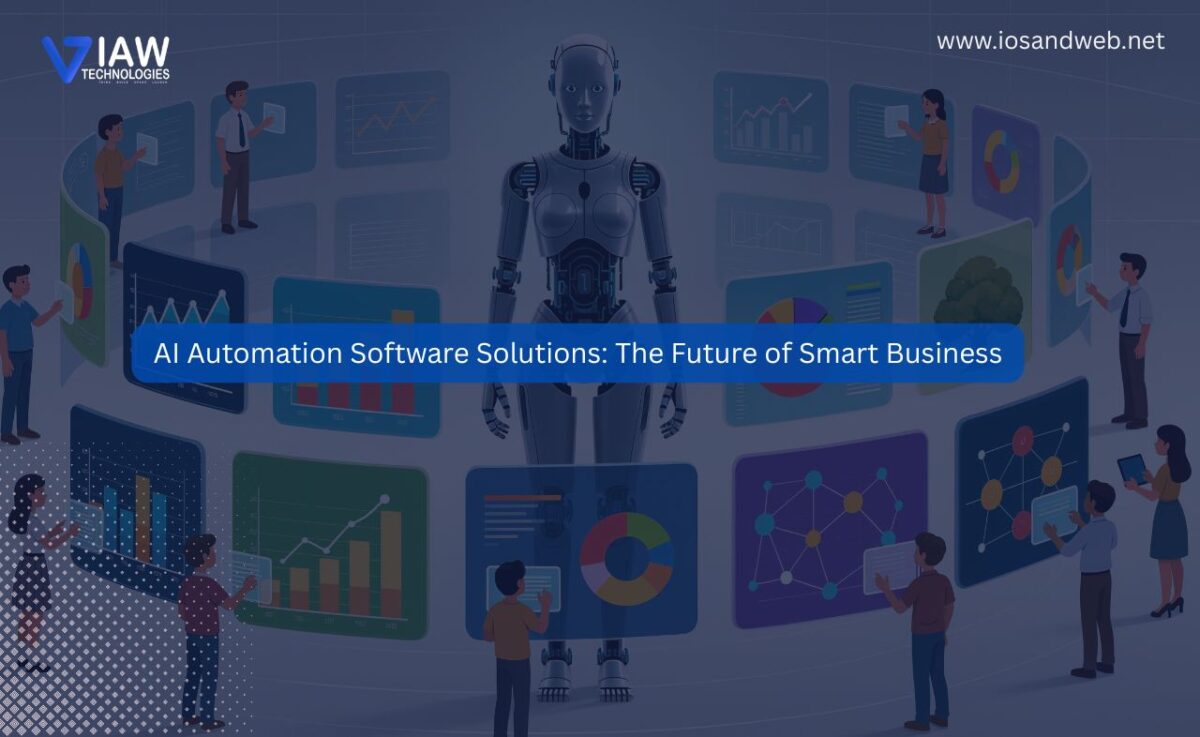
AI Automation Software Solutions: The Future of Smart Business

The business landscape is evolving at breakneck speed, and companies that fail to adapt risk being left behind. At the forefront of this transformation are AI automation software solutions—intelligent systems that are revolutionizing how businesses operate, compete, and grow. But what exactly makes these solutions so transformative, and why should your business care?

In this comprehensive guide, we’ll explore everything you need to know about AI automation software solutions, from their core capabilities to implementation strategies that can help your business thrive in an increasingly digital world.

What Are AI Automation Software Solutions?

AI automation software solutions are intelligent systems that combine artificial intelligence with automation technology to perform tasks that traditionally required human intervention. Unlike simple automation tools that follow pre-programmed rules, these solutions leverage machine learning, natural language processing, and cognitive computing to make decisions, adapt to new situations, and continuously improve their performance.

Think of them as digital employees who never sleep, never take breaks, and get smarter with every task they complete. They can handle everything from responding to customer inquiries and processing invoices to analyzing complex data patterns and making strategic recommendations.

The Evolution from Simple Automation to AI-Powered Intelligence

Traditional automation has been around for decades, handling repetitive, rule-based tasks. However, AI automation software solutions represent a quantum leap forward. They don’t just execute commands—they understand context, learn from experience, and can handle nuanced situations that would stump conventional automation tools.

This evolution means businesses can now automate far more complex processes, freeing human workers to focus on creative, strategic, and relationship-building activities that machines can’t replicate.

Why Businesses Are Embracing AI Automation Software Solutions

Unprecedented Efficiency and Productivity Gains

The primary driver behind the adoption of AI automation software solutions is their ability to dramatically boost operational efficiency. These systems can process vast amounts of data in seconds, complete tasks 24/7 without fatigue, and eliminate the bottlenecks that plague manual workflows.

Research shows that businesses implementing AI automation see productivity increases of 20-40% in automated departments. Tasks that once took hours can now be completed in minutes, and processes that required multiple team members can often be handled by a single automated workflow.

Cost Reduction Without Compromising Quality

While the initial investment in AI automation software solutions might seem significant, the long-term cost savings are substantial. By automating routine tasks, businesses reduce labor costs, minimize errors that lead to expensive corrections, and optimize resource allocation.

More importantly, these solutions scale effortlessly. Unlike hiring additional staff to handle increased workload, AI automation can manage growing demands without proportional cost increases. This scalability is particularly valuable for businesses experiencing rapid growth or seasonal fluctuations.

Enhanced Accuracy and Consistency

Human error is inevitable, especially in repetitive tasks. AI automation software solutions eliminate this variability, ensuring that processes are executed with consistent accuracy every single time. Whether it’s data entry, invoice processing, or quality control checks, automated systems maintain the same high standards without the fatigue or distraction that affects human workers.

Data-Driven Decision Making

Perhaps the most transformative aspect of AI automation software solutions is their ability to collect, analyze, and derive insights from massive datasets. These systems can identify patterns, predict trends, and provide actionable recommendations that would be impossible for humans to uncover manually.

This capability transforms business intelligence from reactive reporting to proactive strategic planning, giving companies a significant competitive advantage in their markets.

Key Applications of AI Automation Software Solutions

Customer Service and Support Automation

AI-powered chatbots and virtual assistants are revolutionizing customer service. These systems can handle thousands of inquiries simultaneously, provide instant responses 24/7, and escalate complex issues to human agents only when necessary. The result? Improved customer satisfaction, reduced support costs, and faster resolution times.

Modern customer service automation goes beyond simple FAQ responses. Today’s AI automation software solutions understand context, sentiment, and customer history, enabling them to provide personalized, empathetic support that rivals human interaction.

Marketing and Sales Automation

From lead scoring and email campaign optimization to predictive analytics and personalized content delivery, AI automation is transforming how businesses attract and convert customers. These solutions analyze customer behavior, segment audiences with precision, and deliver the right message to the right person at the right time.

Sales teams benefit from automated lead qualification, intelligent CRM updates, and predictive forecasting that helps them focus their efforts on the most promising opportunities.

Financial Operations and Accounting

AI automation software solutions excel at financial tasks that require accuracy and compliance. They can process invoices, reconcile accounts, detect fraudulent transactions, and generate financial reports with minimal human oversight. This not only reduces errors but also ensures regulatory compliance and provides real-time visibility into financial health.

Human Resources and Talent Management

From screening resumes and scheduling interviews to onboarding new employees and managing performance reviews, AI automation is streamlining HR operations. These systems can analyze candidate qualifications, predict employee turnover, and recommend personalized training programs based on individual career paths.

Supply Chain and Inventory Management

AI automation optimizes supply chain operations by predicting demand, automating reorder processes, optimizing routing, and identifying potential disruptions before they impact operations. This results in reduced carrying costs, minimized stockouts, and improved supplier relationships.

Implementing AI Automation Software Solutions: A Strategic Approach

Assessing Your Automation Readiness

Before diving into implementation, conduct a thorough assessment of your current processes. Identify repetitive, rule-based tasks that consume significant time and resources. Look for processes with high error rates or compliance requirements. These are your prime candidates for automation.

It’s equally important to evaluate your technical infrastructure and team capabilities. Successful implementation requires adequate data quality, system integration capabilities, and staff who understand how to work alongside automated systems.

Choosing the Right AI Automation Software Solutions

The market is flooded with automation tools, each claiming to be the best. When evaluating options, consider factors like:

  • Integration capabilities: Can the solution seamlessly connect with your existing systems?
  • Scalability: Will it grow with your business needs?
  • Ease of use: Can your team implement and manage it without extensive technical expertise?
  • Customization options: Does it adapt to your unique business processes?
  • Vendor support and community: Is there robust documentation and responsive customer service?

Starting Small and Scaling Strategically

The most successful AI automation implementations start with pilot projects—small-scale deployments that prove value before company-wide rollout. Choose a well-defined process with measurable outcomes for your initial automation project. This approach minimizes risk, builds organizational confidence, and provides valuable lessons for larger deployments.

Once you’ve demonstrated success, create a roadmap for expanding automation across departments and processes. Prioritize based on ROI potential, implementation complexity, and strategic business objectives.

Training and Change Management

Technology is only half the equation. The human element of AI automation implementation is equally critical. Invest in comprehensive training programs that help employees understand how automation will affect their roles and how to work effectively with automated systems.

Address concerns about job displacement honestly and proactively. Most successful implementations augment human capabilities rather than replace workers, allowing them to focus on higher-value activities that require creativity, emotional intelligence, and strategic thinking.

Overcoming Common Challenges in AI Automation Adoption

Data Quality and Availability Issues

AI automation software solutions are only as good as the data they process. Poor data quality—inconsistent formats, incomplete records, or outdated information—can severely limit automation effectiveness. Before implementation, invest in data cleansing and establish governance policies that maintain data integrity going forward.

Integration Complexity

Legacy systems and siloed data create integration headaches that can derail automation projects. Work with vendors who offer robust APIs and integration tools, and consider middleware solutions that bridge gaps between incompatible systems.

Security and Compliance Concerns

Automated systems that handle sensitive data must comply with regulations like GDPR, HIPAA, or industry-specific requirements. Ensure that your AI automation software solutions include appropriate security measures, audit trails, and compliance features. Regular security assessments and updates are essential to maintaining protection against evolving threats.

Managing Organizational Resistance

Change is difficult, and automation can trigger fears about job security and competence. Combat resistance through transparent communication, early involvement of affected stakeholders, and demonstrating quick wins that benefit both the organization and individual employees.

The Future of AI Automation Software Solutions

Emerging Trends to Watch

The AI automation landscape continues evolving rapidly. Hyper-automation—the combination of multiple automation technologies—is gaining traction, enabling end-to-end process automation across entire value chains. Low-code and no-code platforms are democratizing automation, allowing business users to create automated workflows without programming expertise.

Conversational AI is becoming more sophisticated, with systems that understand context, emotion, and nuance far better than early chatbots. Meanwhile, automation is increasingly moving from back-office processes to customer-facing applications, creating seamless experiences that blur the line between human and machine interaction.

Preparing Your Business for an Automated Future

The question is no longer whether to adopt AI automation software solutions, but how quickly and strategically to implement them. Businesses that embrace automation thoughtfully will gain significant competitive advantages in efficiency, agility, and customer experience.

Start by developing a clear automation strategy aligned with your business objectives. Build internal capabilities through training and hiring, and cultivate partnerships with automation vendors and consultants who understand your industry. Most importantly, maintain a learning mindset—the automation landscape will continue evolving, and successful businesses will adapt continuously.

Conclusion: Embracing the Intelligent Automation Revolution

AI automation software solutions represent far more than a technology trend—they’re a fundamental shift in how businesses operate and compete. Companies that successfully implement these solutions gain unprecedented efficiency, accuracy, and insights that translate directly into competitive advantage and business growth.

The future belongs to smart businesses that leverage AI automation strategically, augmenting human capabilities rather than simply replacing them. By starting with clear objectives, choosing the right tools, and managing change effectively, your business can harness the transformative power of AI automation software solutions.

The revolution is already underway. The question is: will your business lead it or be left behind?

Categories
Blog

Amazon Bedrock vs ChatGPT: Which AI Platform Leads in 2025?

The artificial intelligence landscape has evolved dramatically, and businesses face a critical decision: should they invest in Amazon Bedrock vs ChatGPT? As we navigate through 2025, understanding the strengths and limitations of these two powerhouse platforms has become essential for organizations looking to leverage generative AI effectively.

Both Amazon Bedrock and ChatGPT have carved out significant positions in the AI ecosystem, but they serve distinctly different purposes and audiences. Let’s explore what sets them apart and which platform might be the right fit for your specific needs.

Understanding the Core Differences

What is Amazon Bedrock?

Amazon Bedrock is AWS’s fully managed service that provides access to multiple foundation models from leading AI companies through a single API. Think of it as an AI marketplace where you can choose from models developed by Anthropic, AI21 Labs, Cohere, Meta, Stability AI, and Amazon itself. The platform emphasizes enterprise-grade security, customization capabilities, and seamless integration with existing AWS infrastructure.

What is ChatGPT?

ChatGPT, developed by OpenAI, is arguably the most recognizable name in conversational AI. It’s a user-friendly chatbot interface powered by GPT-4 and other advanced language models. While ChatGPT offers API access for developers, its primary strength lies in its intuitive conversational interface and broad accessibility for both individuals and businesses.

Feature Comparison: Amazon Bedrock vs ChatGPT

Model Variety and Flexibility

When comparing Amazon Bedrock vs ChatGPT, model selection stands out as a key differentiator. Amazon Bedrock offers multiple foundation models, allowing you to switch between different AI providers based on your specific task requirements. Need text generation? Choose Claude. Looking for image creation? Stability AI’s models are available. This flexibility means you’re not locked into a single AI provider’s capabilities or limitations.

ChatGPT, conversely, focuses on OpenAI’s proprietary models. While this means less variety, it also ensures a consistent, highly refined experience. The platform has been extensively fine-tuned for conversational interactions, making it exceptionally good at understanding context and maintaining coherent dialogues.

Customization and Fine-Tuning

Amazon Bedrock shines when it comes to customization. The platform allows enterprises to fine-tune models with their proprietary data while maintaining strict data privacy controls. Your training data never leaves your AWS environment, addressing a major concern for organizations handling sensitive information. This capability makes Amazon Bedrock particularly attractive for businesses requiring industry-specific AI applications.

ChatGPT offers customization through custom GPTs and fine-tuning options, though the level of control differs from Amazon Bedrock. The platform has introduced more enterprise features recently, but the customization process is generally more streamlined and less granular than what AWS offers.

Integration and Infrastructure

Enterprise Integration

For organizations already invested in the AWS ecosystem, Amazon Bedrock provides unparalleled integration benefits. The platform connects seamlessly with other AWS services like S3 for data storage, SageMaker for machine learning workflows, and Lambda for serverless computing. This native integration can significantly reduce implementation complexity and time-to-value for AWS-centric organizations.

ChatGPT’s API is platform-agnostic, which can be advantageous for businesses using diverse cloud providers or on-premises infrastructure. The straightforward API design makes it relatively easy to integrate into existing applications, regardless of your underlying technology stack.

Scalability and Performance

Both platforms offer robust scalability, but they approach it differently. Amazon Bedrock leverages AWS’s global infrastructure, providing automatic scaling and load balancing across regions. The platform’s serverless architecture means you only pay for what you use, with no need to provision or manage servers.

ChatGPT’s API also scales effectively, though organizations should be mindful of rate limits and queuing during high-demand periods. OpenAI has made significant infrastructure improvements, but extreme usage spikes may occasionally require careful capacity planning.

Security and Compliance

Data Privacy

In the Amazon Bedrock vs ChatGPT debate, security considerations often tip the scales for enterprise buyers. Amazon Bedrock emphasizes that customer data isn’t used to train underlying models, and the platform offers extensive compliance certifications including HIPAA, GDPR, and SOC 2. The ability to deploy models within your VPC provides an additional layer of data isolation.

ChatGPT has evolved its enterprise offerings with ChatGPT Enterprise and Team plans that promise not to train on customer data. However, some organizations remain cautious about sending proprietary information to external APIs, even with these assurances.

Access Controls

Amazon Bedrock integrates with AWS IAM (Identity and Access Management), providing granular permission controls and audit logging. Organizations can implement sophisticated access policies that align with their existing security frameworks.

ChatGPT offers organization-level controls and SSO integration, which covers most enterprise security requirements, though the depth of control may not match AWS’s comprehensive IAM system.

Pricing Models

Cost Structure

Amazon Bedrock charges based on model usage with different pricing for each foundation model. The pay-as-you-go model can be cost-effective for variable workloads, but costs can escalate quickly with high-volume usage. AWS also offers Provisioned Throughput options for predictable workloads at discounted rates.

ChatGPT offers subscription tiers (Plus, Team, Enterprise) for individuals and organizations, plus API pricing based on tokens processed. The subscription model provides predictable costs for end-user applications, while API pricing offers flexibility for developers.

Use Case Scenarios

When to Choose Amazon Bedrock

Amazon Bedrock excels in scenarios requiring deep customization, multiple model types, or strict data residency requirements. Consider Amazon Bedrock if you’re building industry-specific AI applications, need to experiment with different foundation models, or require tight integration with AWS services. Financial services, healthcare, and government organizations often find Amazon Bedrock’s security and compliance features essential.

When to Choose ChatGPT

ChatGPT is ideal for conversational AI applications, content creation, customer service automation, and rapid prototyping. Its intuitive interface makes it accessible for teams without deep AI expertise. Startups and small-to-medium businesses often prefer ChatGPT for its simplicity and lower barrier to entry.

The Verdict: Which Platform Leads in 2025?

The Amazon Bedrock vs ChatGPT comparison doesn’t have a universal winner—the “leading” platform depends entirely on your specific requirements. Amazon Bedrock leads for enterprises needing maximum flexibility, customization, and AWS integration. It’s the preferred choice when data governance, model variety, and infrastructure control are paramount.

ChatGPT leads in accessibility, conversational quality, and rapid deployment. For organizations prioritizing user experience, quick implementation, and straightforward conversational AI, ChatGPT remains the stronger choice.

Many forward-thinking organizations aren’t choosing between them at all—they’re using both platforms strategically, leveraging Amazon Bedrock for backend AI infrastructure and specialized applications while using ChatGPT for user-facing conversational interfaces and productivity tools.

Also Read :- How Artificial Intelligence Is Changing Web Development in 2025

Making Your Decision

When evaluating Amazon Bedrock vs ChatGPT, consider these key questions:

What’s your existing cloud infrastructure?

How important is model customization to your use case?

What are your data privacy and compliance requirements?

Do you need multiple AI models or will one suffice?

What’s your team’s technical expertise level?

What’s your budget and expected usage volume?

The AI platform landscape continues evolving rapidly, and both Amazon Bedrock and ChatGPT are investing heavily in new capabilities. Whichever platform you choose, ensure it aligns with your long-term AI strategy and can scale as your needs grow.

The future of enterprise AI isn’t about picking sides—it’s about understanding which tools solve which problems best, and building a comprehensive AI strategy that leverages the right platforms for the right purposes.