IAW

iaw-white-logo iosandweb technologies
Categories
Blog

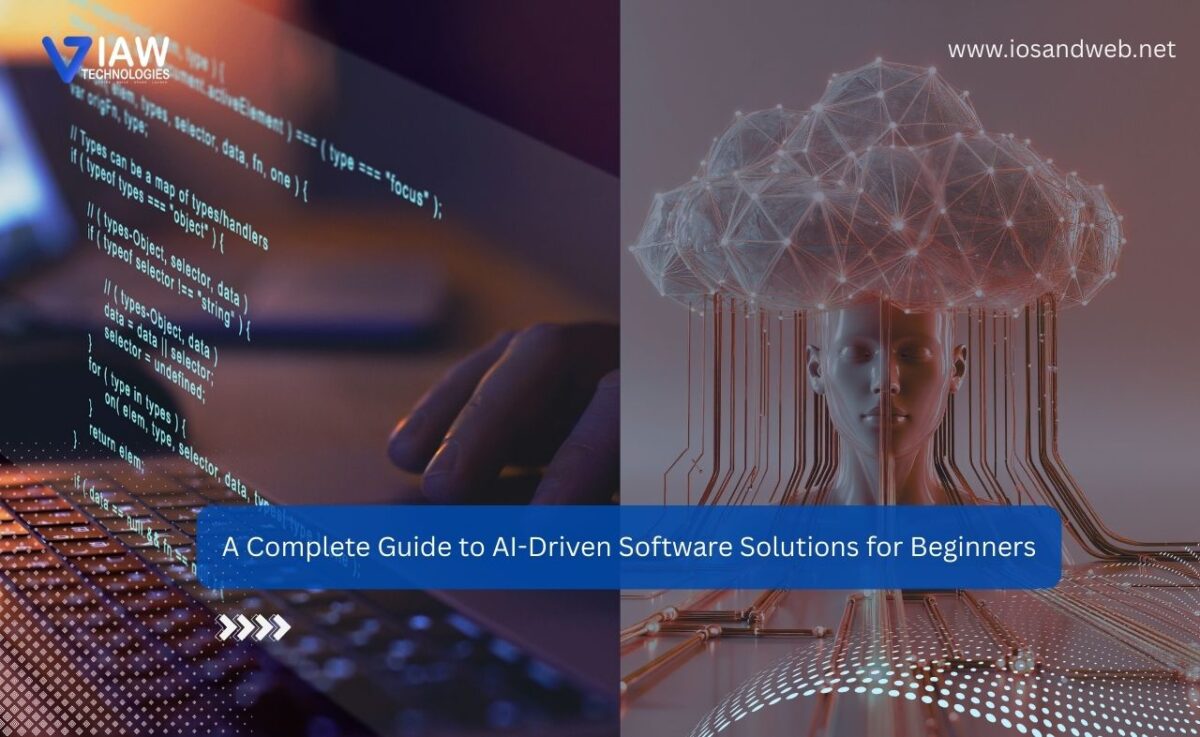
A Complete Guide to AI-Driven Software Solutions for Beginners

The technology landscaxpe is experiencing a seismic shift. Walk into any software development conference, scroll through tech Twitter, or eavesdrop on a startup pitch meeting, and you’ll hear the same buzzwords repeated: artificial intelligence, machine learning, automation. But here’s what most people won’t tell you—AI-driven software solutions aren’t just for tech giants with unlimited budgets anymore. They’re becoming the great equalizer, allowing beginners and small teams to build sophisticated applications that were once the exclusive domain of Fortune 500 companies.

If you’ve been curious about how AI is transforming software development but felt intimidated by the jargon and complexity, you’re in exactly the right place. This guide will walk you through everything you need to know about AI-driven software solutions, from the fundamental concepts to practical implementation strategies that you can start using today.

What Are AI-Driven Software Solutions, Really?

Let’s cut through the marketing hype. AI-driven software solutions are applications that leverage artificial intelligence technologies—like machine learning, natural language processing, or computer vision—to perform tasks that traditionally required human intelligence. Unlike traditional software that follows rigid, pre-programmed rules, AI-powered applications can learn from data, adapt to new situations, and improve their performance over time.

Think of it this way: traditional software is like following a recipe exactly. You add ingredients in a specific order, cook at a precise temperature, and get predictable results. AI-driven software, on the other hand, is like a chef who learns from thousands of recipes, understands flavor profiles, and can improvise based on available ingredients and diner preferences.

The Core Components of AI Software

Before diving deeper, it’s helpful to understand the building blocks that make AI-driven software solutions tick:

Machine Learning Algorithms: These are the mathematical models that enable software to learn patterns from data without explicit programming. When Netflix recommends shows you might like, that’s machine learning in action.

Data Processing Pipelines: AI systems need quality data to function effectively. These pipelines collect, clean, and prepare data for analysis—think of them as the digestive system of AI applications.

Neural Networks: Inspired by the human brain, these interconnected layers of algorithms excel at recognizing complex patterns in images, text, and other data types.

Natural Language Processing (NLP): This technology allows software to understand and generate human language, powering everything from chatbots to content generation tools.

Why Should Beginners Care About AI-Driven Software?

You might be wondering: “I’m just starting out in software development—isn’t AI way too advanced for me?” That’s exactly the mindset that could leave you behind. Here’s the reality: the barrier to entry for AI-driven software solutions has never been lower.

The Democratization of AI Technology

Five years ago, building an AI-powered application required a PhD in computer science, access to massive computing infrastructure, and months of development time. Today, platforms like TensorFlow, PyTorch, and cloud-based AI services from Google, Amazon, and Microsoft have made it possible for beginners to integrate sophisticated AI capabilities into their projects within hours.

Consider these compelling reasons to explore AI as a beginner:

Market Demand: Companies across every industry are desperately seeking professionals who understand AI integration. Learning these skills now positions you for career opportunities that didn’t exist a decade ago.

Competitive Advantage: Whether you’re building a startup or working on side projects, incorporating AI features can differentiate your work from competitors who rely solely on traditional approaches.

Problem-Solving Power: AI opens doors to solving problems that were previously unsolvable with conventional programming—from predicting customer behavior to automating complex decision-making processes.

Automation of Tedious Tasks: One of the most immediate benefits of AI-driven software solutions is their ability to handle repetitive, time-consuming tasks, freeing you to focus on creative problem-solving.

Types of AI-Driven Software Solutions You Should Know

The world of AI software is vast, but for beginners, it helps to understand the main categories and their practical applications. Let’s explore the most accessible and impactful types.

1. Chatbots and Virtual Assistants

These conversational AI applications have become ubiquitous on websites, messaging platforms, and mobile apps. They use natural language processing to understand user queries and provide relevant responses.

Beginner-Friendly Platforms: Dialogflow, Microsoft Bot Framework, and Rasa offer intuitive interfaces for building chatbots without extensive coding knowledge. You can create a functional customer service bot in an afternoon.

Real-World Applications: Customer support automation, appointment scheduling, FAQ handling, and lead generation. E-commerce sites use chatbots to guide customers through product selections, while healthcare providers deploy them for symptom checking and appointment reminders.

2. Predictive Analytics Tools

These AI-driven software solutions analyze historical data to forecast future trends, behaviors, and outcomes. They’re incredibly valuable for business intelligence and decision-making.

How They Work: Machine learning algorithms identify patterns in your data—sales figures, website traffic, customer behavior—and project likely future scenarios based on those patterns.

Practical Uses: Sales forecasting, inventory management, customer churn prediction, and fraud detection. Even small businesses can use tools like Google Analytics with AI features or platforms like Tableau to gain predictive insights.

3. Computer Vision Applications

Computer vision enables software to interpret and understand visual information from the world—essentially giving applications the power of sight.

Beginner Entry Points: Cloud-based APIs from Google Cloud Vision, Amazon Rekognition, or Azure Computer Vision allow you to add image recognition capabilities to your applications without building models from scratch.

Common Applications: Facial recognition for security systems, quality control in manufacturing, medical image analysis, augmented reality filters, and autonomous vehicle navigation.

4. Recommendation Systems

Ever wondered how Spotify knows exactly what song you want to hear next? That’s the magic of recommendation engines—AI-driven software solutions that suggest products, content, or actions based on user behavior and preferences.

Implementation Approaches: Collaborative filtering (recommending based on similar users), content-based filtering (recommending similar items), or hybrid systems that combine multiple approaches.

Business Impact: Amazon attributes 35% of its revenue to its recommendation engine. For beginners, platforms like Recombee and AWS Personalize make it relatively simple to add recommendation features to your applications.

Getting Started: Your First Steps Into AI Development

Feeling ready to dive in? Here’s a practical roadmap for beginners who want to work with AI-driven software solutions without getting overwhelmed.

Step 1: Build Your Foundation

Before touching AI-specific tools, ensure you’re comfortable with these fundamentals:

Programming Basics: Python is the undisputed king of AI development, with extensive libraries and community support. If you’re completely new to programming, invest 2-3 months learning Python basics—variables, loops, functions, and object-oriented programming.

Statistics and Probability: You don’t need a mathematics degree, but understanding concepts like mean, median, standard deviation, and probability distributions will help you grasp how AI algorithms make decisions.

Data Handling Skills: Learn to work with libraries like Pandas for data manipulation and NumPy for numerical operations. Most AI projects spend 80% of their time on data preparation, so these skills are invaluable.

Step 2: Choose Your Learning Path

The AI field is broad, so pick a specialization that aligns with your interests:

Natural Language Processing: If you’re fascinated by language and communication, explore libraries like spaCy, NLTK, or Hugging Face Transformers. Build text classifiers, sentiment analyzers, or simple chatbots.

Computer Vision: If visual problems intrigue you, start with OpenCV for image processing and progress to TensorFlow or PyTorch for deep learning-based vision tasks.

Predictive Modeling: If you’re business-minded, focus on scikit-learn for building machine learning models that forecast outcomes and classify data.

Step 3: Leverage Pre-Built Solutions

Here’s a secret that will accelerate your journey: you don’t need to build everything from scratch. The ecosystem of AI-driven software solutions includes numerous pre-trained models and APIs that you can integrate directly into your applications.

Cloud AI Services: Google Cloud AI, AWS AI Services, and Azure Cognitive Services offer ready-to-use capabilities for text analysis, image recognition, speech processing, and more. These services handle the complex AI infrastructure while you focus on application logic.

Open-Source Pre-Trained Models: Hugging Face hosts thousands of pre-trained models for various tasks. Need a language translation feature? There’s a model for that. Want to classify images? Download a pre-trained ResNet or EfficientNet model and fine-tune it for your specific use case.

Low-Code AI Platforms: Tools like Google AutoML, Microsoft Azure ML Studio, and IBM Watson Studio provide visual interfaces for building machine learning models without extensive coding. They’re perfect for beginners who want to experiment and learn.

Common Challenges and How to Overcome Them

Let’s be honest—working with AI-driven software solutions comes with challenges, especially for beginners. Anticipating these obstacles can help you navigate them more effectively.

The Data Quality Problem

AI systems are only as good as the data they’re trained on. Poor quality data leads to unreliable predictions and flawed insights.

Solution: Start small with clean, well-labeled datasets. Platforms like Kaggle offer thousands of curated datasets perfect for learning. As you progress, develop strong data cleaning habits—removing duplicates, handling missing values, and validating data integrity.

The Complexity Overwhelm

The AI field moves at breakneck speed, with new techniques, frameworks, and best practices emerging constantly. This can feel overwhelming.

Solution: Focus on fundamentals rather than chasing every new trend. Master one framework thoroughly before jumping to the next. Join communities like r/MachineLearning or AI Discord servers where you can ask questions and learn from others’ experiences.

The Black Box Dilemma

Many AI models, particularly deep neural networks, operate as “black boxes”—they produce accurate results, but it’s difficult to understand exactly how they reached those conclusions.

Solution: Start with interpretable models like decision trees or linear regression. As you build confidence, explore explainability tools like SHAP or LIME that help visualize how complex models make decisions.

Resource Constraints

Training sophisticated AI models can require significant computational power, which might seem inaccessible to beginners.

Solution: Utilize free cloud computing resources. Google Colab offers free GPU access, perfect for learning and small projects. Kaggle provides free computing kernels. Start with smaller models and datasets, then scale as your needs and resources grow.

Best Practices for Building AI-Driven Applications

As you begin creating your own AI-driven software solutions, keep these principles in mind to ensure success.

Start With Clear Objectives

Define exactly what problem you’re solving before writing a single line of code. AI isn’t magic—it’s a tool for specific purposes. Ask yourself: What decision or prediction does this system need to make? What would success look like? How will users benefit?

Embrace Iterative Development

Build the simplest version first. Get it working, evaluate performance, then gradually add complexity. This approach, called the “minimum viable model,” helps you learn faster and avoid wasting time on unnecessary features.

Prioritize Ethics and Fairness

AI systems can inadvertently perpetuate biases present in training data. Even as a beginner, develop awareness around ethical considerations. Ensure diverse, representative datasets and regularly test your systems for unfair outcomes across different user groups.

Document Everything

Keep detailed notes about your data sources, model architectures, hyperparameters, and results. This practice will save you countless hours when debugging or trying to reproduce results weeks later.

The Future Is Yours to Build

The journey into AI-driven software solutions might seem daunting, but remember: every expert was once a beginner. The tools, resources, and community support available today make this the perfect time to start exploring artificial intelligence.

Whether you’re looking to enhance your career prospects, build innovative products, or simply satisfy your curiosity about how modern technology works, AI offers endless opportunities for learning and creation. The key is to start small, stay consistent, and embrace the learning process—mistakes and all.

The software you build tomorrow could solve problems we haven’t even identified today. That’s the real power of AI-driven development: it doesn’t just automate existing processes; it enables entirely new possibilities. So pick a project, choose a tool, and write your first line of AI-enhanced code. The future of software is waiting for you to help shape it.

Ready to transform from curious observer to AI builder? The journey begins with a single step—and this guide has given you the roadmap to take it.

Categories
Blog

Top 10 Benefits of Using SaaS Product Development Services for Your Startup

But let’s be real: as much fun as it is to start a business, it’s also phenomenally difficult. From managing minimal resources to acquiring the right talent and actually getting the product to market before your competitors do, a startup founder has a lot on their plate. This is where SaaS product development services come in-a game changer for the modern-day entrepreneur.

Be it a startup or an idea to initiate one, one must have come across something as important as Software as a Service solutions. But what if one leverages professional SaaS product development services to take the journey from an idea to a profitable business? This comprehensive guide will look at the top 10 benefits that make these services invaluable assets for startups that want to scale efficiently and sustainably.

What Are SaaS Product Development Services?

Let me elaborate for clarity’s sake: SaaS product development services mean specialized offerings from development agencies or teams that support businesses in building, launching, and maintaining cloud-based software applications. Unlike traditional software, which users install on their computers, SaaS products are accessible with a web browser and hosted on cloud infrastructures.

These services normally encompass everything from initial concept validation and UI/UX design through full-stack development, testing, deployment, and ongoing maintenance. Examples include companies like Salesforce, Slack, or Zoom-all SaaS products that revolutionized their respective industries by delivering value through the cloud.

Now, let’s discuss why your startup seriously needs to consider partnering with experts in this field:

1. Significantly Lower Initial Investment and Development Costs

Probably the most compelling reason why startups choose SaaS product development services is how the overall costs are drastically reduced compared with building an in-house team from scratch. When you’re bootstrapping or working with limited seed funding, every dollar counts.

Why It’s Cost-Effective

Traditional development requires a substantial upfront investment in infrastructure, servers, licensing, and a full team of developers, designers, project managers, and QA specialists. With SaaS development services, you will be renting the expertise and infrastructure rather than buying them.

With development agencies, the tools, frameworks, and experienced professionals are already invested in and able to hit the road running. They work on either a project or retainer basis, meaning you’re not paying for full-time salaries, benefits, office space, and equipment for a permanent team. You pay for exactly what you need, exactly when you need it.

Besides, there’s the added advantage of SaaS architecture in that the cloud-based applications will not require expensive physical servers or maintenance costs. Your product lives in the cloud, leveraging platforms like AWS, Google Cloud, or Azure, which operate on pay-as-you-go models that scale with your growth.

2. Faster Time-to-Market for Your Product

Everything in the world of startups is about speed. The longer it takes to launch your product, the more capital you burn and the greater the risk that a competitor will beat you to market. SaaS product development services are specifically designed to quicken this timeline.

How They Speed Things Up

With established workflows and prebuilt components, experienced SaaS development teams apply proven methodologies like Agile and DevOps to streamline the entire development process. They have built comparable products before and know exactly which shortcuts to take and which pitfalls to avoid.

Many agencies use modern frameworks and libraries that allow for rapid prototyping and development. Without having to build everything from scratch, they can choose from existing technologies and adapt them to suit your needs. This may cut months off your development time and get your MVP into users’ hands sooner.

For a startup, this speed advantage isn’t just a convenience; it can be the difference between successfully locking in that next round of funding versus running out of runway.

3. Access to Specialized Expertise and State-of-the-Art Technologies

Unless you have unlimited capital, it is simply unrealistic to hire a complete team of specialists that include front-end developers, back-end engineers, cloud architects, DevOps experts, UI/UX designers, and security specialists in a startup. That’s where SaaS product development services come into play, offering immense value.

The Expertise Advantage

The professional SaaS development agencies include teams of specialists who regularly update their knowledge in state-of-the-art technologies, frameworks, and best practices. They bring collective experience from working on dozens or even hundreds of projects across different industries.

Need machine learning integration? They have data scientists for it. Want to build a mobile-responsive application with real-time features? Their front-end specialists know which technologies to use. Concerned about security and compliance? Their architects understand GDPR, HIPAA, and other regulatory requirements.

This breadth of expertise would cost hundreds of thousands of dollars to assemble in-house, let alone the time and effort required to recruit, vet, and onboard these specialists. In its place, with a development service, you have access to this whole skill set right away, without the overhead.

4. Scalability Built into Your Product from Day One

Ultimately, one of the largest challenges with startups is in building something that works for 100 users but breaks when suddenly you have 10,000 users. Poor architecture decisions made early in development create technical debt that haunts you for years. Professional SaaS product development services ensure your product is built to scale from the ground up.

Planning for Growth

Experienced SaaS developers design solutions with scalability as an integral principle. Modern approaches to microservices, containerization, load balancing, and more let your infrastructure scale seamlessly along with your user base.

What that means is that when that dream scenario happens-your product goes viral or you land an enterprise client-your platform will not crash under the pressure but will scale up through auto-scaling, maintaining performance and user experience even when demand spikes.

Building scalability into your product right from the start is much less expensive than trying to retrofit it later once you are already dealing with performance issues and losing customers due to downtime.

5. Focus on Your Core Business While Experts Handle Development

As the founder of a startup, the only greatest resource you have is time. Any moments that are spent trying to puzzle out technical difficulties or trying to manage developers are moments you are not spending acquiring customers, fundraising, or engaging in strategic partnerships or business development.

The Focus Benefit

Essentially, when you use SaaS product development services, you outsource the technical complexity to people who live and breathe software development. This leaves you to do what only you can do as a founder: build relationships, pitch investors, understand your market, and refine your business model.

You’re still involved in product development by way of the regular check-ins, sprint reviews, and key feature/priority decisions. You won’t, however, be up at 2 AM debugging code or trying to resolve a conflict between your developers and designers.

This division of labor is extremely powerful for startups, as founders can hold onto strategic oversight while specialists take over tactical execution.

6. Less Technical Risk & High Quality Assurance

Building software is risky, especially if you are not a technical founder or your in-house team is not versed in modern development practices. Bugs, security vulnerabilities, and architectural flaws can sink your startup before it even gets started. The services offered around SaaS product development considerably mitigate these risks.

Quality and Risk Management

Professional development agencies have instituted processes that ensure quality assurance, through code reviews, automated testing, security audits, and performance optimization. They follow industry standards and best practices that ensure your product is not just functional but robust, secure, and maintainable.

They also carry insurance, and many offer some kind of warranty or guarantee on their work. If something breaks or isn’t done to spec, they are contractually required to make the repair. When you hire individual developers or cobble a team together without processes, you bear all risk yourself.

Moreover, experienced agencies can identify potential problems before they become expensive disasters. They’ve seen what may go wrong and know how to prevent it from happening and save you from painful, costly mistakes.

7. Continuous Updates and Maintenance Support

Launching your product is actually just the beginning, not the end. Software requires periodic maintenance, security updates, bug fixes, and feature enhancements regularly to make sure it remains competitive and secure. Most of the SaaS product development services do include post-launch support that lets your product stay healthy and evolve with market demands.

Long-Term Partnership

Rather than developing your product and then disappearing, quality SaaS development partners stick around through maintenance contracts or retainer agreements. They monitor the performance of your application, apply security patches, optimize code, and deploy new features as your business grows.

This relationship is continuous, hence very valuable for startups that cannot afford a full-time development team. You get the benefits of continuous improvement without the overhead of permanent staff.

Plus, with every evolution of your product and each new feature or integration you develop, your development partner already understands your codebase and is able to implement changes more efficiently than a new team would, starting from scratch.

8. Better Security and Compliance from the Start

In the modern-day digital world, data breaches and security vulnerabilities can take down a startup overnight. Customers and investors alike ask for robust security measures while regulatory frameworks involving GDPR, CCPA, and other industry-specific requirements drive the demand further. Professional SaaS product development services incorporate security into your product architecture right from day one.

Security-First Approach

Perhaps the best thing about experienced SaaS developers is their knowledge of security best practices that include encryption, secure authentication, periodic vulnerability assessments, and observance of data protection regulations. They implement multi-layered security approaches which will protect both your business and customers.

With startups entering regulated industries, such as healthcare, finance, and education, compliance is absolutely unavoidable. Development agencies specializing in such industries know precisely what to do to make the product compliant with SOC 2, HIPAA compliance, or PCI DSS standards.

It will be exponentially harder and more expensive to try to bolt on security measures after a product is built than it would have been to incorporate them in the first place. This is one area where cutting corners can prove catastrophic, making professional services a wise investment.

9. Ability to pivot, change fast

Startup wisdom dictates that pivoting isn’t just common, it’s expected. Your early product idea is very likely to shift significantly with customer feedback, further market research, or competitive pressures. SaaS product development services give you the agility you need to make these changes without starting over from scratch.

Agile Adoption

Professional development teams work iteratively in sprints, meaning you are able to continuously test features, receive feedback, and iterate on your roadmap. If you find out that users want Feature X and not Feature Y, or that your target market is different than you thought, a good development partner will be able to quickly change course.

This kind of flexibility is far more difficult to achieve through traditional waterfall development approaches or even with in-house teams, which may be resistant to change or missing the diverse skillsets needed to support major pivots.

The modular architecture that experienced SaaS developers build also allows features to be more easily added, removed, or changed without disrupting the entire system. This architectural flexibility is a major competitive advantage in the fast-moving startup environment.

10. Proven Methodologies and Best Practices

Finally, SaaS product development services bring proven methodologies that have been refined over countless projects. They do not have to figure out what works through trial and error using your budget—they already know.

Process Maturity

Professional agencies manage projects within established frameworks like Agile, Scrum, or Kanban. They maintain regular sprint planning, daily stand-ups, retrospectives, and demonstrations to keep everyone aligned and the project moving forward.

They also follow coding standards, documentation practices, and version control systems that guarantee your code base stays clean, organized, and maintainable. If you ever have to transition development to another team or bring it in-house, well-documented code following industry standards will make that transition much easier.

These are methodologies not just for organization, but for maximizing value delivery, reducing waste, and ensuring that your investment is going into a product customers will love and that will solve their actual problems.

Making the Decision: Is It Right for Your Startup?

While SaaS product development services do indeed come with a number of key benefits, they are most certainly not the only option available. A lot of technical founders would much rather build everything in-house, and some will have co-founders or early employees who are extremely strong technically.

But for the majority of startups, especially non-technical founders, smaller budgets, or tight timelines, professional SaaS development services mark the most pragmatic path to success. They enable you to compete with well-funded competitors, tap the best expertise in the world, and maintain focus on what makes your business different, rather than getting lost in technical complexity.

The key is in selecting the right development partner. Look for agencies with track records in your industry that communicate transparently and have a vested interest in your success, not just in completing a project. Check their portfolio, speak with past clients, and make sure their values and working style align with yours.

Conclusion

The field of startups has never been as competitive as it is now. Usually, the ones that end up succeeding make smart, strategic choices about where they invest their scant resources. You are not merely outsourcing code when you take advantage of SaaS product development services; you are extending your team with a strategic partner that will help you move more quickly toward product-market fit, reduce technical risk, and give you the time to create a sustainable business.

From cost savings and faster time-to-market to access to specialized expertise and built-in scalability, the benefits are very sound and can be measured. In a setting where 90% of the startups fail, often for reasons that could have been prevented, working with professionals who have experience and know how to avoid common pitfalls might prove to be one of the smartest investments you will ever make.

Whether one is at the ideation or MVP development phase, SaaS product development services can transform this daunting technical journey into an exciting opportunity for materializing one’s vision in the most effective and efficient way.

Categories
Blog

Why Your Business Needs Cybersecurity Software Services Now

In today’s digital-first business environment, cybersecurity is no longer optional—it has become an essential part of running a successful business. Whether you are a large enterprise or an emerging startup, most organizations depend on a variety of digital systems (cloud services, remote working environments, and connected devices) to be able to run their operations effectively. Although these technologies enhance productivity and innovation, they also provide advancement opportunities for cybercriminals. Phishing attacks, ransomware attacks, and complex data breaches are just some of the many security challenges faced by businesses on a daily basis.

This is where Cybersecurity Software Services become very important. These services bring together advanced security technologies, along with continuous monitoring and expert threat handling, to protect a business’s data, its applications, and its networks from cyber threats that are always changing. Instead of simply reacting once an attack happens, today’s cybersecurity efforts focus on stopping incidents before they occur, spotting suspicious activity early on, and then responding quickly so any damage is kept to a minimum.

Whether you run a startup, a growing enterprise, or even a global organization, putting money into reliable cybersecurity services for your business helps to make your security stronger, ensures you meet regulatory requirements, and also helps keep customer trust. The right cybersecurity strategy also supports business operations by cutting down on downtime, securing sensitive information, and protecting important digital assets, important things like that.

In this guide, we explore how business cybersecurity solutions help organizations defend against today’s cyber risks. You’ll also learn about the essential features every security platform should offer and why proactive cybersecurity has become a business priority.

Why Cybersecurity Software Services Matter More Than Ever

Businesses increasingly rely on cloud applications, online transactions, remote collaboration tools, and digital customer interactions. While digital transformation creates new growth opportunities, it also expands the attack surface for cybercriminals to rely on cloud applications more and more, and also online transactions. Plus, there is all this remote collaboration, and digital ways to talk to customers. When a business goes through this digital transformation, it does open up opportunities for them to grow. But it also means there is a larger area, a larger attack surface, that cybercriminals are looking at.

This happens because these smaller businesses generally have fewer security resources available, and often their protection systems are just not up-to-date. Just one cyberattack that gets through can cause a lot of problems. You can have financial losses, things can stop working, there might be legal trouble, and also lasting damage to your reputation.

Modern Cybersecurity Software Services, these kinds of solutions, provide several layers of defense. They are always monitoring systems, and they look for behavior that seems suspicious. The idea is to stop attacks before they can spread throughout the organization.

Key benefits include:

  • They have less exposure to the changing cyber threats out there.
  • Their strategies for preventing data breaches become much stronger.
  • There is continuous detection of threats and ongoing monitoring.
  • When a security event happens, the incident response is much faster.
  • It can help improve how they comply with different industry regulations.
  • Provides better protection for workforces that are remote or hybrid.
  • And overall, it leads to better customer confidence and a stronger business reputation.

Organizations cannot just rely on traditional antivirus software anymore. Instead, they need intelligent security solutions. Solutions that can adapt to new attack techniques as they come up, and also adapt to changes in the business environment.

Common Cyber Threats Businesses Face Today

To build a really good cybersecurity strategy, a business needs to first understand how threats are changing these days. Attackers keep coming up with new ways to get in, using things like automation, artificial intelligence, and even social engineering to find weak spots that can be exploited.

Phishing Attacks

Phishing is still one of the most common ways criminals try to get at you. What happens is, cybercriminals will pretend to be some organization you would trust, sending emails, messages, or making fake websites. Their goal is to steal passwords, financial information, or even important business data.

The more advanced cybersecurity systems use things like email filtering, look at user behavior, and even AI to spot communications that look suspicious. This helps catch them before anyone actually falls for it.

Ransomware Attacks

Then there are ransomware attacks. This is where your business files get encrypted, and the attackers demand money to give you access back. These kinds of attacks can stop an entire business from operating, mess up customer services pretty badly, and end up costing a lot of money.

Modern security platforms work to lower these ransomware risks. They do this by constantly watching what is happening, protecting endpoints, and making sure automated backups are there. Also, they have ways to respond quickly when an incident occurs.

Malware Protection

Malware includes viruses, spyware, trojans, worms, and other malicious software designed to damage systems or steal confidential information. A robust malware protection system will constantly scan devices, look for any sort of malicious behavior, and then try to block that harmful software before it has a chance to mess up business operations.

Insider Threats

It is important to remember that not all security risks come from outside a company. Sometimes, employees or contractors can, by accident or on purpose, reveal sensitive information. Even user accounts that have been compromised can be a source of trouble.

Identity verification, user activity monitoring, and Identity and Access Management help organizations reduce insider security risks while maintaining productivity.

Modern Cybersecurity Software Services: What You Need To Know

When we talk about effective modern cybersecurity software services, it is not just about having one tool. It is more about putting several different technologies together to create a unified security architecture, rather than depending on a single thing.

One important aspect is advanced threat detection. This capability uses things like artificial intelligence, machine learning, and behavioral analytics. The idea is to find activity that looks unusual across all the business systems.

Instead of just waiting for a known virus signature, like in the old days, today’s solutions can recognize suspicious patterns. These patterns might show unauthorized access or an attack that is already happening. This really lets security teams react a lot quicker.

Endpoint protection has become extremely critical. People are working from all sorts of places now—offices, their homes, and using mobile devices constantly. So, securing these endpoints, as they are called, is more important than it has ever been before. This protection covers laptops, desktops, smartphones, tablets, and even servers. It defends against things like malware, ransomware, and any kind of unauthorized access. It does this without slowing down an employee’s work, which is important for productivity.

Then there is firewall security. This really acts like the first line of defense. It watches all the network traffic that comes in and goes out. Modern firewalls are not just simply filtering traffic, either. They actually check applications, they can find behavior that is not normal, and they block connections that are malicious. Also, they enforce the security policies that an organization has put in place across both their on-premises and cloud setups.

Incident response is another key part. Even if you have really strong things in place to prevent problems, security incidents can still happen. Having a fast response makes a big difference. It really cuts down on how much downtime you have and limits the money lost, and also damage to a company’s reputation.

How Cybersecurity Services for Business Support Long-Term Growth 

Cybersecurity has ceased to be considered a cost associated with IT services, but is seen as a strategic investment for any business. Companies whose priority is security will be better able to innovate, grow, and gain customer trust.

Today’s modern business cybersecurity solutions enable companies to defend intellectual property, customer data, finance databases, and operational systems while supporting business continuity. When integrated with DevOps Automation, organizations can identify security vulnerabilities earlier in the software delivery lifecycle and strengthen overall operational resilience. Such solutions make it possible for a company to embrace the cloud and working from a distance with greater ease.

As businesses grow, their security requirements become more complex. Organizations investing in Custom Software Development Services should integrate cybersecurity into every stage of development to reduce vulnerabilities and ensure long-term protection. Modern security platforms allow visibility into networks, cloud operations, and endpoints of a company, making it easier for the company’s IT department to manage risks.

Furthermore, the implementation of preemptive security measures helps prevent unscheduled downtime, minimizes expenses of recovering from cyber attacks, and enhances resilience to such attacks.

An eCommerce business processing thousands of online transactions every day can use endpoint protection, firewall security, and real-time threat detection to prevent unauthorized access and protect customer payment information. Likewise, healthcare organizations rely on Identity and Access Management and Zero Trust Security to secure patient records while meeting strict regulatory requirements. These real-world examples demonstrate how cybersecurity software services support different industries.

How Managed Cybersecurity Services Strengthen Cybersecurity Services for Business 

Since cyber attacks are becoming increasingly advanced, it has been hard for organizations to keep track of the threats to their systems on a continuous basis. Creating a dedicated cybersecurity team within an organization requires huge investments of time and money. That is the reason why most businesses go for managed cybersecurity solutions to ensure constant coverage.

Some of the benefits of managed cybersecurity include:

  • Continuous monitoring of cybersecurity
  • Detection and containment of threats in less time
  • Up-to-date security and patches
  • Guidance on new cyber risks
  • Lower costs of operation when compared to hiring a large team internally
  • Scalability with the growing needs of the business

In case an organization does not have enough resources in its IT department, then managed cybersecurity solutions are a good choice for them.

The Role of Zero Trust Security in Modern Businesses

Classic security models presupposed that all individuals present within the corporate network can be trusted. Nonetheless, the current reality, where work is being performed in a distributed manner, where the use of cloud applications is prevalent, and where most employees work remotely, necessitates a different approach.

That is where the need for Zero Trust Security arises.

The main principle of Zero Trust Security can be formulated in one phrase:

“Do not trust, but verify.”

Any user, device, or application should undergo an authentication procedure prior to accessing any resources of the company. The verification continues to happen even with those who are already logged on to the corporate network.

Zero Trust Security framework may involve such elements as:

Multi-Factor Authentication (MFA)

In order to prove its identity, a user needs to apply several forms of authentication, thus making hacking much harder.

Identity and Access Management

Effective identification and access management allow an employee to use only those systems and data which are required in his or her job. It helps prevent insiders from misbehavior and restricts consequences of stolen credentials.

Least Privilege Access

Employees get only the necessary permissions to do their job.

Continuous Monitoring

The security systems continuously monitor user behavior, logging activities, and system status to prevent any unusual actions from becoming a threat.

Zero Trust is a great security practice that not only makes an environment more secure but also suitable for modern hybrid working environments.

Cloud Infrastructure Security: Protecting Business Data in the Cloud

Effective cloud infrastructure security guards cloud-based environments from unauthorized access, data leaks, and cyber attacks while maintaining business continuity.

Today’s cloud security approach includes:

  • Information encryption
  • Secure configuration of applications
  • Ongoing identification of vulnerabilities
  • Automated security monitoring
  • Security backup and disaster recovery
  • Monitoring for regulatory compliance

Enterprises with several clouds in place will gain the advantage of a unified view, allowing them to have visibility and manage security risks within the whole digital ecosystem through a single console.

With proper security measures in place, companies will feel comfortable taking advantage of cloud computing solutions.

Best Practices for Creating a Secure Business Network

Security can be achieved not only through technological advancements but also by implementing sound security policies and raising awareness among employees to foster a strong security culture.

Some of the best practices are:

  • Keep Software Updated
  • Employee Training
  • Strengthening Password Policy
  • Performing Regular Security Audits
  • Network Activity Monitoring

This approach contributes to creating a secure business network that would ensure sustainable business development.

How to Choose the Right Cybersecurity Software Services Provider

The choice of security partners is as vital as that of the appropriate technology. Each company has particular needs regarding security, which depend on its size, type, infrastructure, and compliance.

While reviewing Cybersecurity Software Services, look for those that provide:

  • Security assessment services
  • Threat detection services
  • Endpoint protection services
  • Firewall security services
  • Cloud security services
  • Identity and Access Management services
  • Incident response services
  • Compliance services
  • 24/7 monitoring and support
  • Scalable solutions for further growth

An appropriate security partner should be capable of not only handling the existing issues but also providing recommendations and improving security constantly.

Future Trends in Cybersecurity Software Services

Cybersecurity continues to evolve alongside rapidly changing technologies and emerging cyber threats. Organizations need to prepare for more sophisticated techniques used by criminals while implementing better technologies when it comes to cybersecurity.

There are several trends that will affect the development of cybersecurity in the future:

  • AI-based threat detection
  • Automation in security operations
  • Risk prediction and analysis
  • Extended Detection and Response (XDR)
  • Secure Access Service Edge (SASE)
  • Passwordless authentication
  • AI-based behavioral analytics
  • Advanced cloud-native security solutions
  • More automation in incident response

Organizations that implement modern cybersecurity technologies now will be better prepared for future attacks.

Frequently Asked Questions (FAQs)

What are Cybersecurity Software Services?

Cybersecurity Software Services are complete security suites that can protect organizations from various types of cyber attacks through threat detection, protection against malware, firewall security, endpoint security, monitoring, and incident response.

Why do businesses need cybersecurity services?

Businesses work with valuable customer data, financial transactions, and other operational data. Cybersecurity services help prevent data breaches, reduce downtime, remain compliant, and establish a better relationship with customers.

How does traditional antivirus software differ from modern cybersecurity software?

While traditional antivirus software is focused on detecting malware, modern cybersecurity platforms use artificial intelligence, behavioral analysis, threat intelligence, and monitoring to detect known as well as new threats.

What are managed cybersecurity services?

Managed cybersecurity services offer monitoring, threat detection, vulnerability management, incident response, and many other security-related services without needing to hire an in-house security team.

How does Zero Trust Security enhance protection?

With Zero Trust Security, user identification, device identification, and application identification are performed on a continual basis in order to reduce the risks of unauthorized access and other insider threats.

How often should businesses review their cybersecurity strategy?

Organizations should review their cybersecurity strategy at least once a year, or whenever there are significant infrastructure changes, regulatory updates, or security incidents. Continuous monitoring and regular risk assessments are also recommended.

An organization should conduct an assessment of its cybersecurity strategy on a yearly basis and whenever there are any significant changes in the infrastructure of the company, regulations, or any important security events. However, it is always better to monitor continuously and perform regular risk assessments as well.

Conclusion

Through cybersecurity services for business, business cybersecurity solutions, and managed cybersecurity services, companies receive continuous monitoring, intelligent threat detection, improved data breach prevention, and faster incident response. Partnering with an experienced Software Development Company also helps organizations build secure digital solutions with security integrated from the very beginning. intelligent threat detection, improved data breach prevention, and quicker incident response capabilities. In addition to Zero Trust Security, cloud infrastructure security, firewall security, endpoint protection, and Identity and Access Management, these services help in building a security architecture that supports business development.

As cyber threats continue to evolve, businesses that invest in modern cybersecurity technologies today will be better prepared to prevent attacks, protect sensitive data, maintain customer trust, and support long-term business growth. A proactive cybersecurity strategy is no longer optional—it is a critical business investment.

Categories
Blog

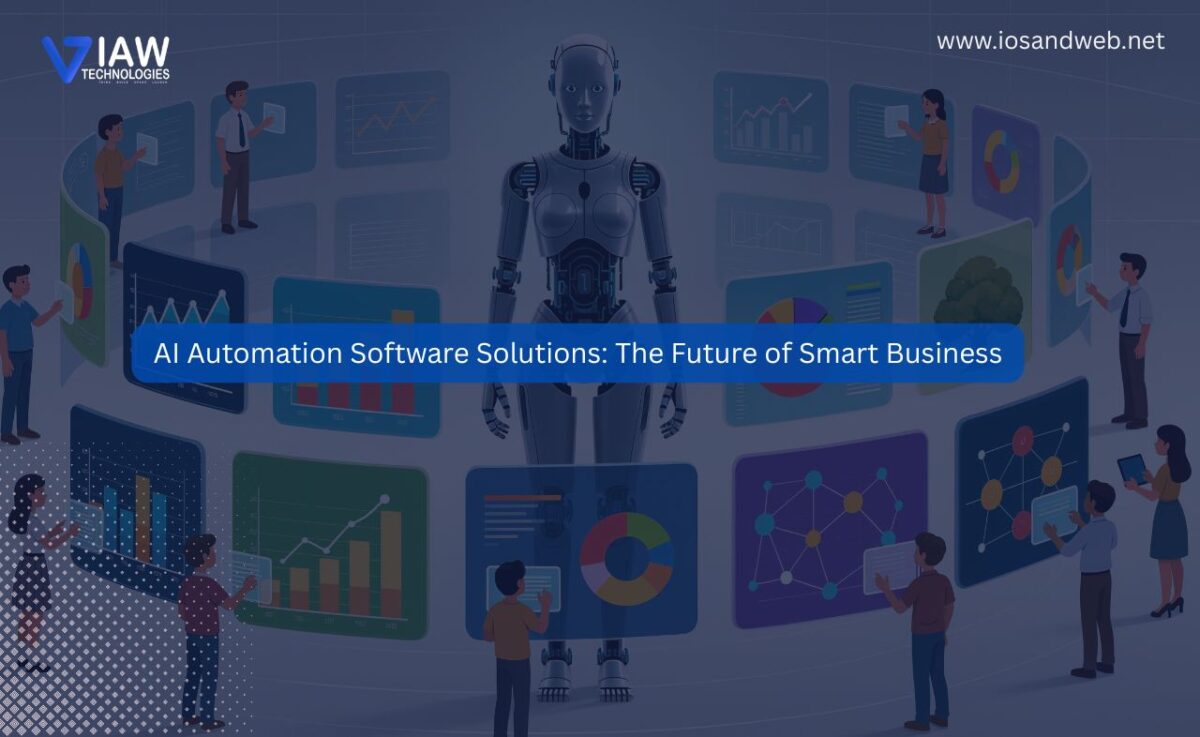
AI Automation Software Solutions: The Future of Smart Business

The business landscape is evolving at breakneck speed, and companies that fail to adapt risk being left behind. At the forefront of this transformation are AI automation software solutions—intelligent systems that are revolutionizing how businesses operate, compete, and grow. But what exactly makes these solutions so transformative, and why should your business care?

In this comprehensive guide, we’ll explore everything you need to know about AI automation software solutions, from their core capabilities to implementation strategies that can help your business thrive in an increasingly digital world.

What Are AI Automation Software Solutions?

AI automation software solutions are intelligent systems that combine artificial intelligence with automation technology to perform tasks that traditionally required human intervention. Unlike simple automation tools that follow pre-programmed rules, these solutions leverage machine learning, natural language processing, and cognitive computing to make decisions, adapt to new situations, and continuously improve their performance.

Think of them as digital employees who never sleep, never take breaks, and get smarter with every task they complete. They can handle everything from responding to customer inquiries and processing invoices to analyzing complex data patterns and making strategic recommendations.

The Evolution from Simple Automation to AI-Powered Intelligence

Traditional automation has been around for decades, handling repetitive, rule-based tasks. However, AI automation software solutions represent a quantum leap forward. They don’t just execute commands—they understand context, learn from experience, and can handle nuanced situations that would stump conventional automation tools.

This evolution means businesses can now automate far more complex processes, freeing human workers to focus on creative, strategic, and relationship-building activities that machines can’t replicate.

Why Businesses Are Embracing AI Automation Software Solutions

Unprecedented Efficiency and Productivity Gains

The primary driver behind the adoption of AI automation software solutions is their ability to dramatically boost operational efficiency. These systems can process vast amounts of data in seconds, complete tasks 24/7 without fatigue, and eliminate the bottlenecks that plague manual workflows.

Research shows that businesses implementing AI automation see productivity increases of 20-40% in automated departments. Tasks that once took hours can now be completed in minutes, and processes that required multiple team members can often be handled by a single automated workflow.

Cost Reduction Without Compromising Quality

While the initial investment in AI automation software solutions might seem significant, the long-term cost savings are substantial. By automating routine tasks, businesses reduce labor costs, minimize errors that lead to expensive corrections, and optimize resource allocation.

More importantly, these solutions scale effortlessly. Unlike hiring additional staff to handle increased workload, AI automation can manage growing demands without proportional cost increases. This scalability is particularly valuable for businesses experiencing rapid growth or seasonal fluctuations.

Enhanced Accuracy and Consistency

Human error is inevitable, especially in repetitive tasks. AI automation software solutions eliminate this variability, ensuring that processes are executed with consistent accuracy every single time. Whether it’s data entry, invoice processing, or quality control checks, automated systems maintain the same high standards without the fatigue or distraction that affects human workers.

Data-Driven Decision Making

Perhaps the most transformative aspect of AI automation software solutions is their ability to collect, analyze, and derive insights from massive datasets. These systems can identify patterns, predict trends, and provide actionable recommendations that would be impossible for humans to uncover manually.

This capability transforms business intelligence from reactive reporting to proactive strategic planning, giving companies a significant competitive advantage in their markets.

Key Applications of AI Automation Software Solutions

Customer Service and Support Automation

AI-powered chatbots and virtual assistants are revolutionizing customer service. These systems can handle thousands of inquiries simultaneously, provide instant responses 24/7, and escalate complex issues to human agents only when necessary. The result? Improved customer satisfaction, reduced support costs, and faster resolution times.

Modern customer service automation goes beyond simple FAQ responses. Today’s AI automation software solutions understand context, sentiment, and customer history, enabling them to provide personalized, empathetic support that rivals human interaction.

Marketing and Sales Automation

From lead scoring and email campaign optimization to predictive analytics and personalized content delivery, AI automation is transforming how businesses attract and convert customers. These solutions analyze customer behavior, segment audiences with precision, and deliver the right message to the right person at the right time.

Sales teams benefit from automated lead qualification, intelligent CRM updates, and predictive forecasting that helps them focus their efforts on the most promising opportunities.

Financial Operations and Accounting

AI automation software solutions excel at financial tasks that require accuracy and compliance. They can process invoices, reconcile accounts, detect fraudulent transactions, and generate financial reports with minimal human oversight. This not only reduces errors but also ensures regulatory compliance and provides real-time visibility into financial health.

Human Resources and Talent Management

From screening resumes and scheduling interviews to onboarding new employees and managing performance reviews, AI automation is streamlining HR operations. These systems can analyze candidate qualifications, predict employee turnover, and recommend personalized training programs based on individual career paths.

Supply Chain and Inventory Management

AI automation optimizes supply chain operations by predicting demand, automating reorder processes, optimizing routing, and identifying potential disruptions before they impact operations. This results in reduced carrying costs, minimized stockouts, and improved supplier relationships.

Implementing AI Automation Software Solutions: A Strategic Approach

Assessing Your Automation Readiness

Before diving into implementation, conduct a thorough assessment of your current processes. Identify repetitive, rule-based tasks that consume significant time and resources. Look for processes with high error rates or compliance requirements. These are your prime candidates for automation.

It’s equally important to evaluate your technical infrastructure and team capabilities. Successful implementation requires adequate data quality, system integration capabilities, and staff who understand how to work alongside automated systems.

Choosing the Right AI Automation Software Solutions

The market is flooded with automation tools, each claiming to be the best. When evaluating options, consider factors like:

  • Integration capabilities: Can the solution seamlessly connect with your existing systems?
  • Scalability: Will it grow with your business needs?
  • Ease of use: Can your team implement and manage it without extensive technical expertise?
  • Customization options: Does it adapt to your unique business processes?
  • Vendor support and community: Is there robust documentation and responsive customer service?

Starting Small and Scaling Strategically

The most successful AI automation implementations start with pilot projects—small-scale deployments that prove value before company-wide rollout. Choose a well-defined process with measurable outcomes for your initial automation project. This approach minimizes risk, builds organizational confidence, and provides valuable lessons for larger deployments.

Once you’ve demonstrated success, create a roadmap for expanding automation across departments and processes. Prioritize based on ROI potential, implementation complexity, and strategic business objectives.

Training and Change Management

Technology is only half the equation. The human element of AI automation implementation is equally critical. Invest in comprehensive training programs that help employees understand how automation will affect their roles and how to work effectively with automated systems.

Address concerns about job displacement honestly and proactively. Most successful implementations augment human capabilities rather than replace workers, allowing them to focus on higher-value activities that require creativity, emotional intelligence, and strategic thinking.

Overcoming Common Challenges in AI Automation Adoption

Data Quality and Availability Issues

AI automation software solutions are only as good as the data they process. Poor data quality—inconsistent formats, incomplete records, or outdated information—can severely limit automation effectiveness. Before implementation, invest in data cleansing and establish governance policies that maintain data integrity going forward.

Integration Complexity

Legacy systems and siloed data create integration headaches that can derail automation projects. Work with vendors who offer robust APIs and integration tools, and consider middleware solutions that bridge gaps between incompatible systems.

Security and Compliance Concerns

Automated systems that handle sensitive data must comply with regulations like GDPR, HIPAA, or industry-specific requirements. Ensure that your AI automation software solutions include appropriate security measures, audit trails, and compliance features. Regular security assessments and updates are essential to maintaining protection against evolving threats.

Managing Organizational Resistance

Change is difficult, and automation can trigger fears about job security and competence. Combat resistance through transparent communication, early involvement of affected stakeholders, and demonstrating quick wins that benefit both the organization and individual employees.

The Future of AI Automation Software Solutions

Emerging Trends to Watch

The AI automation landscape continues evolving rapidly. Hyper-automation—the combination of multiple automation technologies—is gaining traction, enabling end-to-end process automation across entire value chains. Low-code and no-code platforms are democratizing automation, allowing business users to create automated workflows without programming expertise.

Conversational AI is becoming more sophisticated, with systems that understand context, emotion, and nuance far better than early chatbots. Meanwhile, automation is increasingly moving from back-office processes to customer-facing applications, creating seamless experiences that blur the line between human and machine interaction.

Preparing Your Business for an Automated Future

The question is no longer whether to adopt AI automation software solutions, but how quickly and strategically to implement them. Businesses that embrace automation thoughtfully will gain significant competitive advantages in efficiency, agility, and customer experience.

Start by developing a clear automation strategy aligned with your business objectives. Build internal capabilities through training and hiring, and cultivate partnerships with automation vendors and consultants who understand your industry. Most importantly, maintain a learning mindset—the automation landscape will continue evolving, and successful businesses will adapt continuously.

Conclusion: Embracing the Intelligent Automation Revolution

AI automation software solutions represent far more than a technology trend—they’re a fundamental shift in how businesses operate and compete. Companies that successfully implement these solutions gain unprecedented efficiency, accuracy, and insights that translate directly into competitive advantage and business growth.

The future belongs to smart businesses that leverage AI automation strategically, augmenting human capabilities rather than simply replacing them. By starting with clear objectives, choosing the right tools, and managing change effectively, your business can harness the transformative power of AI automation software solutions.

The revolution is already underway. The question is: will your business lead it or be left behind?

Categories
Blog

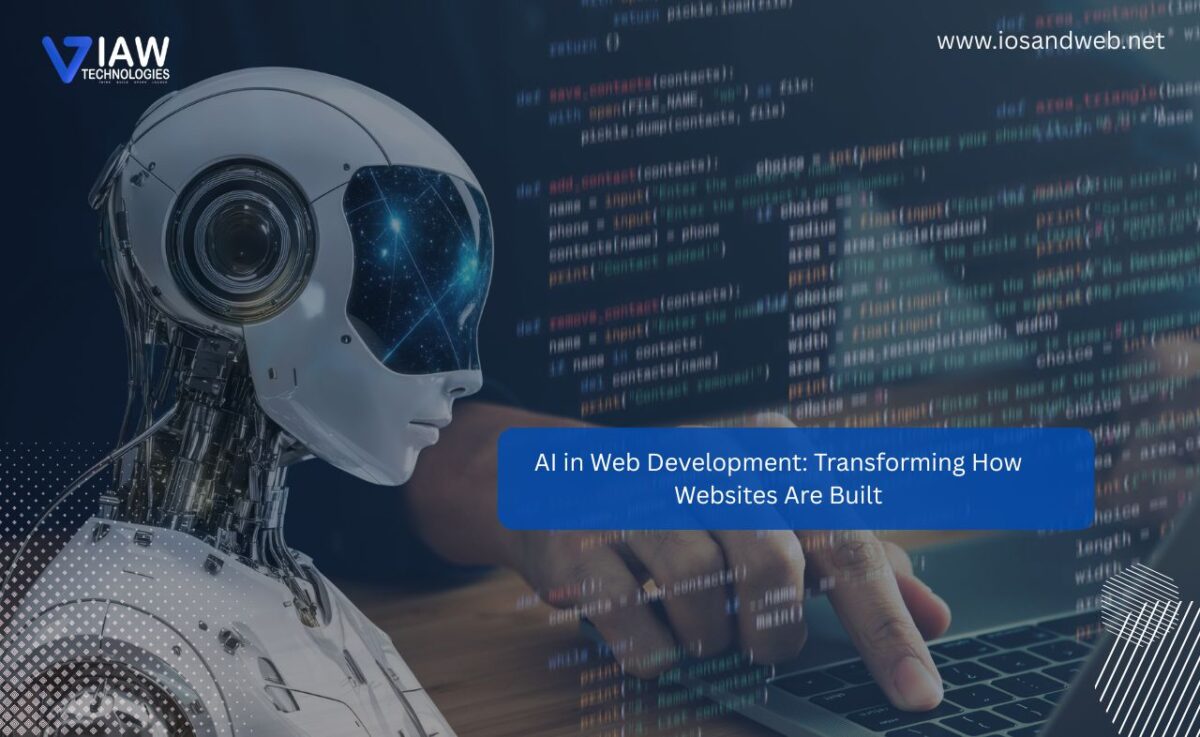
AI in Web Development: Transforming How Websites Are Built

The digital landscape is undergoing a seismic shift, and at its epicenter is artificial intelligence. AI in web development isn’t some buzzword now; this is quite a realistic thing that reshapes the approaches of developers to creating, maintaining, and optimizing websites. From generating code automatically to intelligent design suggestions, the way things work is being seriously rewritten by AI.

The Evolution of AI Website Development

Remember how building a website used to mean hours of hand-coding HTML, CSS, and JavaScript? Those days are not entirely behind us, but they’re definitely evolving. AI for web development has ushered in tools and platforms able to understand the fine details of natural language commands and then translate them into functional code. It is not about replacing developers, though; this is more about augmenting their capabilities and streamlining their workflows.

Modern AI web development tools analyze design mock-ups, understand user intent, and produce clean and efficient code in minutes, not hours. They learn from millions of code repositories, understand best practices, and apply them contextually to specific projects. What’s the result? It means quicker development cycles and less repetitive work that bogs down creative professionals.

How AI is Revolutionizing the Development Process

Automated Code Generation and Completion

Probably the most significant impact of AI in web development has to do with code generation: AI-powered integrated development environments now provide intelligent autocomplete features that go way beyond simple syntax suggestions. These systems understand context, predict developer intent, and can write entire functions based on brief descriptions or comments.

Tools like GitHub Copilot, and many more AI companions, study your codebase, learn from your style of coding, and suggest relevant snippets based on the architecture of your project. This greatly reduces the time one spends writing boilerplate code and enables developers to focus on solving complex problems rather than repetitive tasks.

Intelligent Design and Layout Optimization

AI in web development is much more than just coding. Nowadays, machine learning algorithms can analyze thousands of successful website designs and suggest the best layout, color scheme, and user interface elements that would help reach maximum engagement and conversion rates. These AI systems consider user demographics, industrial standards, and accessibility requirements to make designs both appealing and functionally superior.

Some even automatically do A/B testing and make real-time adjustments to optimize user experience, while their AI identifies which design variations perform best with specific audience segments.

The Rise of the AI Web Developer Assistant

Natural Language to Code Translation

The most exciting recent developments in AI website development, however, may be the ability to convert natural language descriptions into working code. This allows developers to describe in plain English what they want a component to do; AI systems translate that into corresponding HTML, CSS, and JavaScript.

Not only does this speed up development, but it also lowers the barrier to entry for folks who might understand the concepts of the web without extensive coding experience. It democratizes web development, all while making the experts more productive.

Bug Detection and Code Quality Assurance

AI has turned out to be an indispensable assistant in maintaining code quality in Web development. The machine learning models, trained on millions of samples of code, are able to find bugs, security vulnerabilities, and performance bottlenecks well before they become serious problems. Such systems run unobtrusively on the backend, actively analyzing code as it is written, and returning instant feedback in real time.

Proactive quality assurance means fewer bugs in production, improved security postures, and more maintainable codebases overall.

Real-World Applications Transforming the Industry

Responsive Design Automation

Not so long ago, crafting websites that look perfect across all devices was a very time-consuming challenge. Currently, much of this process can be automated by web development AIs that analyze content and automatically create responsive layouts, fitting on differently sized screens with ease. These systems understand design principles and can make intelligent decisions about how content should reflow and which elements to prioritize on smaller screens.

Improving Accessibility

Accessibility-enhancing AI tools create websites that are compliant with WCAG, automatically checking and suggesting improvements. They are able to check color/contrast ratios, missing alt text, correct heading hierarchies, and other common accessibility issues that human developers might miss.

Performance Optimization

By their very nature, machine learning algorithms are great at detecting performance bottlenecks in web applications. Web development platforms that leverage AI can look at loading times, render paths, and resource utilization to provide concrete suggestions for optimization. Some even automatically apply these enhancements, from compressing images to minifying code to optimizing delivery strategies, without requiring intervention on the part of the developer.

The Human-AI Collaboration Model

It is important to note that AI website development is not about replacing human developers; rather, it is about augmenting their capabilities. The most successful use of AI in this space is one which recognizes the complementary strengths of humans and machines.

AI is very good for pattern recognition, handling large volumes of data, or repetitive tasks. Humans bring creativity, strategic thinking, emotional intelligence, and an ability to understand nuanced business requirements. The future of web development will come with effectively combining these strengths.

A Glimpse into the Future: AI for Web Development

As AI web development tools continue to evolve, we can only expect even more sophisticated capabilities. Think of AI systems that understand entire business requirements documents and generate complete web applications or platforms that continuously optimize based on real user behavior and feedback.

The integration of AI with other emerging technologies like voice interfaces, augmented reality, and IoT will bring both opportunities and new challenges to web developers. Those who embrace AI for web development now will be best positioned to take advantage of these opportunities as they emerge.

Conclusion

The change brought to web development by AI is only just beginning, but its impact is already profound: from automated coding and intelligent design, to enhanced accessibility and performance optimization, AI is making web development faster, more efficient, and more accessible than ever before. The key to success in this new landscape is embracing these tools while continuing to develop the uniquely human skills-creativity, strategy, and empathy-that AI cannot replicate. The future of web development is collaborative, and powered by the smart partnership of human developers and artificial intelligence.