IAW

iaw-white-logo iosandweb technologies
Categories
Blog

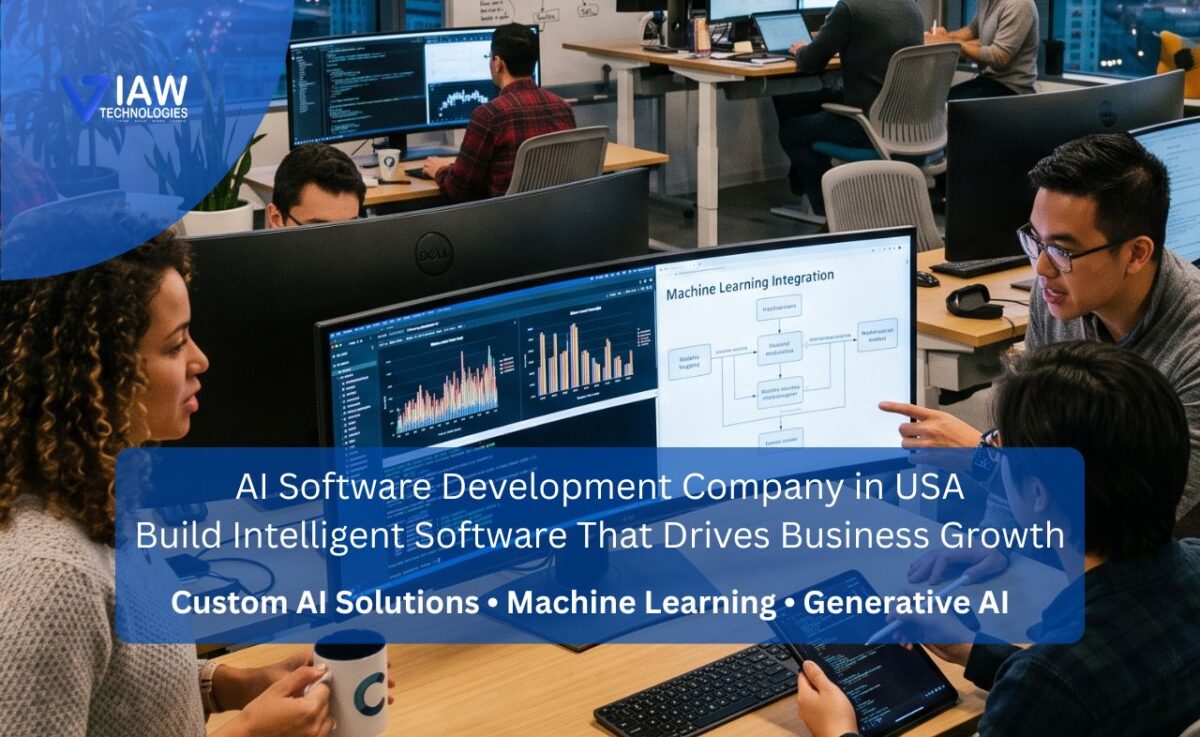
AI Software Development Company in USA

AI Is Here Now. It’s no longer a futuristic buzzword; it’s now a crucial requirement for companies that aim to remain competitive, innovative, and highly automated. In areas like automated business process management, personalised user engagement, smarter customer care, predictive maintenance, and automated operations, companies are leveraging artificial intelligence to deliver a significant boost in efficiency, profitability, and operational excellence. It’s for this reason that enterprises across all sectors are now engaging with AI software development company in USA to deploy high-performing and scalable AI solutions that fit the specific needs of their businesses.

When it comes to innovation, AI development is one of the most prominent fields, and you can find some of the best tech companies, software engineering professionals, and research organisations based out of the United States. If you are a budding startup trying to bring an AI product into existence or a major enterprise aiming to incorporate artificial intelligence to automate its services, your choice of a development partner can greatly define the outcome.

Partner with a leading AI development company. You get more than just a coding company if you partner with a leading AI development company. They will help you discover the opportunities for new AI applications which add real value, guide you on the appropriate technology solutions for your business, develop intelligent applications for you, and provide ongoing support for improvement. An established AI company leverages business intelligence and technical expertise to move you from ambitious innovative concepts to intelligent, practical solutions.

Why Choose an AI Software Development Company in USA?

The preference for working with a software development company in USA comes due to their experienced engineers, technology stacks, and global development practices. Since most AI projects are characterised by extensive data operations, machine learning models, and the need to implement them with appropriate integration with various systems or on cloud-based infrastructure, partnering with experts helps minimise risks.

Here are some of the largest benefits:

Access To Expert AI Engineers

AI development work involves various domain experts like data science, machine learning, natural language processing, computer vision, deep learning, and cloud computing. The dependable top AI software development companies in USA will pool together AI engineers, UI/UX experts, software designers, data scientists, and DevOps to develop total AI-powered systems together.

Accelerated time to market

Sometimes in AI products, you need to hit the market very fast to gain a competitive advantage. The teams are used to working in an agile way, and this allows you to achieve a speedier product deployment without sacrificing the performance, security, and quality of the end product.

Scalable and future-proof applications

With time, the number of users and the volume of data tend to grow; the same happens with the demands for functionalities and improvements to your AI applications. Experienced AI software development companies are capable of architecting scalable solutions capable of evolving in time with the needs of your business and saving you money.

So, what sets a top AI development company apart? 

Software companies abound that can deliver AI services, but selecting the best partner can be complicated. A top AI development company is characterised by its technical competence, openness, and excellent history in implementing AI initiatives.

Business Driven

The most effective implementations begin not by thinking about the technology itself but rather the business problems it needs to solve. The best AI vendors focus on the business challenge and look for ways to solve it and create tangible value in the business – not overly complicated technical solutions.

Technical Competence

A proficient AI software development company in the USA makes smart use of contemporary AI technologies and frameworks to create shrewd apps. A strong AI software company in USA must also have these core AI skills in its arsenal. This includes expertise in areas such as ML (machine learning), LLMs (large language models), computer vision (CV), predictive analysis, AI automation (AI-powered), and NLP. By taking advantage of the AI solutions developed using their broad skill sets, organisations can develop an AI presence that will withstand technological advancements.

Industry Experience: 

Industries vary across regulations and unique customer expectations and problems. When the companies are familiar with various industries, including retail, manufacturing, real estate, health, finance, logistics, and education, they can build suitable AI solutions for these industries.

Core Services Offered by an AI Software Development Company in USA

Businesses partnering with a top AI software development company in USA get to receive end-to-end service for transforming their idea into smart digital products. These businesses do not provide standard solutions; instead, they tailor each project as per your business goal, workflow, and your business’s growth and future-driven plans.

AI Consulting and Strategy

Build the roadmap. Every great AI solution starts with an excellent roadmap. Our AI consultants analyse your existing workflow, identify areas to automate, estimate feasibility, and tell you which AI technologies will work for your organisation. This type of planning minimises risk during the build, while also ensuring AI spending provides a return on your investment.

Custom AI Software Development

Every business is unique, and that’s why the popularity of custom AI software is booming. A dedicated development team will build applications from scratch that perform tedious jobs for you, crunch and understand your business information, upgrade the client journey, and ensure smoother operations. From an intelligent customer management system and advanced business analytics to a customised recommendation machine or chatbot software – custom software offers tremendous value to your business.

Machine Learning Development

Machine learning gives computer programs the ability to learn from previous experiences to develop the software over time, without a human manually reprogramming. Machine learning is used in business to: – Predict customer behaviour – Detect fraud – Forecast sales – Improve inventory management – Personalize offers – Make operations more efficient. Businesses use these smarter systems to speed up decision-making.

Why AI Startups in the USA Are Growing Rapidly

The US is a powerhouse for innovation, making it one of the best places in the world to build an AI startup in USA. The country offers an ample supply of venture capital, access to the most powerful cloud, world-class universities, and a pool of skilled engineering talent to facilitate building AI-based solutions.

Startups, most of the time, prefer working with an established software development company in USA rather than forming large internal teams at the initial stages to keep their operational costs down, speed up development, test their ideas effectively, and work with AI experts to build robust solutions. Just like startups, enterprises in search of leveraging digital transformation opt for hiring software developers in USA to accelerate projects and access world-class software development and practices.

AI Integration and Modernization Services

Companies, whether using an ERP software system, CRM system, e-commerce solution, or custom software, would like to improve the existing system with the features of artificial intelligence rather than shifting to a new one. In this case, an AI software development company in USA can help businesses to integrate AI into their systems smoothly without disturbing daily business activities.

Examples of AI integration services include the following:

Artificial Intelligence chatbots and virtual assistants AI customer service support Predictive analytics reports and dashboards Automated document processing Recommendation systems’ voice recognition capabilities Automation of workflows Business intelligence (BI) reports enabled by artificial intelligence A key way to utilise your software for all its worth is by integrating it with artificial intelligence to decrease the need for manual work, save time, and offer your customers a more superior customer experience.

Industries Benefiting from AI Software Development

With the help of AI, nearly all of the enterprises are becoming faster in making decisions with lower operating costs and a greater level of customer satisfaction. A best AI development company also considers the needs of various organisations and creates individualised solutions that meet their goals.

Healthcare

AI is utilised by health organisations for many applications, including image analysis, record management, appointment scheduling, and disease forecasting, as well as in virtual assistants. In fact, the usage of software programs built on AI assists the health sector in improving the health of patients in addition to minimising paperwork for professionals working there.

Finance and Banking

In the case of financial organisations and banks, AI is primarily utilised for various fraud detection measures, risk assessment, the credit scoring process, customer service operations, and investment analytics. Smart algorithms scan immense quantities of financial data, and that way they enable organisations to make better decisions.

Retail and eCommerce

How to leverage retail with AI: Retail enterprises utilise AI to create customer experiences that are personalised and that help drive sales with intelligent suggestions, the forecasting of inventory needs, and increased customer engagement.

Manufacturing

Manufacturers are applying AI for preventive and predictive maintenance, quality checks, supply chain optimisation, and production planning. Automated intelligence can decrease machine idle times and optimise productivity.

Real Estate

This includes using AI for property recommendations, lead ranking, understanding market trends, implementing virtual assistants and predicting prices to empower your property firm and create a better customer experience as well as an efficient sales funnel.

Why Businesses Continue to Hire Software Developers in USA

Benefits of Choosing Software Developers from USA It has become a common choice for companies across the world to select USA-based software engineers due to the availability of world-class expertise and professionals who can adapt to newer techniques and developing trends. The US developers have had opportunities to work on projects for numerous startups, medium businesses, and Fortune 500 firms and have the capacity to handle a broad range of projects from multiple industries.

Top benefits include the following:

High Engineering Standards

Our developers employ best-in-industry standards and methods in the field of software architecture, coding standards, quality control and software deployment that provide efficient, dependable and maintainable applications.

Transparent Communication

Communication is important in software development The expert US-based development teams provide you with consistent communication through regular project updates, sprint reviews and collaborative planning sessions that involve you in each phase of the development process.

Long-Term Technical Support

Launching is just the beginning of the life cycle of the software; reliable development companies offer continuous monitoring, maintenance, performance optimisation, and security patching, as well as enhancement with new features, as business needs grow and change.

How to Choose the Top Software Development Company in USA

So what makes technology partnerships successful? Price is a major decision in technology purchasing, and it should definitely be on the list. However, companies must consider the top software development company in USA on the basis of their experience, skill set and, obviously, ROI on value.

Review Their Portfolio

Look for evidence of a firm having done some of the best in the world with A.I., along with references to any work it has been recognised for in the business world and a detailed discussion of business-level results it has achieved. Perusing case studies allows you to see if the firm’s AI strengths are consistent with what you want.

Evaluate AI Expertise

Experience in technologies such as machine learning, natural language processing, computer vision, generative AI, cloud technologies, APIs, and current software frameworks.

Check Client Testimonials

Positive reviews from clients and long-standing business partnerships speak to our ability to reliably and transparently provide high-quality software solutions.

Understand Their Development Process

Professional development organisations usually stick to an agile development style that includes project phases with specific deliverables, scheduled status reports, quality checks, and support after the product is shipped. They try to minimise the risks by adhering to the standard product delivery model.

Emerging AI Trends Shaping the Future

With ongoing developments and continuous evolution of artificial intelligence, a world of possibilities is open for businesses in all industries. As a firm collaborating with a qualified AI software development company in USA, one can be well-prepared to integrate such innovations. 

Several top AI trends worth noticing this year are: –

  •  Generative AI applications
  •  AI-driven automation of business processes
  •  Self-contained AI agents
  •  Artificial Intelligence in cybersecurity solutions
  •  Predictive AI analytics for business intelligence
  •  EdgeAI to process Smarter
  •  AI ethically
  • AI-enabled SaaS platforms

Start to adapt to these emerging technology solutions now to make sure you are prepared to enhance operational effectiveness, optimise customer satisfaction, and sustain growth for the future. 

To stay updated with the latest innovations, explore our guide on Software Development Trends 2026. If your business is planning a complete digital transformation, you can also hire a web development company in USA to build modern web applications that work seamlessly with AI-driven technologies.

Why Partner with an AI Software Development Company in USA?

Advanced AI technology alone is not enough to build successful AI solutions – careful planning, talented engineers and clear understanding of business needs are essential. The reliable AI software development company USA acts as a partner in technology over the long haul to assist organisations with capitalising on opportunities, developing intelligent software solutions and enhancing the overall operations. The team at leading AI software development company USA assists organisations, whether it’s to launch a new startup with AI technology or to automate existing enterprise operations.

Frequently Asked Questions (FAQs)

What does an AI software development company in USA do?

A professional AI software development company in USA is a provider that designs, develops, integrates, and maintains customised and comprehensive artificial intelligence-based solutions, including intelligent automation, machine learning applications, enterprise AI software, chatbot development services, and predictive analytics platforms.

Why must companies choose a top AI development company?

The benefits of choosing a top AI development company for any business include utilising specialised knowledge from a skilled team of developers and business experts who offer a combined business insight with advanced technical know-how to bring efficient, scalable AI solutions and assist the company in gaining significant benefits through them.

What is the cost of developing AI software?

The expenses will vary depending on many things, including the complexity of the AI solution, AI functionalities used in it, the quality and quantity of data needed, third-party application integrations, development timeframe, and aftercare. Usually, custom enterprise solutions are more costly than minor AI applications.

Why do startups collaborate with AI development companies?

AI startups in the USA partner with skilled developers to fasten the development process, decrease recruitment costs, access specialised talent in the AI area, and deploy robust products to market faster.

Why do businesses hire software developers in the USA?

Companies usually choose to hire software developers in the USA because they can provide superior technical know-how, contemporary technology, and transparency throughout the whole process and are well-versed in designing quality solutions for global clients.

How Do I Select The Right AI Software Development Company In USA?

To choose the best AI software development company in USA, assess the portfolio of the company, its experience with artificial intelligence, customer feedback, developmental process, and communication standards. You want to ensure a software vendor has the right technical knowledge, security measures, and after-launch assistance, and the AI software should address the company’s future needs and concerns.

Conclusion

Before investing in AI, businesses should also evaluate their overall digital infrastructure. Many organisations partner with an AI software development company in USA while choosing to hire a web development company in USA for developing responsive websites, SaaS platforms, customer portals, and enterprise web applications. This combined approach creates a scalable digital ecosystem that supports both current business needs and future innovation. 
Categories
Blog

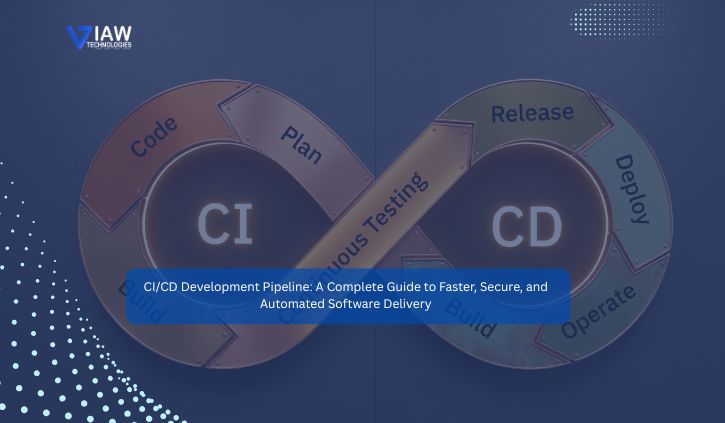
CI/CD Development Pipeline: A Complete Guide to Faster, Secure, and Automated Software Delivery

Speed up software delivery: faster and more consistent Software updates aren’t being pushed out months at a time anymore; they are going out multiple times per day, still securely and stable. Delivering modern software at such speeds requires an effective CI/CD development process to automate the building, testing and deployment of software. CI CD pipeline development processes an automated flow for a wide variety of the development and release lifecycle.

CI CD pipeline development saves manual work and avoids errors in the deployment of applications, speeding up high-quality software development.

A business is not bound to write enterprise applications, cloud applications, AI ML applications or containerized applications. It does not matter the form or format your application is in, following CI CD development best practices helps your team become more efficient and produce higher-quality applications. Businesses can accelerate software releases, recoveries from failures and issue resolutions in order to have more and more software ready on the fly. The article goes into the how and what of CI CD development pipeline development, all the way to CI CD development best practices and how you can leverage automation to take software development up another notch.

In accordance with the 2024 State of DevOps Report, those companies utilizing advanced CI CD procedures deploy much more of their software than those that utilize traditional manual delivery approaches, in addition to less frequently encountered deployment failures and drastically quicker recovery times when an incident takes place between development and ops teams.

These details alone suggest why implementing a dependable CI/CD development pipeline is an essential endeavor for the present era’s software engineer.

What Is a CI/CD Development Pipeline?

A CI/CD development pipeline is a set of instructions for a code to be released, moving from development to production with minimum to zero manual steps in between. The set is called as a combination of Continuous Integration (CI) and Continuous Delivery / Continuous Deployment (CD). It is a way to build code from development environment, test and release code. Rather than manually compiling applications, run code test cases and release applications; it is done automatically to decrease the time.

Goals of a CI/CD development pipeline:

  • Automate development and repetitive tasks
  • Identify software defects earlier in the cycle
    Ensure predictable and consistent code deployments
  • Release code frequently and faster
  • Facilitate better team collaboration
  • Keep application stable

A well established pipeline serves the base for every DevOps engagement.

Understanding Continuous Integration (CI)

Continuous integration (CI) is the development practice of regularly integrating code from many different developers into a single code base, often several times a day.

With each code commit developers make, CI tools will: 

  • Test the code
  •  Download and verify all dependency requirements
  • Run build and compilation of code
  •  Run all the unit tests
  • Conduct analysis of the code quality
  •  Perform code security analysis

 When problems arise, developers get real-time notice so the code will not enter into the production system.

Understanding Continuous Delivery and Continuous Deployment

Continuous Delivery and Continuous Deployment seem to be very similar, they are used in pair sometimes and have a great deal of similarities.

But these are indeed distinct practices, lets get started: Continuous Delivery:

Continuous Delivery

Continuous Delivery’s main idea is to have your software be ready to be released, whenever you desire after passing some quality checks(e.g, Automated Testing, Code Reviews etc.) . In this practice you don’t necessarily release it right away in production, but your system has it ready so you can manually deploy it in production when you feel ready.

In other words, in Continuous Delivery we fully automate the deployment pipeline to the point where a business decision can be enough to start the deployment.

For what?

I hear you asking. In those cases where there are regulation procedures to comply with or production deployments to be scheduled and planned, the business users of the company know when would be the best time for it. Let’s talk about the more radical brother then

Continuous Deployment: 

The way Continuous Deployment differentiates itself from the above practice is by totally automating the process of going to production.

It means that once all the automatic tests have been executed and they all have passed, the code will go automatically to production without a human touching anything.

Yes, I’m being completely serious about that. If a new commit passed all quality checks (Automated tests, security vulnerability scan, lint, code reviews, etc.) you know, the system would directly deploy the change.

Although fully automated deployments may initially seem risky, robust automated testing and monitoring significantly reduce deployment failures. 

What if something goes wrong?

It is typically a best practice that will be adopted by companies as diverse as SaaS platforms,cloud native application, tech startups and any organization that really wants to innovate faster and release value to users very quickly and that can trust its automated tests as a very important component.

Key Stages of a CI/CD Development Pipeline

1. Source Code Management

All the development and design start with a version control system. Team members can all work on their shared application codebase. The pipeline is kicked off automatically on every commit.

The most commonly used solutions for managing source code include Git-based platforms.

Branches, merging and other team functionalities like a “push”, are facilitated.

2. Build Automation

The build stage of the CI/CD pipeline will take the source code and create deployable assets : 

As this part of the process flows: 

  • automatic installation of dependencies
  •  packages will be built 
  • the containers will be created 
  • build validation 

 Automated builds have reduced manual intervention.

3. Automated testing

 It’s likely that most people find automation testing the most valuable piece in building a CI/CD Pipeline

 In theCI/CD Pipeline structure multiple levels of automated testing can be used: 

  • Unit testing
  • Integration testing
  •  functional testing
  •  API testing
  •  regression testing
  •  performance testing etc.

 In this level, all validated code would go forward.

4. Security Validation

Today, security becomes part of modern pipeline development

Security automation: 

  • Scanning the open source dependencies
  •  Analyzing for vulnerabilities 
  • Performing static analysis of source code 
  • dynamic analysis 
  • Scanning for hardcoded secrets 
  • Scanning the source for licensed code 

Embedding security in the early development stages, enables the practice of DevSecOps and helps eliminate expensive production vulnerabilities.

5. Deployment Automation

Once the pipeline successfully validates the application, it is auto-deployed to any of the following: 

  • Development servers
  • QA servers
  • Staging servers
  • Infrastructure at production

Why Businesses Need a CI/CD Development Pipeline

Dedicated investment is an efficient way to gain clearly measurable operational improvements.

Faster Software Delivery

Automated deployments enable organizations to release new features at a high frequency without increasing costs associated with the development team.

Faster updates for customers keeping business competitive.

Better Software Quality

Agile testing identifies bugs early, before they reach the production customers.

This ensures more reliable applications, leading to better Customer Satisfaction.

Reduced Human Errors

When you manage the deployment process manually, you are more prone to errors in your configurations.

Automations make every deployment the same and reproducible. They guarantee each release will have the same validated procedures.

Improved Team Collaboration

In place, developers, testers, security engineers and operations staff provides a common automated workflow.

All this leads to avoiding communication gaps, and increasing visibility on projects.

Lower Operational Costs

Automation reduces the tedious, repetitive tasks associated with installation, enabling engineering teams to concentrate on creating innovations.

CI/CD Pipeline Development for Cloud-Native Applications

The core tenets of cloud native require automation. When enterprises implement these kinds of Kubernetes, serverless, microservices workloads they realize a competitive advantage with automated infrastructure provisioning, testing, scaling, deployment strategies.

Some of the many benefits derived from such capabilities include: 

  • Infrastructure as code
  • Kubernetes deployment automation
  • Docker automation
  • Multi-cloud deployments
  • Serverless automation
  • Automated rollbacks
  • Reduced complexity
  • Scalability

Best Solutions for CI/CD Pipelines in Containerized AI Development

Model validation and updates, coupled with a scalable architecture are some common demands associated with any artificial intelligence solutions.

Some of the greatest options for container-ready AI development for CI/CD have in common 

  • Test automation
  • Orchestration with containers
  • Automated model validation
  • Deploy

The CI/CD process for an AI-driven containerized application generally consist of:

  • Automated validation for model training
  • Container creation
  • Automatic Kubernetes deployment
  • Security scanning for AI dependencies
  • Performance monitoring

Custom CI/CD Pipeline Development Services

Each organisation’s development workflow, infrastructure needs, compliance standards, and deployment strategy are unique. 

Although there are pre-built automation templates for simpler projects, enterprises often need bespoke CI/CD pipeline development services that cater to their tech stack and business objectives.

  • Custom pipelines can be designed to support:
  • Multi-environment deployments
  • Cloud-native applications
  • Kubernetes orchestration
  • Docker container automation
  • Microservices architecture
  • AI and machine learning workflows
  • Enterprise security policies
  • Infrastructure as Code (IaC)

With our customized pipeline, you get an optimized experience across all stages of your development lifecycle — from code commit to production deployment.

How to Develop a CI/CD Pipeline Successfully

In our experience, organizations achieve the best results when they implement a CI/CD development pipeline in phases rather than trying to automate every process at once. Starting with build automation and testing before expanding into deployment and security validation usually reduces implementation risks. 

1. Analyze Project Requirements

Begin by understanding:

  • Application architecture
  • Programming languages
  • Cloud infrastructure
  • Deployment frequency
  • Security requirements
  • Compliance needs

With that comes a clear roadmap which will prevent you from having to make some expensive changes down the road during your development lifecycle.

2. Choose the Right Version Control System

A centralized version control repo makes collaboration between developers efficient while ensuring that each change in code can be tracked easily.

Some of the best practices around VCS are:

  • Feature branching
  • Pull request reviews
  • Merge validation
  • Protected branches
  • Code ownership policies

All these things help create a solid foundation for setting up a good CI/CD development pipeline.

3. Automate your Build Processes

Eliminating tedious manual processes by automating builds ensures better consistency across different dev environments. It also speeds up deliveries with improved reliability as an added advantage.

This process generally involves:

  • Dependency installation
  • Code compilation
  • Package creation
  • Container image generation
  • Artifact storage

4. Automate Testing

Your testing needs to occur on every commit.

Good pipelines should include:

  • Unit testing
  • Integration testing
  • API testing
  • UI testing
  • Regression testing
  • Performance testing

Automatically validated, production-ready code can progress.

5. Deploy to Every Environment

In Your CI CD pipeline development strategy, your deployment strategy needs to involve automated deployments to:

  • Dev
  • QA
  • Stage
  • Production

It’s essential to automate every deployment with the same methods and strategies, preventing many of the common configuration and deployment errors.

6. Monitor and Continuously Improve

It doesn’t end with deployment.

Continuous monitoring gives insight into:

  • Application status
  • Rates of errors
  • Key performance indicators (KPI)
  • Infrastructure usage
  • Deployment success

Using the data gathered from monitoring, teams can optimize their pipeline over time.

CI/CD Development Pipeline vs Traditional Deployment

Traditional DeploymentCI/CD Development Pipeline
Manual deploymentAutomated deployment
Slow releasesFaster releases
More human errorsReduced errors
Manual testingAutomated testing
Slow feedbackContinuous feedback

Best Practices for CI/CD Pipeline Development

Many organizations implement CI/CD  development pipelines to automate and integrate processes like builds, tests, deployments, and security scans based on their practical experiences. This practice offers a team a structured approach to theCI/CD workflow while reducing deployment risks, helping to prove out the pipeline development workflow and iteratively enhancing the software delivery pipeline.

Let’s dive into how your team can make the most of itsCI/CDdevelopment with the help of these best practices:

Keep thePipelineModular

Break your application build andCI/CDpipeline development processes down into a series of modular components that can be reused or debugged individually.

AutomateEverythingPossible

This means building, tests, security, deployment, and more. Automation eliminates manual, time-consuming tasks.

Shift Lefton Security

Don’t wait until the production environment to start testing your application’s security; find vulnerabilities earlier in the process by shifting the testing process “left” in theCI/CDpipeline.

ManageEverythingin version control

Applications code, pipeline scripts, infrastructure configuration – everything should be stored in a version control system.

Use Infrastructure asCode

You should use code to define and deploy infrastructure so you always know it matches the test and production environments.

Measureand Monitor theCI/CDPipeline

Here are some key metrics to track to help you ensure yourCI/CDdevelopment is running efficiently and improve overall software delivery:

  • Build duration
  • Lead time
  • Deployment frequency
  • Recovery time
  • Failure rate

Common Challenges in CI/CD Development Pipelines

Despite the benefits, organizations may encounter challenges while implementing a CI/CD development pipeline.

Legacy Systems

Older applications may not support modern automation workflows.

Solution: Gradually modernize the architecture and introduce automation in phases.

Long Build Times

Large applications can slow pipeline execution.

Solution: Optimize build steps, enable caching, and run tests in parallel.

Security Risks

Hardcoded credentials and outdated dependencies increase security risks.

Solution: Use secure secret management, automated vulnerability scanning, and regular dependency updates.

Environment Inconsistencies

Differences between development and production environments often lead to deployment failures.

Solution: Use containers and Infrastructure as Code to standardize environments.

Scaling Challenges

As applications grow, pipelines can become increasingly complex.

Solution: Design scalable, modular pipelines that support parallel execution and reusable components.

Popular Tools Used for CI/CD Pipeline Development

Some widely adopted ones are listed below.

There are several tools to automate each stage of your CI/CD pipeline.

  • Jenkins
  • GitHub Actions
  • GitLab CI/CD
  • Azure DevOps
  • CircleCI
  • Bitbucket Pipelines
  • Docker
  • Kubernetes
  • Terraform
  • Ansible
  • SonarQube
  • Argo CD

Choosing the best combination of service for you will depend on your application’s architecture, deployment model, and business objective.

Why Choose Professional CI/CD Development Services?

Implementing automation involves much more than just installation of some tools.

To get the most out of your workflow, you need to plan and integrate things carefully while also optimizing processes over time.

By partnering with experts, we’ll make sure that your CI/CD development pipeline is both secure and scalable, meeting all of your business goals along the way.

Professional teams can help with:

  • End-to-end pipeline design and implementation
  • Cloud and container integration
  • DevSecOps adoption
  • Automated testing strategies
  • Deployment automation
  • Performance optimization
  • Ongoing maintenance and monitoring

When an organization needs more than just a good code base, our integration with Professional Web Development Services ensures that your pipeline works best when paired with application engineering expertise.

For organizations focused on developing JS based applications, pairing our platform with a node.js web application development service will make you able to release updates even faster and scale better.

If your business has built out an entire digital product offering, then Full Stack Web Development Services help ensure all facets of your product’s development—from front end to back end—are handled seamlessly through one unified development team.

Frequently Asked Questions (FAQs)

1. What is a CI/CD development pipeline?

A CI/CD development pipeline is an automated workflow that moves code from development to production by automating building, testing, security validation, and deployment.

2. Why is a CI/CD development pipeline important for businesses? 

It helps organizations release software faster, reduce deployment errors, improve collaboration, strengthen security, and deliver more reliable applications.

3. What is the difference between Continuous Delivery and Continuous Deployment?

Continuous Delivery prepares software for deployment after automated testing but requires manual approval for release. Continuous Deployment automatically releases validated code changes to production without manual intervention.

4. Can CI/CD pipelines support AI and containerized applications?

Yes. Modern CI/CD pipelines support Kubernetes, Docker, AI/ML workflows, automated model validation, security scanning, and cloud-native deployments.

5. Why should businesses choose custom CI/CD pipeline development services?

Custom CI/CD pipeline development services are tailored to an organization’s infrastructure, technology stack, compliance requirements, and deployment workflows, ensuring better scalability, security, and operational efficiency.

Conclusion

In today’s world of fast-paced technology, having an efficient CI/CD (Continuous Integration / Continuous Delivery) development pipeline has become a necessity for any company aiming for a competitive edge in software delivery.

By streamlining code integration, testing, security checks, and deployment processes, businesses can significantly enhance their speed to market while ensuring top-notch application quality.

Whether you are working on modernizing legacy apps, building cutting-edge cloud-native platforms, or looking for the most effective solutions when it comes to creating optimal CI/CD pipelines in containerized AI development environments – there’s no doubt about the immense long-term benefits of professional CI/CD pipeline development services.

From accelerated deployment times to heightened security standards and increased team synergy, developing a robust CI/CD pipeline strategy equips your enterprise’s development teams with all they need to excel at innovation without compromise.

As our ever-changing tech landscape continues to evolve rapidly forward, only those companies who invest strategically into designing customized CI/CD pipeline strategies suited specifically towards meeting unique business requirements stand poised at forefronts delivering exceptional quality applications swiftly & safely!

Given how rapidly companies are adopting cloud-native apps, AI solutions, and microservices, our investment in scalable CI/CD pipeline development has never been more important if we’re to deliver ongoing innovation and sustained business growth.

We’ve found that most companies start by automating build and test stages, before progressing onto things like security scans and production deployments. This allows them to incrementally validate their CI/CD development process, reduce deployment risks and deliver software incrementally and iteratively without significant impact on current ways of working.

Categories
Blog

The Ultimate Guide to E-commerce SEO for Websites

Know Best SEO Practices For E-commerce Websites:

If you want to enhance traffic and revenue to your e-commerce website, e-commerce SEO and on-page SEO are essential first steps. Online, there are a ton of instructional and how-to articles that provide general SEO advice, but there are significantly fewer that specifically address the needs of ecommerce business owners with advanced SEO methods.

Today, we wish to impart to you a fundamental knowledge of on-site SEO for e-commerce. It will be more than enough to get you going, make sure you are giving Google the right signals, and get you ready for SEO success with the best SEO plan for ecommerce business and advanced SEO strategy.

We have an in-house certified team of SEOs. We offer Free SEO Audit Services and advanced SEO custom strategy. Contact Us.

Let’s start now.

While paid search may get you visitors, SEO is significantly less expensive. You should still optimize for search even when ad blockers and ad blindness may decrease the effectiveness of sponsored search.

Web page headlines, private data, hyperlink architecture, product details, and navigational layout are routinely optimized for SEO and customer experience in every advanced e-commerce SEO update.

Significance of SEO for Your E-commerce Webpage

Google is frequently used for searches. To help them make decisions, they are looking for alternatives, suggestions, comparisons, and other information.

Can customers find your products even though they may be posted online? Here, advanced e-commerce SEO is relevant. It provides you with a way to come in touch with your target market without having to pay for marketing. After attracting people to your website, you can captivate them with your first-rate products, alluring language, and persuasive calls to action with new ranking signals.

If your website is only designed to attract human visitors, your business will suffer. Getting traffic to your website is the first challenge in attracting new customers, which advanced SEO effectively tackles.

We have an in-house certified team of web developers. We offer custom Software and Web Development Services.

𝗗𝗼 𝗻𝗼𝘁 𝗺𝗶𝘀𝘀 𝘁𝗵𝗲 𝗼𝗽𝗽𝗼𝗿𝘁𝘂𝗻𝗶𝘁𝘆 — 𝗯𝗼𝗼𝗸 𝘆𝗼𝘂𝗿 𝗰𝗮𝗹𝗹 𝗼𝗻 𝗖𝗮𝗹𝗲𝗻𝗱𝗹𝘆: Book Now

The Ecommerce SEO Checklist: Best Practices for Your E-commerce SEO Strategy

You require an advanced e-commerce SEO strategy if you want customers to find your products faster. Your plan will be increasingly effective as you cross each item off the list.

Use the Correct Keywords

These keywords must be in the content even though you don’t want to overdo them in your product titles and descriptions.

In the header, body, meta description, alternative qualities, and sub-headlines for your product, use your core keyword. Use as many latent semantic index (LSI) terms as possible. These are related keywords that help Google comprehend the context of your page with advanced e-commerce SEO updates.

Analyse the User Intent, CPC, and Volume of Keyword Searches

Before using a keyword, do some research on it. Be aware of the keyword’s search volume (the quantity of times it is entered into search engines), cost per click (CPC), level of paid advertising competition, and searchers’ intentions.

Let’s analyze it in greater detail.

The volume of searches for a certain keyword reveals the level of interest it has attracted from customers. If a keyword has a high search volume, which indicates that it is more popular, you will find more searches for it with Google ranking factors in advanced e-commerce SEO.

The cost per click (CPC), which is based on a specific search, displays how much money people spend each time they click an advertisement with an advanced e-commerce SEO strategy. Consider looking for a long-tail replacement if your target term is highly competitive.

Not least of all, user intent clarifies what people are attempting to find when they input a certain term into Google’s search bar. Let’s say someone types “shower” and then pushes Enter.

Analyze Your Competition

If you don’t know where to start with on-site SEO for your e-commerce website, your best chance is to look to your competitors with an advanced SEO checklist. Larger competitors have likely invested time and effort into optimizing their websites, and you can learn a lot about their tactics directly from their websites.

On keywords, you should focus your attention. You should pay close attention to the keywords on their main websites and best-selling product pages with advanced SEO services.

Focus on Homepage SEO

The homepage is often where most businesses focus their SEO efforts. Although this is undoubtedly one of the most crucial pages on your website to optimize, you shouldn’t focus just on it.

Reduce Site Architecture Complexity

Starting with your homepage and moving down to the product categories and the products found within them, you should establish a clear hierarchy of navigation with the best agency for advanced e-commerce SEO.

Product Pages Boost

The product pages of your business are vital to it, so you should work hard to make them better. Many webmasters of e-commerce sites only include an image or a video with a few words about each product.

You need additional information if you want Google to find your product pages. Below is a list of the specific things you want to work on with an advanced SEO agency.

Image Optimization

Your product page’s images are very essential. Which website — one with no image at all, one with a tiny, illegible image, or one with an image that clearly depicts the goods from as many angles as possible — would you be more likely to purchase from? Images are essential for both your clients and advanced e-commerce SEO guide.

Customer Opinions

Encouraging reviews is another strategy to boost consumer trust in your products, so if it’s a high-quality product, use it.

Even low ratings can be advantageous. Customers are likely to favour the more expensive item if you have a greater cost item with outstanding reviews and a lower cost item with middling reviews, which will boost your business’s sales with an advanced e-commerce SEO guide.

Summary

Several owners of e-commerce businesses desire to increase conversions right away. That is the right attitude, despite the fact that you are ahead of the game. Starting with e-commerce SEO will help you position yourself for success.

Categories
Blog

Machine Learning in Mobile Apps: How Smart Apps Are Changing User Experience

You’ve probably noticed it. You open a music app and it already knows what you’re in the mood for. Your banking app flags a suspicious transaction before you even check your account. Your keyboard finishes your sentence before you’ve typed half of it. It feels almost uncanny — but there’s no magic involved. What’s happening behind the scenes is machine learning in mobile apps, and it’s fundamentally changing what users expect from their digital experiences.

In this post, we’re unpacking how ML is being woven into the fabric of modern mobile applications, why it matters for both developers and users, and what the future of intelligent apps looks like.

What Is Machine Learning in Mobile Apps, Really?

Before diving into applications, let’s ground ourselves in what this actually means in a mobile context.

Machine learning (ML) is a branch of artificial intelligence that enables systems to learn from data and improve their performance over time — without being explicitly programmed for every scenario. In mobile apps, this translates to features that adapt to you: your habits, your preferences, your patterns of use.

Unlike traditional apps that follow hard-coded logic (“if user taps X, do Y”), ML-powered apps observe, analyse, and predict. They get better the more you use them. And as mobile hardware has grown more powerful — with dedicated neural processing units now standard on flagship devices — running ML models directly on-device has become not just feasible, but fast.

Machine learning in mobile apps isn’t just a trend for tech giants anymore. Mid-size product teams and startups are integrating ML capabilities into their apps using accessible frameworks like TensorFlow Lite, Core ML (Apple), and ML Kit (Google). The barrier to entry has dropped dramatically, and the results are showing up in everyday app experiences across categories.

How Machine Learning Is Reshaping User Experience

1. Hyper-Personalisation at Scale

Personalisation used to mean showing a user’s name in a greeting. Today, it means an app that curates an entirely different experience for each of its millions of users.

Machine learning in mobile apps makes this possible by continuously analysing behavioural data — what content you engage with, how long you spend on it, what you skip, when you’re most active — and building a dynamic model of your preferences. Streaming platforms, e-commerce apps, and news aggregators have made this their core differentiator.

The key here is that this personalisation isn’t static. It updates in near real-time. If you suddenly develop an interest in a new topic, your app adapts within days, sometimes hours. That’s not a curated playlist someone built for you — that’s a model that learned you.

2. Predictive Text and Smart Assistants

Keyboard apps are perhaps the most everyday, invisible example of ML at work. When your keyboard suggests exactly the word you were about to type — or autocorrects with context rather than just spelling — that’s an ML model trained on billions of text patterns, then fine-tuned to your own writing style over time.

Voice assistants take this further. Natural language processing (NLP), a subset of machine learning, allows apps to understand not just words but intent, context, and even sentiment. Ask your assistant to “remind me about this when I get home” and it correctly infers a location-based trigger. These capabilities have matured significantly, making voice interaction a genuine UX consideration rather than a novelty.

3. Computer Vision and Augmented Reality

One of the most visually striking applications of machine learning in mobile apps is computer vision — enabling apps to understand what the camera sees.

This powers everything from document scanning that auto-detects edges and corrects perspective, to skincare apps that analyse your skin condition, to retail apps that let you virtually try on glasses or furniture. Face ID and biometric unlock are also rooted in ML-driven vision models.

For developers, frameworks like ARKit and ARCore have made it easier to embed vision-based experiences without building models from scratch. The result is a wave of apps that use the physical world as part of their interface — a fundamentally new mode of interaction.

4. Fraud Detection and Security

In fintech and banking apps, machine learning in mobile apps is quite literally protecting users’ money.

Traditional rule-based fraud detection is brittle. It can catch known patterns but struggles with novel ones. ML models, by contrast, learn the baseline of normal user behaviour — your typical transaction amounts, locations, timing — and flag deviations in real-time, often before a transaction completes.

This happens quietly, in the background, which is exactly how good security UX should work. The user doesn’t see the model. They just see a notification: “Did you make this purchase?” That seamless, invisible protection is a direct product of machine learning.

5. Health and Fitness Intelligence

Health apps are another domain where ML has moved from novelty to necessity. Whether it’s a smartwatch app detecting irregular heart rhythms, a fitness tracker predicting your recovery time, or a mental wellness app identifying mood patterns from journaling entries — machine learning is adding a layer of insight that static logging never could.

These apps collect longitudinal data and apply ML to surface patterns the user themselves wouldn’t notice. Over weeks and months, an app might identify that your sleep quality drops when you exercise too late, or that your stress indicators rise before a particular weekly meeting. That kind of contextual intelligence is only possible because of machine learning.

On-Device vs. Cloud ML: Why It Matters for UX

One of the lesser-discussed but genuinely important dimensions of machine learning in mobile apps is where the model actually runs.

Cloud-based ML sends data to a server, processes it, and returns a result. It’s powerful but introduces latency and raises privacy concerns. On-device ML, by contrast, runs the model directly on the user’s phone. It’s faster, works offline, and keeps sensitive data local.

As mobile chips have grown more capable — Apple’s Neural Engine, Qualcomm’s Hexagon DSP — on-device inference has become viable for increasingly complex models. This shift matters enormously for UX. Real-time photo editing, live translation, and instant recommendations no longer require a network round-trip. The experience is immediate, and privacy is better preserved.

For users, this distinction is largely invisible. But for developers and product teams, choosing between on-device and cloud ML is a significant architectural decision with direct UX consequences.

Challenges Worth Acknowledging

It would be incomplete to talk about machine learning in mobile apps without acknowledging the genuine challenges.

Data privacy is the most prominent. ML models need data to train and improve, but users are rightly cautious about what data is being collected, how it’s used, and who has access to it. Regulatory frameworks like GDPR and CCPA have raised the stakes here. Apps that handle ML responsibly — with transparency, consent, and on-device processing where possible — will earn user trust. Those that don’t will face backlash.

Bias in models is another real concern. If an ML model is trained on unrepresentative data, it can produce skewed or discriminatory outcomes — in hiring tools, health apps, or financial products. Building fair, representative training datasets is not a solved problem, and it requires intentional effort.

Model size and battery consumption also matter in a mobile context. Large, complex models can drain battery and consume storage. Optimisation — through quantisation, pruning, and distillation — is an active area of work that mobile ML practitioners can’t ignore.

The Road Ahead: What’s Next for ML in Mobile?

The trajectory is clear. As ML tooling matures, we’ll see capabilities that once required server-side infrastructure move entirely onto the device. Models will become more efficient, not just more powerful. Personalisation will deepen. And users will increasingly expect — even demand — that their apps are intelligent.

On-device large language models (LLMs) are already emerging as a frontier. Imagine a productivity app that drafts emails in your writing style, entirely on your phone, with no data ever leaving the device. That’s not a distant vision — early versions of it exist today.

For product teams, the implication is straightforward: machine learning in mobile apps is no longer an advanced feature or a differentiator for category leaders alone. It’s becoming a baseline expectation. The apps that will thrive are those that integrate ML thoughtfully — not as a buzzword, but as a genuine tool for building better, more responsive user experiences.

Final Thoughts

Smart apps aren’t smart by accident. Every personalised recommendation, every predictive text suggestion, every invisible fraud check is the product of deliberate ML integration and thoughtful UX design. Machine learning in mobile apps represents one of the most significant shifts in how software serves people — moving from reactive tools to proactive, adaptive experiences.

Categories
Blog web development

Hire Web Development Company in USA: Services, Costs, and Expertise

Choosing the right development partner can make or break your digital ambitions. When you’re exploring web development company in USA, you’re entering a marketplace filled with incredible talent, cutting-edge innovation, and—admittedly—significant price variations. Let’s demystify what these companies offer, what you can expect to pay, and how to identify genuine expertise.

The USA Web Development Landscape

The United States is a leader in technology and innovation, and the web development industry in the USA is no exception. From startups in Silicon Valley to enterprise experts on the East Coast, web development companies in the USA offer unmatched access to talent, technology, and expertise.

But what makes American web development companies so special?

Innovation at the Core

The companies in the USA are always at the cutting edge of innovation. They are early adopters of new technologies such as new frameworks, progressive web app tech, and AI development tools. This innovation-driven strategy will ensure that your project is built using the latest and greatest techniques and best practices.

Regulatory Compliance and Security

The companies in the USA are experts in handling difficult data protection regulations like GDPR for international clients, ADA compliance, and industry-specific regulations like HIPAA for healthcare and PCI DSS for e-commerce. This is a highly valuable service if your project is related to sensitive data or industries.

Comprehensive Services Offered

Custom Web Development

Most web development firms in the USA are capable of developing custom solutions for specific business needs. These are:

Enterprise Web Applications: Scalable and robust platforms for handling complex business operations and traffic

E-commerce Platforms: Custom e-commerce solutions with inventory management, payment processing, and customer relationship management

Progressive Web Apps (PWAs): Hybrid solutions for delivering app-like experiences on web browsers

Content Management Systems (CMS): Custom WordPress, Drupal, or Headless CMS development

Full-Stack Development Expertise

The best firms have full-stack development expertise, meaning they can handle both frontend and backend development. They use the latest technology stacks such as React, Angular, Vue.js for frontend development and Node.js, Python, Ruby on Rails, or .NET for backend development.

Mobile-First and Responsive Design

Given the fact that mobile traffic has already surpassed desktop traffic in most sectors, the best web development firms in the USA focus on mobile-responsive designs that offer seamless experiences across all devices and screen sizes.

Ongoing Maintenance and Support

The best web development firms don’t just leave you after the project is completed. They offer comprehensive maintenance services that include security patches, performance enhancements, bug fixes, and feature additions to keep your online assets up-to-date and competitive.

Understanding Cost Structures

Now, let’s talk about the elephant in the room: yes, web development companies in the USA do charge a higher rate compared to other options available internationally. However, it is essential to understand the pricing structure to make informed decisions and understand the value for money.

Hourly Rate Structure

Junior Developers: $50-$100 per hour Mid-Level Developers: $100-$175 per hour Senior Developers/Architects: $175-$300+ per hour Specialized Experts (AI, Blockchain, etc.): $250-$400+ per hour

The above rates are highly location-dependent, with primary tech cities such as San Francisco, New York, and Seattle charging a higher rate compared to secondary cities.

Project-Based Pricing

Many web development companies in the USA offer fixed-price projects, ensuring that you know exactly what you are getting into:

Basic Business Website: $5,000-$15,000 Custom Web Application: $25,000-$150,000 Enterprise Platform: $150,000-$500,000+ E-commerce Solution: $30,000-$200,000

Please note that the above rates are approximate and highly dependent on the complexity of the project, functionality, integration, and timeline.

Value-Based Pricing Models

Some of the more advanced web development companies in the USA offer value-based pricing, where the cost of development is directly tied to the business value your project creates.

Evaluating Expertise and Credentials

Portfolio and Case Studies

Good companies display extensive case studies that illustrate their problem-solving skills, technical methods, and deliverables. They should be working on projects of similar scale and type to yours.

Technical Certifications

Having partnerships and certifications with technology giants such as Microsoft, AWS, Google Cloud Platform, or Salesforce is a sign of quality.

Industry-Specific Experience

No matter what industry you belong to – healthcare, finance, education, or retail – collaborating with web development companies in the USA who have experience in your industry is a huge plus.

Development Methodology

Inquire about their project management methodology. Companies using Agile development, sprint development, and CI/CD pipelines have mature development processes with low risks and high transparency.

Communication and Cultural Alignment

The Time Zone Advantage

Partnering with US-based companies means the end of communication problems that come with offshore development partnerships. Real-time collaboration, instant explanations, and coordinated working hours cut project timelines exponentially.

Cultural Understanding

US-based companies automatically know what the US market expects and how US consumers behave. This cultural fit translates to products that appeal to your target market without needing much explanation.

Making the Right Choice

When looking for web development firms in the USA, the following are some key points to consider:

Technical expertise: Do they have the right technical expertise for your project requirements?

Communication skills: Are they able to explain complex concepts in simple terms? Are they proactive and responsive?

Transparency in process: Are you able to see what is being developed, and can you provide feedback?

Support services: What kind of support services do they offer after the project is completed?

The Investment Perspective

Yes, partnering with web development companies in the USA is a huge investment. However, consider what exactly you are paying for. You are paying for the expertise that comes with years of working on tough projects, for communication that doesn’t involve language barriers, for legal protections, for safeguarding intellectual property, and for development that considers American business practices.

For businesses that are serious about their online presence, this investment always pays off, even if it means paying a higher price.

Your Next Step

The quality, innovation, and reliability of the American web development market are second to none. Whether you are developing an MVP for your startup or an enterprise-level platform, the right web development company can help you bring your vision to life.

Take the time to research, ask for proposals, and interview potential companies. The best web development company in the USA for your project is out there, one that has the right mix of technical expertise and communication skills.

Your online future deserves nothing but the best that American web development companies have to offer.