AI automation has quickly evolved beyond a buzzword into a practical addition to everyday business. Businesses are rapidly adopting AI for the purpose of automating mundane and repetitive tasks, improving employee productivity, rendering Personalized Customer experiences, and enabling faster decisions.
Enterprises’ automation priorities have rapidly changed away from rules-based automation to intelligent automation encompassing context awareness, the ability to integrate business data, decision-making capability, and the ability to execute multi-task automation.
Agentic AI, multi-agent workflows, multimodal AI, voice automation, and AI-powered workflow automation are some of the most important business automation trends that we can see.
The flip side of automation expansion is the new focus by many enterprises on governance, data privacy, and human oversight and on demonstrating value delivered by AI in real-world operations, not just experiments.
AI automation solutions for businesses involve the integration of artificial intelligence and workflow automation so tasks can be done with minimal human intervention.
In contrast to classical automation approaches, which focus predominantly on predefined rules, the development of intelligent AI-based automation systems allows for handling information of various forms, discerning patterns, interpreting context, and learning how to interact under different circumstances.
What Is AI Automation for Businesses?
AI automation involves leveraging tools like artificial intelligence, AI agents, workflow automation, and machine learning to optimize business activities. This approach, often referred to as AI business automation, helps organizations connect applications, process data, execute actions, and support employees across different departments.
Businesses can also use specialized AI automation services to identify suitable workflows, integrate AI tools, and build scalable automation systems based on their operational requirements.
It can orchestrate data between various applications and systems, perform data processing tasks, execute actions in an automated fashion, and even assist your workforce throughout your entire organization.
Realistically, what you are likely to use it for would be having an automated email service that either directly resolves a customer’s request (extracting data from email, writing a response, etc.), updates records in CRM, or escalates to a human agent if needed.
AI automation is becoming core in digital transformation because of its ability to significantly boost productivity. Modern-day automated business solutions are built around full workflows now, not just automated processes.
Benefits of AI Automation for Businesses
The potential to be more productive is one of the biggest advantages of AI automation for the business.
Workflows that have always depended upon individual, time-consuming human effort can be taken over by automated systems, enabling the business person to allocate more time towards planning, thinking creatively, and making decisions on the business and handling the clients.
Other important benefits include:
- Higher productivity: AI can handle repetitive administrative activities continuously.
- Faster operations: Automated workflows can reduce delays between different business processes.
- Lower operational costs: Businesses can reduce the amount of manual effort required for routine work.
- Better customer experiences: AI can provide faster and more personalized support.
- Improved accuracy: Automated systems can reduce errors associated with repetitive data entry and processing.
- Scalability: Companies can handle increasing workloads without increasing manual processes at the same rate.
The value is increasingly measured by business outcomes rather than simply the amount of work automated. This becomes especially important for businesses as they move AI projects from the pilot to the production stage.
How AI Automation Helps Businesses: Key Use Cases
Businesses can apply AI workflow automation across almost every department.
1. Customer Support Automation
With AI automation for customer support, repetitive customer questions (FAQs), can be automatically answered, customer queries can be intelligently categorised, conversations between customer and agent can be summarized,nd support agents are guided to provide an efficient answer, or escalations may be escalated to an actual support agent in case of complicated issues.
This customer support automation helps businesses respond faster while allowing support teams to focus on complex customer issues that require human judgment.
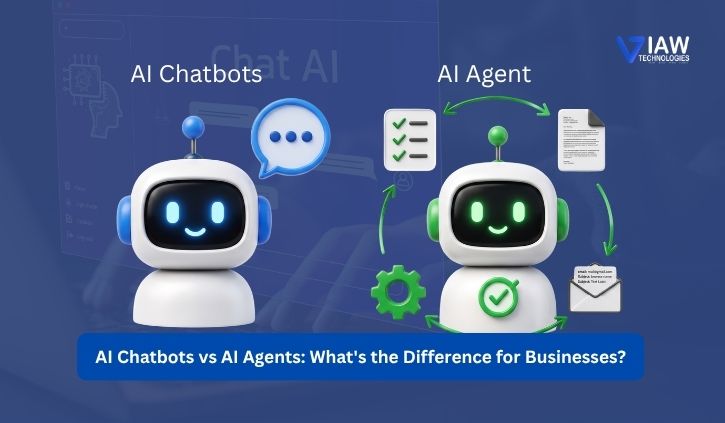
Increasingly sophisticated modern AI chatbots are evolving to include what we can think of as an AI agent capable of actually doing things in addition to just writing an answer. Agentic AI in service is a big topic in customer service today.
This is because, according to Salesforce, service leaders identified an investment in an AI agent as their top priority, while organizations also indicate it as the way they will make improvements to customer-service costs and speed.
2. Sales and Lead Management
AI may be programmed to score and qualify leads automatically, populate CRM fields, set up follow-up appointments, provide a summary of sales calls, and identify good prospects.
AI automation for sales and marketing combines sales automation with marketing workflows to automate manual qualification and follow-up processes, freeing sales and marketing teams to focus on qualified prospects and strategic customer relationships.
Across India , AI agents are already being deployed from an experiment into a sales process function.
3. Marketing Automation
These AI systems can also observe customer behaviour, tailor content, segment data into audience groups, automate workflows, and adapt to varying customer behaviour over time, leading to more data-driven marketing automation.
4. Business Process Automation
BPA offers many applications, from processing invoices to onboarding new employees, analyzing documents to providing reports, linking up various applications and eliminating most manual handover.
Companies can start by looking for mundane tasks that will be able to be standardized and then gradually introduced with AI where the business need is of reasoning, forecasting, prediction, etc.
Through process standardization, businesses can identify areas for process optimization by taking a critical look at where the main bottlenecks are and improving workflows accordingly.
How to Automate Business Processes With AI
A pragmatic start: Begin with a high-volume process with tangible business value. Define the business processes, note where repetitive tasks exist, how business systems are interrelated, and determine where human review is necessary. If the workflow requires even more complex, step-based actions, agents can perform the plans and execute based on the planned tasks.
Google Cloud sees these agentic workflows as another key trend for 2026, as more agents can coordinate multiple activities across business processes.
As AI goes deeper into the business operations, businesses should have governance, data security, monitoring, and human review in place for automation scaling.
AI Automation Trends to Watch in 2026
The greatest transformation for 2026 isn’t simply AI assistance but agentic AI, where AI agents can comprehend goals, deploy tools, engage with business apps, and carry out multi-step processes. Additional important trends mentioned are multimodal AI, voice automation, decision support augmentation with AI, multi-agent workflows, model routing, and human-AI partnership.
The trends of Multimodal and Voice AI, to bring in a more natural customer experience, are seeing early adoption from customer care departments in India.
AI Commerce—whereby autonomous systems handle shopping and product discovery. Increasingly, especially at the enterprise level, controlling AI expenditure, appropriate selection of AI models and developing a resilient and adaptable infrastructure are becoming more prevalent.
Any businesses implementing an overall AI strategy should use any recent developments to anticipate and address where automation is growing, and the following AI development trends every business should watch in 2026 will be important in this respect.
The Future of AI Automation
It’s not a world purely focused on replacing manual operations. It’s going to be driven by the intelligence of business operations, with humans and AI working together. AI automation for small businesses can provide significant efficiency benefits by helping smaller teams automate administrative work, customer enquiries, lead follow-ups, and reporting.
Meanwhile, companies with larger teams can use intelligent AI agents to manage an increasingly greater number of complex activities.
These will be the organizations dedicated to functionality, ROI, data security, ethically-based AI, and the guiding force of the human decision-maker, which can then develop AI automation from innovation to a lasting source of competitive advantage.