IAW

iaw-white-logo iosandweb technologies
Categories
Blog

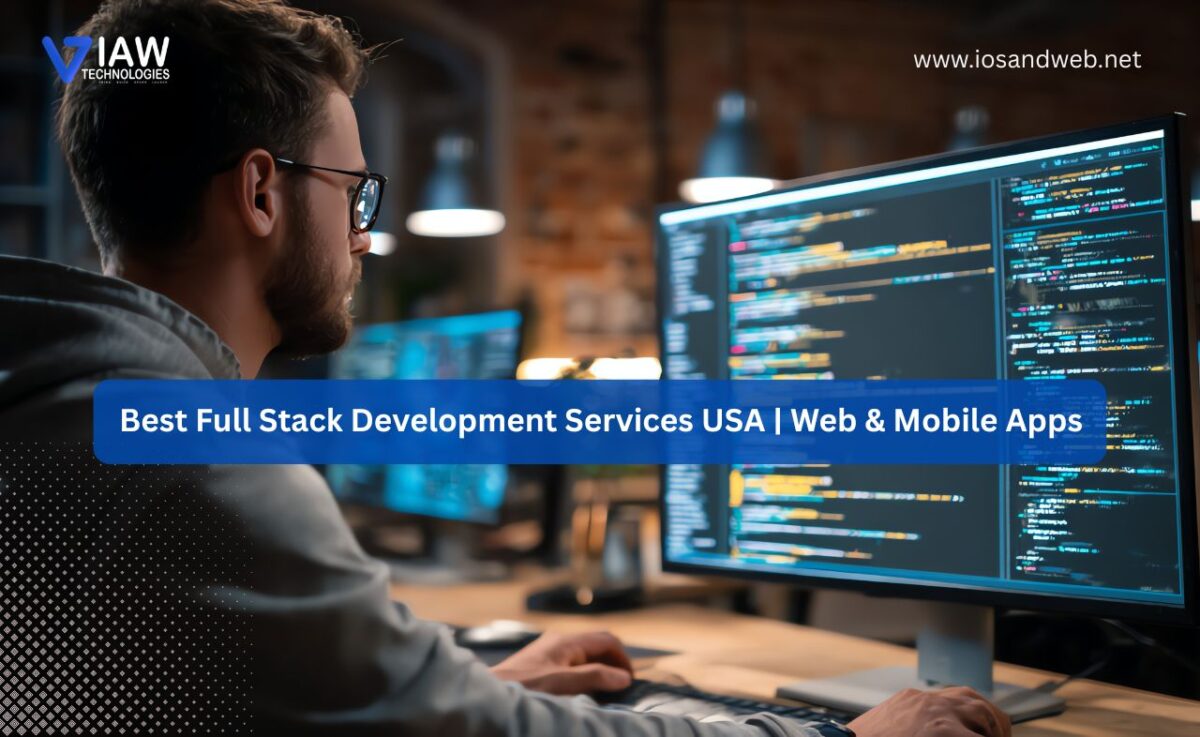
Best Full Stack Development Services in USA: Building Scalable Digital Solutions

In the fast-changing digital world of today, companies require more than a website or an application—they require end-to-end, scalable solutions that expand as per their aspirations. That is where full stack development services in USA get involved, providing complete end-to-end expertise that turns ideas into potent digital products.

Why Choose Full Stack Web Development Services for Your Business

Full stack development covers both frontend and backend development, building integrated digital experiences from the user interface all the way to the database layer. By contrast with specialized developers who each work on one area, full stack developers have the adaptability to work on all aspects of your project, which makes them a valuable asset for companies looking for unified, scalable digital solutions.

The US has become a world center for top-of-the-line full stack development professionals, where one finds the best technical skills along with profound knowledge of market forces. When you’re working with USA full stack development services, you’re not employing programmers—you’re accessing strategic tech partners who have a clue as to how to create systems that scale.

Technologies Used by a Full Stack Development Company in USA

Frontend Frameworks That Shape User Experience

Full stack development services leverage modern frontend technologies such as React, Angular, and Vue.js to build intuitive, responsive, and high-performing user interfaces. These frameworks enable developers to create single-page applications (SPAs) that deliver fast, seamless, and desktop-like experiences across web browsers, improving user engagement and customer satisfaction. A Full Stack Development Company in USA uses these advanced technologies to develop scalable web applications that meet evolving business requirements.

The frontend layer is the first point of interaction between users and your application, making usability and performance essential for long-term success. A trusted Full Stack Development Company in USA combines experienced UI/UX designers with skilled developers to create visually appealing, user-friendly, and responsive digital experiences. By offering comprehensive full stack web development services, these companies ensure every interface is optimized for functionality, accessibility, and business growth..

Backend Architecture for Unparalleled Performance

The backend is the powerhouse of any digital solution. Top full stack developers in the USA work with robust technologies such as Node.js, Python (Django/Flask), Ruby on Rails, and Java Spring Boot to develop secure, efficient server-side applications. These technologies manage anything from business logic and database functionalities to API integrations and authentication mechanisms.

Scalability starts at the backend. Professional development teams design systems on the microservices, containerization (Docker/Kubernetes), and cloud-native paradigms that enable your application to manage increasing user loads without a performance hit.

Why Full Stack Web Development Services in USA?

World-Class Talent Access

The USA has some of the best technology education institutions in the world and hosts the best talent on the planet. Investing in American full stack web development services in USA gives you access to developers who are not just technically sound but also have an understanding of how to develop products for competitive markets.

These experts are up to date with the latest technology, contribute to open-source communities, and integrate best practices from a wide array of industry experiences. This becomes directly applicable to your projects as more maintainable codebases and improved architecture decisions.

Proven Track Record of Scalable Solutions

US-based development companies have been able to successfully implement projects for startups that have grown to millions of users and companies that manage sophisticated digital ecosystems. Such experience is priceless while developing solutions that must operate under pressure.

From e-commerce websites managing Black Friday traffic surges to health care applications needing HIPAA compliance, full stack web development company USA have proven their capability to develop systems that are not only functional but truly scalable and secure.

Some of the important services offered by full stack development companies are as follows:

Custom Web Application Development

Whether you require a customer-facing website, an internal management system or a SaaS product, full stack teams develop custom web applications that meet your exact needs. These solutions are easily integrated with your current systems while there is space for future extensions.

Mobile Application Development

Numerous full stack providers provide cross-platform mobile app development with technologies such as React Native or Flutter, enabling you to target both iOS and Android users with one codebase. This reduces the development time and cost significantly while providing uniform user experiences on devices.

API Development and Integration

Today’s apps are seldom standalone. Full stack developers build secure RESTful and GraphQL APIs to make your systems talk to third-party services, mobile applications, and partner platforms. They also connect payment gateways, CRM platforms, analytics software, and other critical services to your digital system.

Cloud Infrastructure and DevOps

Scalability is not about code—scaling is about infrastructure. Best full stack development services are cloud architecture design, automated deployment pipelines (CI/CD), monitoring systems, and performance optimization. They use top cloud providers such as AWS, Google Cloud, and Microsoft Azure to deploy robust, auto-scaling infrastructure.

Development Process: From Concept to Launch

Discovery and Planning

Excellent full stack development service providers in USA start with intensive discovery sessions to get a grasp of your business objectives, target market, and technical needs. Competitor analysis, technology stack planning, and project roadmapping are part of this step.

Agile Development Methodology

The majority of US-based teams practice Agile or Scrum methodologies, releasing work in incremental sprints that enable ongoing feedback and adaptation. This methodology guarantees that the final product meets your vision while embracing changing requirements.

Quality Assurance and Testing

Thorough testing—unit tests, integration tests, and end-to-end testing—guarantees that your application runs smoothly through various scenarios. Security testing and performance benchmarking are also practices from top-rated providers.

Deployment and Post-Launch Support

The partnership doesn’t stop at deployment. Professional services offer continuous maintenance, feature addition, and technical support to keep your app secure, fast, and in sync with your expanding business needs.

Choosing the Right Full Stack Development Partner

While assessing potential partners, ensure that companies possess relevant industry expertise, open communication practices, and portfolios showing successful scalable projects. Ask them about their development processes, technology expertise, and post-deployment support models.

The top full stack web development services in USA will behave as true partners, providing strategic input in addition to technical delivery. They’ll question assumptions when appropriate, suggest cutting-edge solutions, and stick to your long-term success.

Conclusion: Investing in Scalable Digital Excellence

Selecting the ideal full stack development partner is one of the most important decisions you’ll make for your digital projects. With the focus on technical expertise, tried-and-tested methodologies, and innovation culture, Hire full stack development services USA provide compelling benefits for enterprises committed to developing scalable digital solutions.

Whether you’re an enterprise refactoring legacy apps or a startup seeking to test your MVP, working with seasoned full stack engineers guarantees your digital foundation is crafted to drive expansion, evolve with change, and provide outstanding user experiences at scale.

Categories
Blog

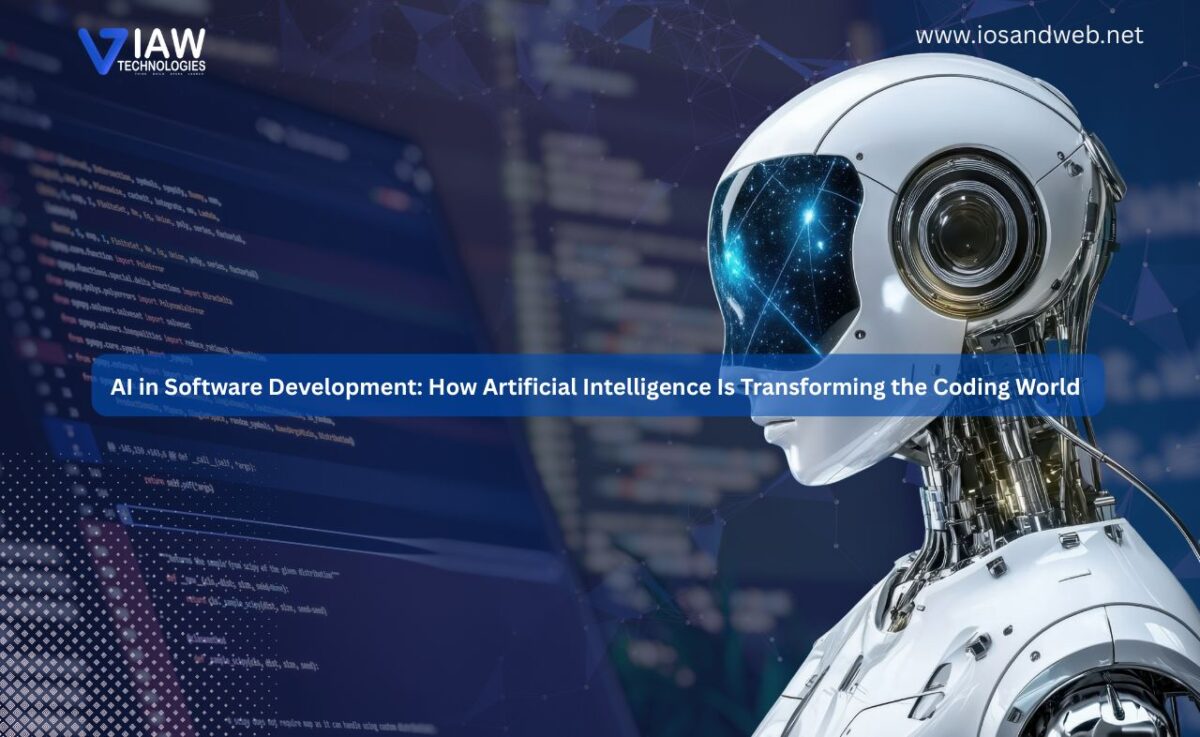
AI in Software Development: How Artificial Intelligence Is Transforming the Coding World

Software development is being turned on its head, and artificial intelligence is at the center of it all. You’re a developer, tech enthusiast, or entrepreneur — you’ve probably seen firsthand how AI in software development has evolved from science fiction to mundane fact. But what does that actually mean for the future of programming, and how can you take advantage of these technologies to stay ahead of the curve?

The Era of AI-Powered Development Tools

Those days are gone when coding involved spending hours in front of a blank page, fighting syntax errors and logical issues. AI-based software development has ushered in the age where smart assistants collaborate with developers, providing real-time feedback, detecting issues even before they occur, and even creating complete code blocks from plain English descriptions.

Tools like GitHub Copilot, Amazon CodeWhisperer, and Google’s AI coding tools have come a long way. These environments don’t just auto-complete your code-they’re reading context, inferring intent, and generating solutions that are at or near best practices. For most developers, these AI assistants are now as essential as their IDE itself.

How AI Code Generation Actually Works

Fundamentally, AI code completion is based on large models that have learned from billions of lines of code in open source libraries. They learn patterns, boilerplate solutions, and programming idioms in many languages. As you begin typing a comment or a function, the AI looks at what you’re typing and proposes appropriate code completions.

The best part about AI in coding is that it doesn’t just learn syntax, but intent. Explain to it what you need in normal English, and the AI will respond with that as actual code in languages such as Python, JavaScript, Java, or Go.

Automated Testing and Quality Assurance

Maybe the most vital use of artificial intelligence to software programming is automated testing. Previously, testing involved where the programmers would write test cases themselves, execute them, and inspect results—a time-wasting activity that would usually have human error.

Today’s AI can generate test cases from your codebase automatically, anticipate where it might fail, and even provide fixes ahead of time before bugs reach production. Machine learning algorithms analyze historical bug histories for patterns and weaknesses that human testers can’t detect.

Intelligent Debugging: Needles in Code Haystacks

Debugging has been the most infuriating part of programming all along. AI debuggers now scan your code, identify differences, and offer context-specific explanations for why it does not work. Some of the more sophisticated systems offer alternatives with probability of success ranked. 

This shift allows developers to receive less bug hunting and more of creating features that count. What happens? Accelerated development cycles and better quality software reaching end users.

Code Review and Optimization at Scale

Code review averts the code from being poor in quality, but it is labor-intensive. AI-powered software development has worked wonders on this endeavor by delivering automated code reviews that seek out security bugs, performance problems, and code standard enforcement.

These smart systems are able to scan several hundred lines of code within seconds and identify possible problems that may take their human counterparts hours to notice. They measure code complexity, propose refactoring opportunities, and enforce consistency throughout large codebases.

Performance Optimization Through AI

Aside from detecting bugs, artificial intelligence excels at code optimization. AI programs scan your code’s run patterns and provide suggestions to reduce memory usage, reduce processing time, and make it more efficient in general. This is quite handy in applications dealing with massive datasets or complex processing calculations.

The Impact on Developer Productivity and Creativity

One of the strongest points for AI in coding is its impact on productivity. Research indicates that coders using AI-based coding tools can complete work 25-40% quicker than coders working individually. Speed is only part of the advantage, though.

By liberating developers from the tedium—such as writing boilerplate code, producing documents, or dealing with repetitive patterns—AI allows developers to focus more on creative problem-solving and architecture ideas. This allows software engineers to remain at a higher level of abstraction, with fewer user interface and business logic intricacies involved in implementation and more.

Learning and Skill Development

Interestingly enough, software development AI is a superb learning tool for junior and senior developers alike. Junior developers would observe best practices in practice as the AI offers correctly written code, while seniors are able to learn new languages or frameworks at an accelerated pace using AI-provided examples and documentation.

Challenges and Considerations

In spite of all the hoopla regarding artificial intelligence in coding, it is prudent to recall the traps. AI code is not necessarily perfect—sometimes it may spew out inelegant solutions or seed fatal bugs hard to trace. Coders have to be ever vigilant and critically examine AI proposals.

Also on the agenda for discussion is the issue of dependency and skill obsolescence. Does excessive reliance on AI tools diminish core coding skills? The response is probably in moderation—AI as a supplement to human capability, not a substitute.

Security and Privacy Issues

When developing software with assistance from AI, the programmers need to be mindful of security issues. AI algorithms trained on open code bases can ultimately provide code patterns containing vulnerabilities or even replicate proprietary code unintentionally. Firms need to have proper policies regarding what code can be subjected to AI tools and how sensitive data should be treated.

The Future: Collaboration, Not Replacement

The AI revolution in the field of coding is not a replacement one—it’s an augmentation one. The best development teams of the future will be those that successfully integrate human imagination, critical skill, and domain expertise with the speed, pattern recognition, and computational ability of AI.

As they become more smart, we can anticipate even more advanced uses: AI that can grasp business needs and create complete application designs, systems that can anticipate and prevent security vulnerabilities ahead of time, and development environments that learn about the working style of individual programmers.

Embracing the AI-Powered Development Era

One of the largest paradigm changes in the history of computer programming is the use of AI for software development. Whether you are building mobile applications, web sites, or enterprise-class software systems, artificial intelligence provides tools that can make you more productive, more efficient, and ultimately more effective.

The question is not if you should adopt these technologies, but how to intentionally insert them into your development process. Begin small, try various tools, and discover what AI assistants augment your coding process. The world of coding is changing—and if you participate properly, you may change along with it.

Ready to discover how AI can help enhance your software development projects? At IosAndWeb, we are ever on the forefront of development technologies, helping companies apply the latest technologies to design exceptional digital products.

Categories
Blog

Why You Need a Shopify Web Development Agency for Your eCommerce Success

Building an eCommerce site is easy—but an eCommerce site that actually makes sales, converts visitors, and scales along with your business? That’s the difficult part. Shopify has become the go-to platform for progressive eCommerce businesses due to its flexibility, integrations, and user-friendliness. But to unlock its true potential, you often need more than a DIY install.

That’s where a Shopify web development agency comes into play. These experts don’t just build your store—they create a tailored digital experience that connects with your brand, drives conversions, and prepares you for long-term expansion.

1. What Exactly Does a Shopify Web Development Agency Do?

A Shopify web development company is comprised of experts who specialize in building, optimizing, and maintaining Shopify stores. They are responsible for taking your eCommerce concept to a fully functional, visually appealing, and conversion-friendly website.

They manage:

  • Custom theme development and design to reflect your brand identity.
  • App integrations for analytics, marketing, and customer experience.
  • Speed and performance optimization to make it easier to browse.
  • Migration from other platforms to Shopify.
  • Technical SEO configuration for improved search visibility.
  • Ongoing support and maintenance so your store stays secure and scalable.
  • In short, they do all the heavy backend and frontend lifting so you can focus on running your business.

2. Why Not Just Build the Store Yourself?

Shopify’s drag-and-drop features make it seem simple enough to DIY. But while templates can help you get started, they never deliver the depth, the pace, and the polish that today’s customers expect.

A professional Shopify web development agency can:

  • Personalize your store beyond what templates allow.
  • Optimize your site for SEO, performance, and conversions.
  • Ensure it integrates with third-party apps and future version upgrades.
  • Troubleshoot and fix bugs quickly.
  • Think of it this way—anybody can technically create a store, but only professionals can create one that sells.

3. How a Shopify Web Development Agency Drives eCommerce Success

a) Custom Design That Builds Trust

First impressions count. A generic design won’t go far in building trust. Agencies develop specialized Shopify themes to reflect your brand tone, color scheme, and user base.

 Custom design = stronger brand identity = higher conversions.

b) Optimised User Experience (UX).

Navigation, speed, structure, and mobile-friendliness all factor into how customers engage with your store. A Shopify web development agency ensures your site smoothly navigates, loads quickly, and keeps users engaged. A seamless experience tends to equate to lower bounce rates and better conversion rates.

c) Built-in SEO Foundation

Agencies refine your site structure, meta tags, and content organization for Google. That translates to more visibility and organic traffic—without spending a dime more on ad spend.

d) Seamless App Integrations

From inventory management apps to CRM software, payment gateways, and marketing automation—Shopify has thousands of apps it integrates with. A good agency knows exactly which ones are best for your business model and how to integrate them seamlessly without slowing down your site.

e) Data-Driven Improvements

A good Shopify web development agency doesn’t just launch your site online and walk away. They track analytics, heatmaps, and conversion rates to see what makes the future better, so your store keeps evolving with customer habits.

4. The ROI of Hiring a Shopify Web Development Agency

Your investment in pro development pays back in many forms:

Increased conversion rates: A cleaner design and sensible content flow convert visitors into customers.

Better scalability: Agencies build stores with more traffic and transactional capacity as you grow.

Less downtime: Experts keep your store up to date and running smoothly, keeping problems from arising in the first place.

Better SEO visibility: A solid technical foundation lets your products show up where it matters—on Google’s front page.

Saved time: You can focus on products and strategy while letting your agency handle the tech.

Plain and simple, a Shopify web development agency lets you make more money with less stress.

5. How to Choose the Best Shopify Web Development Agency

Before signing on the dotted line, make sure the agency:

  • Is Shopify Partner or Expert certified.
  • Offers open-book pricing and set timelines.
  • Is familiar with an established portfolio of Shopify stores in your industry.
  • Provides post-launch service and ongoing optimisation.
  • Is ethical and honest and is on the same page as you.
  • Your ideal collaborator is not just technically skilled—they are familiar with your business model and target audience.

6. Shopify Web Development vs. Generic Web Development

Shopify-specific stores are better than general web developers because they possess knowledge of the platform that generalists don’t. They understand Shopify’s Liquid code, app ecosystem, SEO quirks, and payment gateways.

Having a Shopify web development agency means fewer integration issues, faster setup, and a Shopify-optimized website.

7. Future-Proofing Your eCommerce Business

The eCommerce world evolves so fast—new payment options, AI-recommended products, and changing customer expectations are always around the corner.

 A Shopify web development agency stays on top of these trends and ensures your store just keeps up easily. That’s the difference between a store that survives and one that thrives.

Conclusion

Your Shopify store isn’t an online catalogue—it’s the face of your business, the heart of your brand, and a significant producer of your revenue. That’s why having a Shopify web development agency ensures that each component of your site, from look to performance, is built to deliver maximum results.

If you want your eCommerce business to be more than just seen, but scale with maximum effectiveness, and deliver an out-of-this-world shopping experience, now’s the time to hire the experts. Because success with Shopify isn’t so much about being online—it’s about getting it right.

Categories
App Development Blog

Best Coding for App Development: Top Languages Every Developer Should Know

Developing an app is not only about ideas, it is about making those ideas into functional, reliable and engaging digital products. Whether you’re developing a startup app or an enterprise platform or the next viral social media tool, the foundation is choosing the best coding for app development.

The language you choose to program in can impact everything from scalability and performance to maintenance and user experience. So how do you best program apps, and what programming languages are most valuable to learn in 2025? Let’s be specific.

1. Why the Right Programming Language Matters

The right programming language can make or break your app’s success. It affects:

Speed and performance: The speed at which your app runs and responds.

Compatibility: Whether it is compatible with Android, iOS, or both.

Development time: How quickly your developers can code, test, and release.

Maintenance: How rapidly bugs can be resolved or updates published.

Different applications demand varying tools. That’s why getting to know best coding for app development isn’t all about popularity — it’s all about purpose.

2. Swift – The King of iOS App Development

If your goal is building apps for Apple products, Swift is a no-brainer. Apple created Swift, and it’s a high-performance and safe language that’s easy to learn — perfect for anything from iPhone and iPad apps to Apple Watch integration.

Why developers like Swift:

  • High performance and concise syntax.
  • Safe coding environment that avoids common errors.
  • Fantastic integration with Apple’s ecosystem (UIKit, SwiftUI).
  • Perfect for: iOS, macOS, watchOS, and tvOS apps.

Swift is most often the first one that comes to one’s mind when people speak about the best coding for app development, especially in the Apple ecosystem.

3. Kotlin – New Favorite among Android Developers

For Android developers, Kotlin has taken the place where Java once held undisputed dominance. It’s concise, expressive, and fully backed by Google as the top choice for an Android language.

Why Kotlin is special

Less code to write in comparison to Java.

Compatible with existing Java codebases.

Supports both object-oriented and functional programming.

Best for: Android apps, server-side development, and cross-platform tools like Ktor or Jetpack Compose.

If you’re serious about building Android apps, Kotlin should be at the top of your best coding for app development list.

4. JavaScript – The All-Rounder for Cross-Platform Apps

JavaScript pervades everything — and now, it’s also one of the best programming languages for building apps. With React Native and Ionic, developers can write apps that run on iOS and Android with minimal effort.

The reasons developers still use JavaScript:

  • It is capable of true cross-platform development.
  • Enormous library support and lively community.
  • Works perfectly with backend technologies such as Node.js.

Best for: Hybrid mobile apps, PWAs (Progressive Web Apps), and small to mid-scale projects.

If you want one codebase that flows across devices, JavaScript is a good bet.

5. Python – Simplicity Meets Power

While never traditionally linked to mobile apps, Python has become a favorite among developers seeking speed, ease, and flexibility. Libraries like Kivy and BeeWare let you develop cross-platform apps using pure Python.

What Python excels at:

  • Easy to read and newbiefriendly syntax.
  • Ideal for data-centric or AI-driven apps.
  • Extensive libraries for backend, analytics, and automation.
  • Ideal for: Prototype apps, data analysis apps, AI-driven apps, and MVPs.

Python’s simplicity and minimalist architecture make it one of the most appropriate coding options for app development, especially for startups that require speed.

6. Dart (with Flutter) – Beautiful and Fast Apps

Google created Dart, which powers Flutter, a technology that’s changing mobile development forever. With Flutter, you can use a single codebase and deploy on Android, iOS, web, and desktop as well.

Why Flutter + Dart is picking up steam:

  • Stunning, high-performance UI design.
  • Hot reload for lightning-fast code updates.
  • Near-native performance across all platforms.
  • Best for: Startups, multi-platform apps, and firms that need quick prototyping.

If you’re exploring modern tools, Flutter is often named among the best programming for app development frameworks right now.

7. C# – The Veteran That Still Shines

With Xamarin and the .NET framework, C# is still a solid option for mobile developers. It’s got amazing features, excellent community backing, and is perfect for Windows background developers.

Why it’s still relevant:

  • Established ecosystem and excellent tooling (Visual Studio).
  • Solid performance and scalability.
  • Platform support for Android, iOS, and Windows.
  • Ideal for: Enterprise-level mobile apps and Microsoft tool-using teams.

8. What’s “Best” Depends on Your Goal

There is no single “best coding for app development.” Responds to your project:

  • Goal
  • Recommended Languages
  • iOS-only apps
  • Swift
  • Android-only apps
  • Kotlin
  • Cross-platform apps
  • JavaScript (React Native), Dart (Flutter)
  • AI or data-driven apps
  • Python
  • Enterprise solutions
  • C#, Kotlin

When comparing the best programming for app development, think about long-term scalability, community support, and number of developers available.

9. Trends Shaping App Development in 2025

The coding environment for app development keeps evolving. These are some trends to watch out for:

  • AI-coded coding (with offerings like GitHub Copilot) speeding up development.
  • Low-code platforms allowing teams to build apps with minimal coding by hand.
  • Cross-platform frameworks (Flutter, React Native) mainstreaming.
  • Sustainability in code — developers optimizing for energy and resource efficiency.
  • These trends don’t replace solid programming skill. They just make optimal coding for app development even more accessible and efficient.

Conclusion

There is no single “best” app development programming language for everyone. Swift and Kotlin are the kings of mobile platforms, JavaScript and Dart rule the cross-platform world in versatility, and Python is the king of flexibility.

The best code for app development is code that is working towards your objective, your team’s capability and your users. Keep learning, keep experimenting and stay adaptable. That’s the way to become a top-notch developer.

Categories
Blog

Enterprise Blockchain Technology: Transforming Business Operations in 2025

The digital world is changing at breakneck pace, and companies that do not keep pace will be left on the sidelines. Through 2025, there is one technology that is an actual force of transformation: enterprise blockchain technology. Unlike the cryptocurrency bubble that filled headlines a few years ago, enterprise blockchain now is about fixing real business issues—anything from supply chain clarity to secure information sharing and process streamlining.

But why is enterprise blockchain technology so revolutionary, anyway? And more specifically, how precisely can your business leverage it to differentiate you from the rest? Let’s go into the realm of enterprise blockchain and see why bringing on a veteran enterprise blockchain development firm may prove to be one of the best business moves you’ll ever make this year.

What is Enterprise Blockchain Technology?

Fundamentally, enterprise blockchain technology is a shared ledger that happens in business. Unlike the public blockchains present for all, enterprise blockchain happens on permissioned networks wherein merely authorized participants may see and authenticate transactions.

Imagine a collective digital notebook, where many are writing it at the same time but nobody can delete what has been written. Every transaction is secured with cryptography digitally, dated by a stamp, and linked to the next, forming a one-way chain of transactions that cannot be undone. This design provides three simple advantages: transparency, security, and efficiency.

What distinguishes enterprise blockchain technology from its public equivalents is an emphasis on scalability, privacy controls, and governance systems that align with corporate compliance needs. A seasoned enterprise blockchain development firm sees the subtleties of this and can adapt solutions meeting a specific industry regulation and offer measurable business value.

Why Businesses Are Adopting Blockchain for Enterprise in 2025

Enterprise blockchain adoption has moved from pilot projects to massive deployments. There are a number of reasons that are propelling this pace:

Increased Security and Data Integrity

Data breaches cost companies millions of dollars every year, along with the reputational hit. Business blockchain technology offers military-grade security through consensus algorithms and cryptographic hashing. Data stored on the blockchain can be altered only by re-creating all the following blocks on multiple nodes—a virtually insurmountable task.

Financial institutions are applying blockchain to business for validating cross-border transactions, and healthcare organizations are safeguarding patient records with blockchain-based systems. The native security design of the technology naturally diminishes the possibility of single points of failure that plague conventional centralized databases.

Transparency and Traceability in Supply Chain

Supply chains are growing more complicated, stretching across borders and touching dozens of intermediaries. Enterprise blockchain technology provides unparalleled visibility into these kinds of networks. Every step the product takes, from raw materials to final delivery, can be logged on an unerasable ledger.

Retailers can confirm product authenticity, manufacturers can determine actual-time bottlenecks, and customers can view spend history at a click of their mobile phone. When you use an enterprise blockchain development firm, they can couple IoT sensors and smart contracts to perform verification steps automatically, eliminating manual overhead and increasing precision.

Cost Reduction Through Disintermediation

Conventional business transactions typically have several middlemen involved—banks, brokers, clearinghouses, and check agencies—all of whom charge cost and time on transactions. Blockchain business gets rid of most middlemen since it permits peer-to-peer transactions with inherent trust factors.

Think about cross-border payments: what would otherwise take 3-5 days and an enormous cost can be done in minutes at a fraction of the cost with enterprise blockchain technology. Smart contracts automate complex multi-party agreements, lessening legal cost and execution time to seconds from weeks.

Key Uses of Enterprise Blockchain Technology by Industry

Financial Services and Banking

The first to identify the potential of blockchain were banks and financial institutions. Apart from cryptocurrency, they’re implementing enterprise blockchain technology in regulatory compliance, securities settlement, and trade finance. Industry-specific blockchain for enterprise solutions handling thousands of transactions per day have been developed by consortiums such as the Enterprise Ethereum Alliance and R3.

JP Morgan’s JPM Coin and the Australian Securities Exchange’s blockchain settlement platform are just the beginning. A financial services industry seasoned enterprise blockchain development company can assist institutions in navigating regulatory needs as they develop sound, scalable solutions.

Healthcare and Pharmaceuticals

Patient interoperability continues to be healthcare’s most vexing headache. Enterprise blockchain technology provides patient-autonomous, secure medical records any authorized provider can access independent of their electronic health record (EHR) system. This eliminates redundant testing, enhances diagnostic accuracy, and provides the patient with true ownership of medical data.

Pharmaceutical firms are using blockchain for business to fight counterfeits—a $200 billion-a-year issue. By following medicines from factory to patient, blockchain guarantees authenticity and allows speedy recall action when necessary.

Manufacturing and Supply Chain

Enterprise blockchain solutions are being used by international industry leaders to issue digital representations of real assets, track the origin of components, and implement automated quality inspection procedures. Upon discovery of a defect, traceability functionality within blockchain enables companies to mark batches and places in real-time.

Walmart’s traceability initiative shaved product-source identification time from 7 days to 2.2 seconds with enterprise blockchain technology. That’s from a regional recall to a national crisis.

Government and Public Services

Governments across the globe are looking towards enterprise blockchain technology for land registration, digital identity management systems, and open voting systems. Estonia’s e-Residency initiative and Dubai’s blockchain initiative show how distributed ledger technology can be leveraged to improve public sectors.

Collaborating with an enterprise blockchain development firm having experience in government projects ensures strict security and privacy compliance while providing citizen-focused solutions.

Choosing the Right Enterprise Blockchain Development Company

All blockchain solutions are not equal, and the right partner is essential for success. Look for the following in an enterprise blockchain development firm:

Technical Expertise Across Multiple Platforms

The blockchain environment is comprised of various platforms—Hyperledger Fabric, Ethereum Enterprise, Corda, and Quorum—each of which has its strengths. Your development partner must have experience with several frameworks and be in a position to recommend the most appropriate one for your specific use case.

Industry-Specific Knowledge

Blockchain healthcare requirements vary significantly from those of supply chain or financial use cases. An enterprise blockchain development firm with experience provides industry-aware expertise, familiarity with regulatory models, integration complexity, and process operation specific to your enterprise.

End-to-End Service Capabilities

Successful blockchain deployment is more than writing code. Bring in partners who provide strategy consulting, proof-of-concept creation, legacy system integration, security audits, and support. The ideal enterprise blockchain development partner becomes an extended tech partner, and not merely a vendor.

Track Record and Case Studies

Obtain detailed case studies with measurable results. Did the previous deployments reduce costs? Improve processing? Secure better? Detail-rich examples show capability better than vague claims.

Conquering Typical Enterprise Blockchain Implementation Challenges

Enterprise blockchain technology has deeper value, yet implementation is not smooth sailing:

Scaling issues: Early blockchain networks had low throughput of transactions. Current blockchain for business has mitigated this largely in part through sharding, layer-2 solutions, and more efficient consensus algorithms.

Complexity of integration: Integrating blockchain with legacy ERP, CRM, and database systems is not a piece of cake. A seasoned enterprise blockchain development firm employs APIs, middleware, and microservices architecture to facilitate ease of integration.

Regulatory ambiguity: Blockchain regulations are in a state of flux across the world. Having flexibility in your architecture and employing lawyer-fluent developers future-proofs your investment.

Change management: It’s merely technology. Enterprise blockchain technology adoption would call for training, process re-engineering, and acceptance by your stakeholders within your organization.

Future of Enterprise Blockchain Technology

Looking ahead to progress beyond 2025 and beyond, a number of trends are framing blockchain for enterprise:

Interoperability protocols are making it possible for various blockchain networks to talk to each other, dissolving data silos and forming value networks between ecosystems. Blockchain-AI convergence is building smart and self-optimizing supply chains and automated compliance systems. Green blockchain projects are mitigating environmental issues through energy-efficient consensus algorithms.

It is now not a matter of if or when you should adopt enterprise blockchain technology, but rather how soon you can implement it successfully. Your industry’s early adopters are already reaping benefits across efficiency, transparency, and customer trust.

Pioneering the Path to Blockchain Transformation

Deploying enterprise blockchain technology isn’t synonymous with ripping out your current infrastructure or staking the firm on unproven technology. Begin with a targeted pilot project to handle one pains point—maybe document verification, inventory management, or onboarding partners.

Collaborate with an enterprise blockchain development firm that invests time in knowing your business problems, rather than selling technical solutions. The appropriate methodology is strategic insight combined with technical expertise, driving value through measurable ROI while laying the foundation for future innovation.

Business blockchain is no longer so-called emerging technology—it’s arrived, it’s established, and it’s revolutionizing the way progressive businesses do business. The sole question now is: are you going to be a leader of change in your industry, or ride the sidelines?

Ready to see how enterprise blockchain technology can change your business operations? Get in touch with IosAndWeb’s blockchain specialists and pass on your unique challenges to find out about tailored solutions that yield actual business benefit. The distributed, open, and secure future of enterprise operations is here today.