IAW

iaw-white-logo iosandweb technologies
Categories
1st Blog

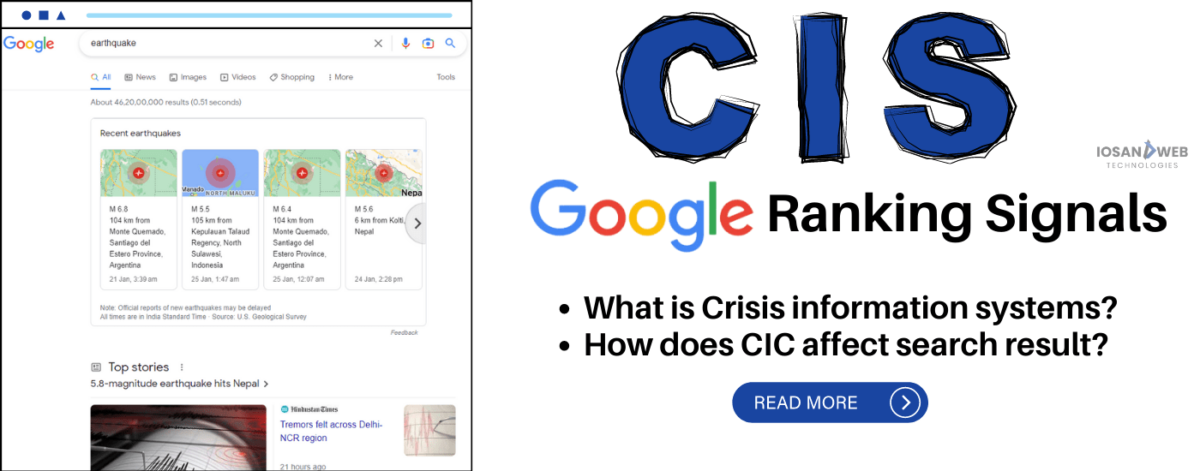
CIS – Crisis Information Systems – Everything You Need Know

A key organizational role is crisis management. Most organizations will experience a crisis at some point, and failing to respond effectively can seriously impact the business’s bottom line, stakeholders, and reputation.

To minimize harm, organizations must react to PR disasters swiftly and skillfully. For those working in public relations and crisis management, we’ve provided a list of best practices, helpful links, and case studies on this page. In the following segment we will cover, What is CIS in Google search? 

What is the history of CIS? 

The 1980s saw numerous large-scale industrial and environmental disasters, which gave rise to the subject of crisis management. It is regarded as the most significant step in public relations. A crisis typically has three components: 

(a) a threat to the organization, 

(b) the aspect of surprise, and 

(c) a limited amount of time for decision-making.

What is crisis management?

Here, a crisis is defined as a serious threat to operations that, if not addressed correctly, could have detrimental effects. Three connected threats can arise during a crisis:

  • Public protection
  • Financial setback
  • loss of reputation

Serious crises, including industrial accidents, can cause harm and even fatalities with SEO latest update. When a crisis occurs, money is frequently lost because less people make purchases, business activities are disrupted (for example, a factory may be closed while an accident investigation is conducted), and there may be legal action or payouts involved. Every crisis has the potential to harm an organization’s reputation.

Crisis management’s ultimate goal is to defend an organization and its stakeholders from dangers and lessen the severity of those risks with New Google algorithms.

In crisis management, there are three stages:

  • Strategy,
  • mitigation, 
  • getting ready for a turmoil

Management responds to a crisis through crisis management.

One searches for ways to better prepare for the next crisis after the last one has passed, and one keeps their word on previous promises.

Utilizing Social Media

It makes it feasible for people to communicate information during a crisis with a bigger audience more quickly, which puts organizations in danger. People have a highly public platform to express their thoughts, rumors, and experiences with Google search ranking updates.

We have an in-house certified team of SEOs. We offer Free SEO Audit Services and advanced SEO custom strategy. Contact Us

Now that everything is global

A problem in one market will eventually become news in other markets because of the internet and social media.

  • Be ready to handle the market crisis wherever. Crises exist everywhere.
  • Social media cannot be approached in a singular way. Various markets have various media, traditions, and customs. What solves the issue in one situation may make it worse in another.

Ante-Crisis Stage

In order to prevent crises from occurring, known risks must be reduced, It involves the following pointers: 

  • Recognizing your major stakeholders
  • developing and updating a crisis management strategy at least once each year
  • choosing and preparing a team for crisis management
  • exercising the crisis management team and strategy at least once a year

Recognizing your major stakeholders

One of the first tasks in creating a crisis communications plan is identifying the audiences that a company must contact during a crisis. Each audience that might be interested in information during and after an incident has different information demands with Google’s helpful content update.

If you are looking for quality content with SEO optimization so you can discuss with our qualified content writers. Contact Us

A list of prospective stakeholders with whom you might need to get in touch in a crisis is provided below. The following list will change based on the sector you work in:

  • Clients and customers
  • the incident’s survivors and their relatives
  • the family members of employees
  • Community, especially those who live close to a damaged facility
  • Directors and management of the company
  • shareholders and investors
  • a board member
  • government agencies, rule-making bodies, and other authorities
  • Suppliers
  • broader public

Once your groups are listed, you should determine who the owners of each relationship are.  Customer, supplier, news media, and other enquiries are answered by the central communications office. The contact center needs to have the right tools and employees that are prepared to respond to information requests with SEO update 2023.

Crisis Response Strategy

A crisis management plan (CMP) is a guide, not a construction manual. A CMP offers forms to be utilized to record the crisis response as well as lists of important contact information and suggestions for what to do in a crisis. A CMP is not a detailed manual for handling crises.

Time is saved by a CMP during a crisis by:

  • allocating some chores in advance
  • gathering data in advance
  • acting as a source of information
  • crisis response unit
  • The crisis team’s regular members are:
  • Public affairs
  • Legal \sSecurity \sOperations
  • Finance
  • people resources

Nevertheless, depending on the nature of the crisis, the composition may change. Each crisis is distinct, necessitating the need for crisis teams to make choices with Google Search updates

Think about the following as you prepare for a crisis:

  • Managing a possible crisis’ public relations component.
  • preparing, creating, and putting into action PR plans.
  • event planning, such as press conferences, family briefings, and press tours.
  • composing, researching, and sending press releases to certain media
  • preparing for and giving speeches to advance goals in public relations
  • establishing and preserving cooperative connections with community, customer, employee, and public interest group representatives with ranking signals
  • preparing or editing organizational publications for audiences both inside and outside the organization, such as employee intranets and stockholder reports
Speaker Education

Prior to any crisis, possible spokespersons should ideally receive media relations training and practice. All spokespersons are equipped with the necessary media relations knowledge and abilities thanks to preparation.

Following are some pointers for approaching the media:

  1. Avoid using the word “no comment,” as people may assume that the organization is guilty and concealing something.
  2. By staying away from technical terminology or jargon, communicate facts concisely. Lack of clarity leads people to believe that an organization is deliberately misleading them in order to conceal something.

Summary

Best practices, case studies, and helpful resources for crisis management teams have been identified with advanced SEO strategy. Although crises initially pose a threat, competent crisis management can reduce the harm and, in certain cases, enable an organization to emerge from the crisis stronger than before.

Since no organization is immune from a crisis, everyone should make every effort to be ready. This piece offers several suggestions that can be implemented into an efficient crisis management strategy.

Checkout Common SEO Mistakes To Avoid in 2023.

Categories
1st Blog Google Algorithms

Google BERT – Everything You Need Know

Know What is Google BERT?

Many of us already communicate directly with Google since it is integrated into so many aspects of our life.

Users input questions such “how do I go to the market” and “when does Spring start” as if they were speaking to a real person. But keep in mind that Google is an organization based on algorithms.

And Google BERT is one of such algorithms that helps the search engine grasp user requests and give pertinent results with New Google algorithms.

Yes, bots can grasp natural speech, including lingo, errors, repetitions, and to or that are present in our speech but that we don’t even notice because technology has improved so much since bots were first created.

Google developed this new search algorithm to comprehend users’ search intents and the contents of web sites better.

And how does it operate? How does it impact your SEO plans, too?

Let’s all get it now, shall we?

Describe Google BERT.

The Google BERT algorithm enhances spoken language understanding by the search engine.

Since individuals naturally reflect them in their search terms and page content, this is significant in the world of searches, and Google makes an effort to match them effectively.

An abbreviation for BERT is Bidirectional Encoder Representations from Transformers. Confusing? Okay, so let’s go through a few technical concepts in order to grasp what BERT is.

BERT is a neural network, to begin with.

What is that, do you know?

Neural networks are computer models that are based on the central nervous system of an animal, which has the ability to learn and detect patterns. Machine learning includes them.

BERT’s neural network can recognize the subtle linguistic variations in human speech with New Google algorithms.

It is based on the Natural Language Processing (NLP) Transformer paradigm, which recognizes the relationships among words in a phrase rather than evaluating each one separately in order.

BERT is a pre-training model for processed natural language. This shows that since the model was trained on a text corpus, the data set may be used to build a variety of systems (like Wikipedia).

Algorithms that, for example, assess questions, replies, or feelings can be made.

Artificial intelligence is a factor in every aspect of this predicament. In other words, bots handle every duty!

The algorithm, once created, continues to learn new things about human language by examining the massive volumes of data it receives.

It is important to note that BERT understands the full context of a word, such as the terms that arrive before and after it as well as their connections, which is essential for comprehending the components of websites as well as the reasons of users when they search on Google. This goes beyond the A.I. world, which mimics more science fiction.

BERT was released when?

On the GitHub platform, Google released BERT as open source in November 2018.

After that, anyone may quickly develop their own system using the pre-trained scripts and templates provided by BERT.

BERT was utilized by Google itself in its search engine with New Google algorithms. The incorporation of BERT in the search algorithm was Google’s biggest recent change, which was disclosed in October 2019.

Although Google has already implemented models for comprehending human language, this update was hailed as one of the most significant developments in the history of search engines.

BERT was first only offered in English and in the United States. However, the paradigm had already been adapted to more than 70 languages by December 2019. The quality of the search results increased significantly as a result.

RankBrain was replaced by BERT.

Google is constantly looking for ways to enhance user experience and provide the best results. BERT is not the beginning or the end of this.

The search engine revealed an update in 2015 called RankBrain that completely changed the search landscape with Google search ranking updates.

The system used artificial intelligence for the first time to comprehend material and search.

BERT and RankBrain both employ machine learning, but RankBrain does not incorporate Natural Language. The approach focuses on query processing and grouping semantically related words and phrases because it is unable to grasp human language on its own.

Therefore, when a new search is done on Google, RankBrain examines previous searches to determine which words and phrases, even if they don’t exactly match or have never been searched, best fit that search.

The bots gain better understanding of the connections between words and raise ranking as they get signals from user involvement with Google’s helpful content update.

As a result, this was Google’s first effort to comprehend human language. To give visitors with better results, the algorithm still uses this technique to comprehend search intentions and page contents.

Therefore, BERT did not supersede RankBrain; rather, it introduced a new way to interpret human language. Google’s algorithm can utilize either approach (or perhaps combine the two) depending on the search to provide the user with the best result with SEO update 2023.

Remember that a great complexity of rules and actions combine to produce Google’s algorithm. Although important, RankBrain and BERT are only a small portion of this powerful search engine.

How is Google BERT put into practice?

Google differs from other language processing algorithms due to its bidirectional nature. But what does that actually mean?

There is only one direction in other systems. In other words, they only contextualize words using the keywords in the text to their left or right.

BERT examines the surrounding area in both directions, to the left and right of the word. As a result, the relationships between words and phrases are much more understood.

Another distinction is that BERT builds a language model from a small text corpus.

BERT’s bi-directional approach, in contrast to earlier models, allows you to develop the system more accurately and with a lot less data than prior models.

As a result, when the model has been trained on a text corpus, it goes through “fine-tuning” (like Wikipedia).

BERT is currently being put through certain tasks, with your preferences dictating the outputs and inputs with Google Search updates.

Once that occurs, it starts to adapt to different requirements, such sentiment classification or responses to questions.

Be aware that there are numerous uses for the BERT algorithm. Therefore, when we discuss Google BERT, we are discussing how it is integrated into the search engine infrastructure.

BERT is a tool that Google employs to comprehend both the data it collects and the goals of its users’ searches.

Understanding what users mean does not require the study of previous searches like RankBrain. BERT comprehends words, phrases, and the entire text just like people do.

But remember that this NLP model is only one part of the algorithm. The meanings and linkages between words are known to Google BERT.

The remainder of the algorithm’s effort is still required by Google in order to link the query to the index pages, choose the top results, and order them by user relevance with search console updates.

Google BERT’s significance for the search experience

Let’s put the IT terminology aside for the time being and talk about what BERT implies in the area of Google searches.

But what effect does the algorithm have on way a person searches? You are aware that Google can better grasp human language thanks to the algorithm.

It’s important to remember that Google wants to organize all web content so that users may get the best answers.

The search engine must be able to understand both the topics that websites cover and what people are looking for. As a result, it can properly match keywords with web material.

For instance, when you type in “food bank,” the search engine understands that you are not seeking for a babysitter, a financial institution, or a sandbank in the sea.

If you typed “food bak” or “bank food” into the search bar, it would understand what you meant (in reverse order).

BERT understands the meaning of that term in both your search terms and the contents of the indexed sites.

When the algorithm scans a page containing the word “bank,” it divides the pages for the furnishings bank, food bank, and banking with new ranking signals.

However, the searcher goes above and beyond by understanding the search. 

Google is aware that you are seeking for food banks nearby because you conducted this search. As a result, the businesses in your area that provide this kind of service will probably be listed on the search result, especially if they have a successful local SEO strategy.

In this way, Google improves its intelligence to provide users results that genuinely fulfill their search criteria. A similar search experience is what Google aims to offer with new ranking factors.

In comparison, not every search result returned by Google in its early years corresponded to the user’s query. The searcher had just the option of the keyword’s exact match.

For instance, the search engine only could produce results for pages that had the exact phrase “bromeliad care” whenever anyone searched for it.

Google has already started to acknowledge that “care” and “how to care” are ideas that are closely related since the debut of RankBrain. In this scenario, the search engine would also show pages with the words “how to care for bromeliads.”

BERT tells Google that the user wishes to learn how to take care of bromeliads without using the precise words with advanced SEO strategy.

The problem is that Google’s original term exact matching technology led to the development of internet vices. Many websites began using the keywords in their content to appear in search results, much as a user might. But this has a horrible effect on reading enjoyment.

Think about this with us: Which would you like to read: an article that mentions bromeliad care in passing or one that continually utilizes the term “bromeliad care” without ever clarifying what it means?

As a result, Google’s decision to understand search intentions also improves consumers’ reading experiences.

Website content is intended to be presented using simple, reader-friendly language.

If you are looking for a quality content with SEO optimization so you can discuss with our qualified content writers Contact Us!


Through this, Google also combats the dishonest practice of keyword stuffing, which violates search engine rules. Consequently, the only winner is the user!

In what ways does BERT impact SERPs?

Google predicted that BERT would affect 10% of American searches when it initially launched it.

Many sites expected losing positions as a result of the announcement, as is the case with every algorithm upgrade, which generated a stir in the SEO industry with advanced SEO methods.

In contrast to improvements that attempt to curtail inappropriate conduct, BERT did not penalize any websites. As a result, the alignment of user queries and page content is enhanced.

As a result, if a person’s score for a certain keyword decreased, it indicated that their answer to the query was insufficient.

On the other hand, if the website is Google-optimized, it was probably more suited for a different query and was able to improve the quality of its traffic, increasing the possibility that readers will find the content interesting.

Google presented an example to show the enhancements that BERT makes to SERPs. The graphic below shows how the outcome might seem both before and after BERT.

How can content and SEO be optimized for BERT?

What can you do to improve your SEO outcomes in light of Google’s upgrade and the SERP changes?

In reality, not much can be optimized for BERT.

If you were looking for SEO advice when you found this post, you could find this phrase annoying with SEO latest update.

However, it’s important to understand that Google made this modification explicitly to prevent websites from tailoring their content and pages for search engines.

The search engine wants to trust that your website will deliver relevant content to users.

Therefore, optimize for users rather than BERT. Instead of offering optimization guidance, we wanted to emphasize certain effective content production strategies in order to give your visitor the best possible experience.

Write with clarity.

Both RankBrain and BERT require that content be made for people, not bots! So disregard exact keyword matching.

Many people still remove auxiliary words (referred to as stopwords, such as “to,” “a,” “from,” and “one,” etc.), striving to come closer to the phrases users use, in order to precisely match users’ searches.

This produces extremely optimized sentences for topics like “bike how to choose,” which at the very least makes reading them odd.

Text optimization that takes user spelling errors into account is another anomaly. Since many individuals could write “lawyer,” which is the proper term, the text instead substitutes “lawer.”

The website loses credibility in addition to doing absolutely nothing for SEO with SEO latest update!

We have in-house certified team of SEOs. We offer Free SEO Audit Services and advanced SEO custom strategy. Contact Us

Write about how to select a bike and how to hire a lawyer in clear, conversational English. Stopwords and spelling errors are unimportant.

Keeping this in mind, you don’t have to (and shouldn’t!) force Google to exactly match the consumers’ search phrases. Instead, use natural language whenever possible.

Improve for search intent

It’s accepted that SEO no longer focuses on particular keywords. Therefore, how should the content be optimized in order to show up in consumers’ searches?

Change your attention from keywords to search intentions.

Instead of concentrating on improving the user’s search experience, you should now improve the user’s search experience. Do you notice the distinction?

Understanding your consumer persona’s intentions—specifically, the uncertainties they want to clear up and which your website can address—is the key.

Searches for keywords and benchmarks, local search patterns, and ranking chances can all help you detect this. The production team must produce top-notch material that meets public demands as perceived by the public.

Look up the word-to-word connections in the semantic space

Make high-quality content

Although this orientation may seem obvious, it is always a good idea to reiterate. In essence, Google wants you to provide high-quality content for readers. Therefore, stop wasting time considering optimizing for various terms.

Make a commitment to provide unique, current, trustworthy, and user-friendly information for users in addition to fulfilling search goals. Create articles that are worthwhile to read and to share with Seo latest update.

According to Google, information that is of the highest caliber should possess a high level of EAT, or expertise, authenticity, and trust.

So, your content marketing strategy should be based on these words. Google will be able to identify your work.

Make reading the greatest experience possible

Finally, consider the reading experience at all times. Do you have a book you simply cannot put down? Or the piece that provides you with a wealth of useful knowledge?

Be motivated by them!

Recognize how these materials are composed, how they tell stories, and how they engage the reader. Naturally, you’ll need to modify the language and format for the internet, for instance, by incorporating scannability features and using links and photos.

This is what you need to accomplish in your writing to draw readers in and keep them coming back.

In terms of SEO, this interaction tells Google that you provide a nice experience and are deserving of ranking points with SEO latest update.

Thus, you have all the information you need regarding Google BERT and how it affects the SEO market.

You recognize that Google is being serious, don’t you?

Naturally, the investments won’t end with BERT. We’ll be here to watch this metamorphosis unfold alongside you.

Checkout Common SEO Mistakes To Avoid in 2023

Categories
1st Blog seo

The Ultimate Guide to Advanced Ecommerce SEO for Website

Know Best SEO Practices For Ecommerce Websites:

If you want to enhance traffic and revenue to your e-commerce website, advanced ecommerce SEO and on-page SEO are essential first steps. Online, there are a ton of instructional and how-to articles that provide general SEO advice, but there are significantly fewer that specifically address the needs of ecommerce business owners with advanced ecommerce SEO methods.

Today, we wish to impart to you a fundamental knowledge of on-site SEO for e-commerce. It will be more than enough to get you going, make sure you are giving Google the right signals, and get you ready for SEO success with the best SEO plan for ecommerce business and advanced ecommerce SEO strategy.

We have an in-house certified team of SEOs. We offer Free SEO Audit Services and advanced ecommerce SEO custom strategy. Contact Us.

Let’s start now.

While paid search may get you visitors, SEO is significantly less expensive. You should still optimize for search even when ad blockers and ad blindness may decrease the effectiveness of sponsored search.

Web page headlines, private data, hyperlink architecture, product details, and navigational layout are routinely optimized for SEO and customer experience in every advanced ecommerce SEO update.

Significance of SEO for Your Ecommerce Webpage

Google is frequently used for searches. To help them make decisions, they are looking for alternatives, suggestions, comparisons, and other information.

Can customers find your products even though they may be posted online? Here, advanced ecommerce SEO is relevant. It provides you with a way to come in touch with your target market without having to pay for marketing. After attracting people to your website, you can captivate them with your first-rate products, alluring language, and persuasive calls to action with new ranking signals.

If your website is only designed to attract human visitors, your business will suffer. Getting traffic to your website is the first challenge in attracting new customers, which advanced ecommerce SEO effectively tackles.

We have an in-house certified team of web developers. We offer custom Software and Web Development Services.

𝗗𝗼 𝗻𝗼𝘁 𝗺𝗶𝘀𝘀 𝘁𝗵𝗲 𝗼𝗽𝗽𝗼𝗿𝘁𝘂𝗻𝗶𝘁𝘆 — 𝗯𝗼𝗼𝗸 𝘆𝗼𝘂𝗿 𝗰𝗮𝗹𝗹 𝗼𝗻 𝗖𝗮𝗹𝗲𝗻𝗱𝗹𝘆: Book Now

The Ecommerce SEO Checklist: Best Practices for Your Ecommerce SEO Strategy

You require an advanced ecommerce SEO strategy if you want customers to find your products faster. Your plan will be increasingly effective as you cross each item off the list.

Use the Correct Keywords

These keywords must be in the content even though you don’t want to overdo them in your product titles and descriptions.

In the header, body, meta description, alternative qualities, and sub-headlines for your product, use your core keyword. Use as many latent semantic index (LSI) terms as possible. These are related keywords that help Google comprehend the context of your page with advanced ecommerce SEO updates.

Analyse the User Intent, CPC, and Volume of Keyword Searches

Before using a keyword, do some research on it. Be aware of the keyword’s search volume (the quantity of times it is entered into search engines), cost per click (CPC), level of paid advertising competition, and searchers’ intentions.

Let’s analyze it in greater detail.

The volume of searches for a certain keyword reveals the level of interest it has attracted from customers. If a keyword has a high search volume, which indicates that it is more popular, you will find more searches for it with Google ranking factors in advanced ecommerce SEO.

The cost per click (CPC), which is based on a specific search, displays how much money people spend each time they click an advertisement with an advanced ecommerce SEO strategy. Consider looking for a long-tail replacement if your target term is highly competitive.

Not least of all, user intent clarifies what people are attempting to find when they input a certain term into Google’s search bar. Let’s say someone types “shower” and then pushes Enter.

Analyze Your Competition

If you don’t know where to start with on-site SEO for your e-commerce website, your best chance is to look to your competitors with an advanced ecommerce SEO checklist. Larger competitors have likely invested time and effort into optimizing their websites, and you can learn a lot about their tactics directly from their websites.

On keywords, you should focus your attention. You should pay close attention to the keywords on their main websites and best-selling product pages with advanced ecommerce SEO services.

Focus on Homepage SEO

The homepage is often where most businesses focus their SEO efforts. Although this is undoubtedly one of the most crucial pages on your website to optimize, you shouldn’t focus just on it.

Reduce Site Architecture Complexity

Starting with your homepage and moving down to the product categories and the products found within them, you should establish a clear hierarchy of navigation with the best agency for advanced ecommerce SEO.

Product Pages Boost

The product pages of your business are vital to it, so you should work hard to make them better. Many webmasters of e-commerce sites only include an image or a video with a few words about each product.

You need additional information if you want Google to find your product pages. Below is a list of the specific things you want to work on with an advanced ecommerce SEO agency.

Image Optimization

Your product page’s images are very essential. Which website — one with no image at all, one with a tiny, illegible image, or one with an image that clearly depicts the goods from as many angles as possible — will you be more likely to purchase from? Images are essential for both your clients and advanced ecommerce SEO.

Customer Opinions

Encouraging reviews is another strategy to boost consumer trust in your products, so if it’s a high-quality product, use it.

Even low ratings can be advantageous. Customers are likely to favor the more expensive item if you have a greater cost item with outstanding reviews and a lower cost item with middling reviews, which will boost your business’s sales with an advanced ecommerce SEO guide.

Summary

Several owners of e-commerce businesses desire to increase conversions right away. That is the right attitude, despite the fact that you are ahead of the game. Starting with ecommerce SEO will help you position yourself for success.

Checkout Common SEO Mistakes To Avoid in 2023

Categories
1st Blog seo

SEO January 2023 Updates Checkout and Be Update

The most recent SEO developments in the market regularly alter the SEO environment. In the last few years, there have been many SEO products, and more could happen in 2022. As new SEO updates are published to optimise websites for relevance in search rankings, SEO is still a game of adaptation.

Let’s assume that you still need to start to focus on this. If you have a site, you will unquestionably be at the forefront of the SEO industry in 2023. In this situation, because there are still a few months left in the calendar year, it is time to get ready and be willing to do the actions required to keep your site competitive in this industry.

Latest updates from google and Microsoft in 2023:

  1. Continuous scrolling 

Google is extending its “Continuous Scrolling” feature, formerly only accessible on mobile devices, to all English-language searches conducted in the United States. This will make it simpler for users to find relevant search results.

Users need to understand that continual scrolling differs from ess scroll. Users can only scroll through the first four pages of search results at once on mobile, according to Google. Visitors can scroll down through up to six pages of search results before using the “More” button to look through more options.

In the past, Google has shown search results as “pages.” As a result, when users scrolled down the search result page earlier, they had to click on the relevant page at the bottom to see other results.

Additionally, the new feature can make websites that didn’t score well enough to appear on the main page more visible. According to a joke, page 2 of Google search results is the best place to conceal something criminally harmful because few brave souls venture further down the page.

The change comes as many people lament the deteriorating reliability of Google search results. As a result, Google has made several adjustments, including enhancing the look of search results. In September, a feature that presented Reddit and Quora results under the headline “Discussions and forums” was also introduced.

While many of the improvements are geared toward mobile users, Google is also working to enhance desktop search. The company has been testing widget-styled cards on the home page to give clients rapid access to information like the weather and stock prices.

  1. Google launches AI-driven 

Google has announced that Duplex on the Web, a Google system that allows Google Assistant to automate some user tasks for website visitors, would be discontinued.

Google has announced the discontinuation of Duplex on the web, a Google Assistant service that allowed some user tasks to be automated for website users.

Duplex on the Web is “deprecated,” As of this month, it will no longer be maintained, according to a note on a Google support page.

The update stated, “After this date, any automated functions specified by Duplex on the Web will no longer be available.”

“We’re reacting to the information we’ve heard from users & engineers about how to improve the Duplex,” a Google spokesman said.

“By the end of this year, we’ll refuse Duplex on the Web and completely focus on creating AI advancements for the Duplex machine translation, which benefits most users daily,” the official added.

The company launched Duplex online in connection with its 2019 Google I/O developer conference.

Due to Duplex on the Web, Google Assistant can do a wide range of website activities.

While these actions are being performed in the user’s full view, the user can halt the process at any time and retake control.

Duplex on the Web “trains regularly on your site to allow Google Assistant to do specific tasks,” the company claims.

If Duplex on the Web is enabled for your website in Search Console, Google Assistant may suggest performing supported activities for website users.

Site owners, publishers, and SEOs frequently pay more attention to Google’s periodic broad core upgrades than the company’s more significant AI-based system launches.

According to Google these three, RankBrain, neural matching, and BERT are their three biggest AI systems. However, they have a lot of AI systems for Search, and some are included in the fundamental upgrades that Google releases. However, Google claimed that all of these could coexist with core changes.

Google confirmed to us that Google Search uses additional machine learning technologies. BERT, neural matching, and RankBrain are just a few of Google’s more potent and well-known systems, the company stated. Google said that “additional AI features that don’t belong to those particular three AI systems” could nevertheless have an impact on core updates.

We have in-house certified team of SEOs. We offer Free SEO Audit Services and advanced SEO custom strategy. Contact Us

  1. Helpful content update 

The first significant update to Google helpful content update system since its launch in August 2022 has started to roll out. The update began on December 5 but became apparent on December 

which is why Google made this announcement on December 6.

What is new? The helpful content upgrade, commonly known as the system, now affects all languages, not just English, and is a global update. As a result, Google’s systems will have an easier time spotting new kinds of low-quality content created mainly for search engines instead of for humans.

Google also notified us that additional signals had been added to this system, allowing it to distinguish more information created solely for search engines as rather than for individuals.

Timing. Google claims that this update originally appeared for a very small number of searches late on December 5 but that it became a more obvious change on December 6.

Rollout. Like most other Google upgrades, the deployment should take about two weeks.

According to Google, the December 2022 helpful content update was released. It improves our classifier and works with all content worldwide and in all languages. The deployment can take up to two weeks to complete.

More about the helpful, updated content. Google seeks to tackle “information that seems to have been prepared exclusively for search engine rankings instead of to aid or inform people” with its helpful content upgrade.

Google claims that this algorithm update would simplify user access to “high-quality information.” Google wants to reward and promote higher-quality content that is more helpful to users and created with people in mind.

Recently, the phrase “search engine-first content” or “SEO content” has been used frequently and is a hot issue on social media. It describes content produced with the goal of ranking highly in search engines.

In other words, because those websites were designed to do well in Search, searchers are unhappy when they find unhelpful websites that perform well in Search.

With its new algorithm, Google intends to boost human-designed sites above search engines while weakening those kinds of websites.

The search engine giant said it is a part of its “ongoing work to eliminate low-quality information and make it easier to access things that feel authentic and valuable in search.”

How to respond if you are hit?

You have a list of queries you can ask Google about your content. If your content complies with this update, carefully consider the questions we have posed below. Then, ask yourself these questions.

If this upgrade impacts you, it could take you many months to recover if you take all the essential precautions and gradually modify your stuff.

Google informed us that once the current update is complete, a site may experience a positive change if it is no longer viewed as being unhelpful. However, if a facility still needs work in other areas, it could not experience a beneficial transformation. So always strive to improve the value of your website.

Suppose you see any ranking or visibility changes in Google search over the course of the next two weeks. In that case, especially if they’re considerable, you can probably attribute them to this improvement.

  1. Gallery Of Visual Components on Youtube

Visual elements make up the core parts of the Google Search results page that a user may view or interact with. It explains the elements’ names, appearances, and whether you can optimize your site for each of them. The most well-liked UI components of Google’s web search are displayed visually in the Visual Elements collection.

Google Search results page structure

Here on the Google Search results page, which has a number of different types of the search result in visual elements, each search result has a distinct set of potential child graphic cues. For instance, a text result is a separate visual element with several child visual elements, including credit, title links, and snippets.

The aesthetic aspects may change over time, as well as how a particular result is displayed, depending on a number of variables, such as whether you’re to use a desktop computer or a phone, the nation you’re in, the accent of your search query, and many others.

  1. Search status dashboard {crawling, indexing and serving}

As 2023 approaches, we aim to create a new tool that will help the general public understand the most recent state of the crawling, indexing, and serving technologies that have an impact on Search. 

System outages are extremely rare, but when they do happen, we want to be upfront about them. When disruptions occur, we’ve previously collaborated with our Quality Assurance Engineers (SRE) to externalize them via our Google Search Central Twitter feed. To explain the state of Search moving forward, we are launching the Google Search Status Dashboard today.

We’ve been collaborating with our SREs over the past few years to find better ways to make information about large occurrences widely available and practical. Making issue reporting quick, precise, and simple was the aim.

 As a result, we introduced a new status dashboard and streamlined the incident communication procedure.

This dashboard presents various issues that happened over the past seven days, as well as some details and the status of the incident. A broad issue is a systematic problem with a Search system that impacts several websites or Search users. Most of the time, these flaws are evident from the outside, but SREs use internal monitoring and warning systems to find the issues.

You may be familiar with some of the dashboard’s capabilities from other Google status dashboards, such as seeing past data and subscribing to an RSS feed.

How do we convey updates and occurrences?

We aim to submit an incident on the dashboard within just an hour of receiving confirmation from SREs that there is a persistent, broad issue with Search and to provide subsequent updates to the event throughout a 12-hour period. The situation often began when we were able to verify the problem.

We’ll strive to offer more details that might help find the solution in addition to the conventional status update you might see.

For instance, in the fictitious event that the nameserver in charge of website domain resolution for millions of websites rejects Googlebot’s connection requests, we might publish an update advising users to switch nameservers in order to resolve the problem. As with any problem, we will continue to share updates on the occurrence along with any mitigation measures as they become available.

When our engineers have implemented adjustments that will stop the impact on the system, we deem an incident to be resolved. Although the system as a whole is now healthy, depending on the occurrence, sites may continue to have effects until they are reprocessed.

  1. Update on link spam

A fresh Google update has been released. For SEOs around the world, this is a time of both worry and joy as they either rush to rectify their mistakes or pop the cork to celebrate their recent massive influx of organic search traffic.

Recently, we’ve got a link spam update in addition to two core updates in June and July. Google has switched to a new updating model as a result. On that, however, later.

We’ll walk you thru the Link Spam Update for the time being. Next, we’ll discuss Google updates more generally. And last, the potential consequences of using shady tactics and how to recover.

The Update on Link Spam

Google’s newest effort to stop low amounts from ranking highly, the Link Spam Update, was released on July 26. It is planned to be implemented over the next two weeks, so it ought to be fully integrated as of publication.

It is what?

So, as everyone is aware, links are the foundation of SEO. They effectively serve as the web’s version of an academic citation or a digital “like.” One of the various ways Google determines what information deserves to be at the top and what doesn’t is by using this method.

However, because links carry such a significant amount of weight and top results have such a significant economic impact, supplying links to online material has become an entire industry.

This is true to an extent. However, not all of it is. Google has frequently explained what it considers to be natural and unnatural links, for instance, in its rules on link schemes.

This link spam update focuses on sponsored guest posting, affiliate links, and paid links.

So what does the upgrade alter?

With both the new versions, Google is trying to solve this.

These artificial links are becoming increasingly easier for Google to identify and will be nullified—that is, ignored—in their algorithms.

But it’s not really that simple. The same document states: “When we detect sites engaging in either publishing or acquiring links using excessive sponsored as well as guest posts without acceptable link tags, analytical & manual measures may be implemented.”

Google has therefore modified its policies on how to categorize links that are paid for clearer in order to avoid this and make them more visible.

I’m going to explain whether or not you should care now. I’ll start by examining the fluctuations and changes in the SERPs since the update. I’ll next offer some advice on what this update means for your company’s SEO strategy.

  1. To eat, make it EEAT

Expertise, Authoritativeness, and Trustworthiness are abbreviated as E-A-T.

If you’re in the SEO field, you’ve likely been hearing a lot lately regarding E-A-T.

However, what precisely is E-A-T? Is it a significant update, a minor adjustment, or something in between? Do you need to completely revamp your SEO approach? Or can you safely disregard it, much like that taco from last weekend that is still in the fridge, half-eaten?

What Is E-A-T, Exactly?

E-A-T is one of the many criteria Google employs to decide whether or not material is beneficial to readers and should rank highly.

E-A-T was originally mentioned when Google incorporated the idea into their Search Quality Guidelines in 2014.

  • The level of expertise of the content’s creator was instructed to be a key factor for those assessing the quality of Google searches.
  • the credibility of the website, the content, and the writer of the content
  • The validity of the author, the information, and the website.

Is E-A-T a factor in rankings?

E-A-T is not a formal ranking criterion, but it can have an effect on how highly ranked your material is.

Google employs the E-A-T principle to determine which content is high-quality and deserves to be ranked higher in a variety of different aspects of its algorithm. Even if it isn’t a direct ranking factor, it might still indirectly impact your overall search rankings.

It matters, but it might not be as crucial as some SEO experts believed.

According to Google’s Gary Illyes, all the discussion around E-A-T is exaggerated and hardly ever brought up internally.

Therefore, why is E-A-T crucial for SEO?

Now that Google is letting us in on some of their criteria for high-quality material, content marketing and SEO experts may find themselves significantly affected.

E-A-T criteria specify exactly what kind of content Google considers high-quality to genuine human reviewers who assess hundreds of websites.

  1. Function in Youtube Videos

Doctors, nurses, and other health professionals will soon be able to have their YouTube accounts approved, according to an October 27 announcement from YouTube.

“This new step will help us to expand to offer high-quality material from a wider set of healthcare channels,” YouTube stated in a statement.

Professionals in mental health and those who provide health information are both able to qualify for the certification.

This includes “health content shelves that showcase films from these sites when you search for health topics” and “health source information panels that assist users in identifying videos from authoritative sources,” according to YouTube.

Youtube in the US on the day of the release, but the company promised that it would subsequently be expanded to other countries and cover more medical specializations.

Unavoidable commercials

YouTube is covertly testing a new feature that makes users watch five ads that cannot be avoided before a video starts playing.

On September 8, YouTube responded via its team’s Official YouTube Twitter account, where it broadcasts updates, to a user’s complaint about being forced to view five advertisements.

“Hmm, this might happen with bumper advertising as they only last up to 6 seconds. You can provide feedback directly to YouTube using the send feedback option if you’d like.

On September 13, it had reported that a number of platform users had voiced their displeasure with the non-skippable adverts.

The idea of unskippable advertisements is reportedly only being tried for YouTube’s current users, not YouTube Premium members.

The number of subscribers to YouTube’s YouTube Premium content may be increasing as a result, according to rumours that have been spread as a result of this.

Because not all YouTube users can see the five commercials, the technique is still being tested.

Team YouTube’s statement highlighted bumper marketing, which made its debut in 2016. These commercials cannot be skipped and may appear before, through, or after a video.

Increasing the effectiveness of supervision

Parents can use a specific content setting under monitored accounts to restrict full access to movies and music children under 13 can watch and play. They can also decide which services, default bank details, and adverts their children see.

Increasing supervision’s efficiency

With monitored accounts, parents can choose a specific content setting to restrict a child under 13’s access to all movies and music. They can also decide which services, default bank details, and adverts their children see.

In January 2022, YouTube announced that these monitored accounts could now access the video-sharing service through a web browser or an app on compatible smart TVs as well as other devices like smartphones, laptops, PCs, and tablets. Kids with supervised accounts can access both the YouTube Music website and the app.

Furthermore, in the US, parents with monitored accounts are allowed to browse YouTube Kids, YouTube, and YouTube Music on Google Assistant-enabled gadgets.

Welcome to Shorts

The popularity of short videos has exploded online. People prefer to watch brief films, so the need for micro-video content, whether it be Instagram Reels or Facebook Reels, keeps rising daily. From “Shorts,” YouTube also made the decision to incorporate this into its platform in 2020. With 5 trillion total views, YouTube Shorts has achieved amazing success, according to its official blog.

To help with this expansion, all Android smartphones received the ability to import horizontal video snippets from their device’s gallery that were no more than 60 seconds in February.

This capability was enhanced on the iPhone in March, allowing one to record a Short in better lighting. You must select the “More Minimize” option in the camera toolbar on your iPhone in order to access the “Lighting” icon. You may now also make real-time edits to your video clip. 

Simply tap the “Retouch” magic stick in the camera toolbar to give your phone’s screen a skin-smoothing appearance. Both functions are present as long as you don’t actively turn them off.

YouTube Studio Editor development

In February, YouTube improved the Studio Editor feature to better support content producers.

Users may instantly add video end screens, audio tracks, data cards, and images to their videos.

Additionally, videos can be correctly cropped and obscured. This modification aims to expedite the YouTube channel in question’s video editing process.

According to YouTube, producers can delegate the duty of writing titles for their channels to others by using the new channel ability, Increasing your Editors’ Power Subtitle Editor, in YouTube Studio.

With a few adjustments, the usability for Subtitle Editors was enhanced in April. The creator grants the ability to add and edit subtitles to a video. They can also change the subtitles for videos that are first posted in a default language.

Updates from Microsoft in 2023

  1. Updates from Microsoft advertisements:

Microsoft recently revealed new features, beta tests, planned improvements, and the expansion of two existing successful products in its line-up.

With the advertiser’s experience in mind, Microsoft continues to evolve and roll out new features and products to rival Google. Microsoft advertisers should explore the growing selection of ad options.

Auto-generated remarketing lists are now accessible. Three different list types are now available 

to improve performance.

As per Microsoft, smart remarketing listings have been proven to enhance performance from across Microsoft Search & Audience Networks. Advertisers on the Microsoft Search Network saw a 92% boost in click-through rate (CTR) and a 45% reduction in the cost-per-acquisition when using these lists (CPA). 1 We saw an 11% decrease in CPA and a 67% gain in CTR on the 

Launched three remarketing lists:

  • Every Visitor
  • Every converter
  • Lists for clever remarketing

Now includes a calendar view for ad scheduling. The Microsoft Ads dashboard’s ad scheduling section now features a new calendar view.

This gives you a clear picture of every occasion when your advertisements will run with your default bid (0% bid adjustment), every occasion when a positive bid adjustment, every occasion when there is a negative bid adjustment, and every occasion when your campaigns won’t run.

Expanded coverage of advertisements for property promotions and hotel prices. Presently, 147 markets have hotel advertisements, while 138 markets have property promotion advertisements. 

As part of Microsoft’s significant expansion outside of Bing Maps, Property Promotion advertising is now shown on the Microsoft Bing SERP, in Microsoft Bing Videos, Microsoft Bing Images, and on Microsoft Bing Travel.

Extensions for flyers. Flyer extensions, which are accessible everywhere, let you display your image flyers beside text adverts.

Advertisers can create up to five Flyer Extensions for each account, and the platform will display them alternately. Currently only available for text ads, the extensions may soon be made available for shopping as well.

Arriving Soon

updated folder features in the asset library. You can better organize your materials this month with the aid of new folder capabilities.

Online converters update, withdraw and restate while in beta. With this new feature, you can either erase (retract) the conversion or update (restate) the corresponding revenue figure. This gives you additional flexibility and precision when dealing with situations like returned or cancelled orders, partial returns, lowered conversion values, or fixing a data issue.

Not Fresh

On the Microsoft Audience Network, video advertising. According to Microsoft’s announcement from last month, the community network now enables video adverts. These video advertisements are now generally accessible united states, Uk, Canada, France, Germany, Australia, and New Zealand.

Imports from Performance Max. Imports from Performance Max were first made available a few months ago. Microsoft, however, made the capability accessible worldwide earlier this month. When you receive a notification on Microsoft Advertising online in the upper right corner of the screen, advertisers will know it has been activated.

Auto-apply APIs that were retired. Some specific Auto-apply APIs from Microsoft that are included in standard Campaign & Bulk APIs are being retired. Examine their support site for more details about this.

  1. Microsoft ads scheduling with calendar view

Microsoft unveiled a ton of new things and shared the monthly Microsoft Advertising news and new features. New flyer extensions and the ability to erase (retract) conversions or alter (restate) their related revenue value are just a few of the new features.

Extensions for flyers

Flyer Extensions are now available through Microsoft Advertising on a global scale! You may place your image flyers adjacent to text advertisements with flyer extensions. Advertisers may build up to five Flyer Extensions per account, and also the system will equally rotate each one.

Here is how they appear:

Conversions from Retract to Restate

Within Microsoft Advertising, you may now either erase (retract) conversions or alter (restate) the corresponding income figure.

According to Microsoft, this gives you additional flexibility and accuracy in situations like returned or cancelled orders, partial returns or decreased conversion value, or fixing a data issue.

Since this is a beta, requesting access is necessary.

View Calendar To Schedule Ads

The online Microsoft Advertising ad scheduling feature has a new calendar view. This gives you a clear picture of all the instances in which your campaigns won’t be successful, according to Microsoft, and includes all instances in which your ads will serve with your fallback bid (0% bid adjustment), a positive bid alteration, a negative bid adjustment, and no bid adjustment at all. 

Library of Assets Folders

This month, Microsoft is introducing additional folder features in Microsoft Advertising’s Asset Library. “The Asset library is a useful tool for organizing all the creative elements you can use to drive your Microsoft Advertising campaigns. We’ll introduce new folder capabilities later this month to assist you in organizing your assets.” Google wrote.

Lists for automated remarketing

A quick and simple way to use remarketing and improve performance is with motor remarketing lists. The three types of lists offered are smart remarketing lists, all visitor lists, and all converts lists.

  1. Flyers ads launched

Flyer additions: Attach a flyer to your advertisement

By emphasizing your company’s goods, offers, and sale occasions, flyer extensions can increase ad visibility and effectiveness. They enable you to display pictures (flyers) of the chosen goods and deals, giving customers more details before they make a purchase. 

A flyer extension for your ad is free, but you will still be charged for any clicks that result in sales. Flyer extensions help your ads to stand out from the crowd and boost interaction by displaying prominently on wide inquiries like “weekly discounts” or “weekly specials.” Only one month is allowed for flyers to be active.

Text advertisement flyer extension

When adding a new flyer extension, you must provide an image that will be the basis of your flyer.

Each account, campaign, or ad group can have up to five associated flyers. We will consistently rotate the flyers if your account, campaign, or ad group has more than one active flyer. A potential customer will be taken to the flyer’s web page on your website when they click the flyer’s image in your advertisement.

Sponsored ad design for a flyer

The flyer carousel, which features weekly ad circulars from participating businesses, prominently features flyer-sponsored ads that drive potential customers to the flyer’s web page on your website. Only shopping campaigns can leverage flyer-sponsored advertisements and the flyer carousel experience.

The product in your flyer must be the focus of a shopping campaign before you can set up a flyer-sponsored advertisement. The sponsored flyer advertisement may be seen in the photographs below, both in the flyer carousel and on the search engine results page.